REVIEW · VALENCIA PROVINCE
Hike to the Roman aqueduct Peña Cortada
Book on Viator →Operated by Valencia Mountain Enthusiasts · Bookable on Viator
A Roman aqueduct hike near Valencia is rare.
This 5 to 6 hour, 14 kilometer circular walk takes you through the Peña Cortada aqueduct area, including tunnels carved in rock and a standout bridge, with the Tuéjar/Chelva river sound in the background. You also get time to slow down in Chelva and its historic neighborhoods, plus a classic Ruta del Agua style stroll.
I love two things most: the way the route mixes close-up Roman engineering with real walking fun, and the fact that you’re not stuck in one spot. You’ll pass through rock-cut tunnels, cross the aqueduct bridge, then keep moving through water-shaped scenery on the Ruta del Agua.
One thing to consider: this is built around hiking first, history second. Plan for a moderate fitness effort, watch your footing on narrower trails, and if you’re traveling with kids (or anyone nervous around drop-offs), you’ll want to judge each section carefully.
In This Review
- Key things I’d circle on your map
- From Serranos Towers to Calles: start strong (and smart)
- Calles to Peña Cortada: tunnels, single-track, and that bridge moment
- Acueducto de la Peña Cortada area and Chelva’s water route vibe
- Chelva old neighborhoods: slow strolling instead of speed-rushing
- Ruta del Agua again: why repeating the theme works
- Duration, group size, and how to pace yourself
- What you should pack: snacks, water, and footwear
- Price and value: what you’re paying for at $1,245
- Who this hike suits best (and who should think twice)
- Should you book the Peña Cortada aqueduct hike?
- FAQ
- How long is the hike to the Peña Cortada Roman aqueduct?
- How far is the route?
- What parts of the experience are included?
- Is lunch included?
- Do you need tickets for the stops?
- Is pickup available and where do you meet?
- What fitness level is required?
- Is the route child-friendly and are there animals allowed?
Key things I’d circle on your map
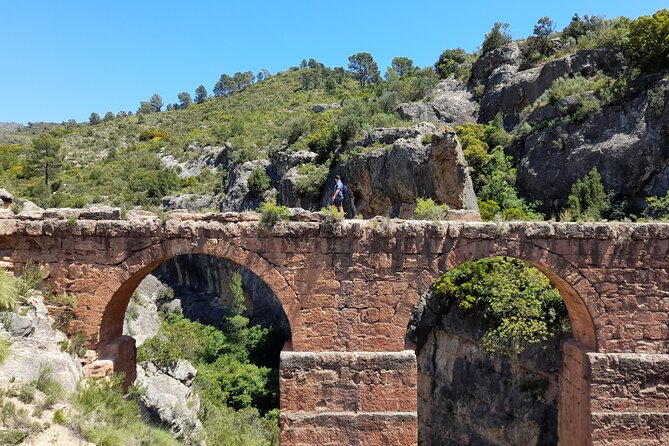
- Peña Cortada aqueduct tunnels: walk through rock-cut passages instead of just viewing ruins from afar.
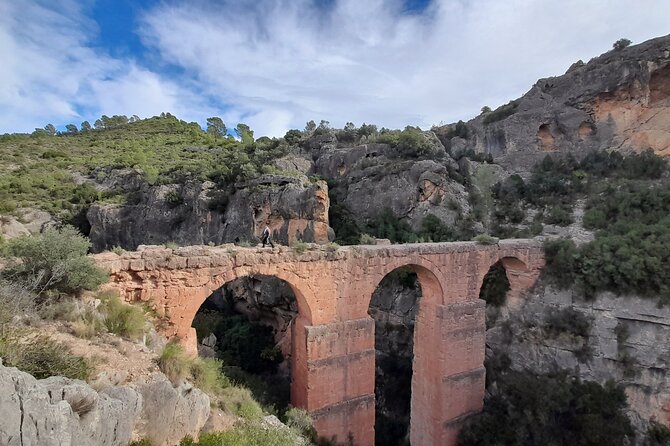
- That big aqueduct bridge: it’s the visual payoff people remember most.
- Ruta del Agua time with water sounds: springs, sources, ditches, and the Tuéjar/Chelva river theme follows you.
- Circular 14 km route: you get a full “out-and-back feeling” without repeating the same segment.
- Small group max of 8: easier pacing and less crowd pressure on narrow parts of the trail.
From Serranos Towers to Calles: start strong (and smart)
You start in València at Serranos Towers, Plaça dels Furs (Ciutat Vella). The start time is 9:30am, and pickup is offered, with private, air-conditioned transportation handled by Valencia Mountain Enthusiasts. If you like to get going early, this schedule works well: it helps you reach the aqueduct hike before the heat and before the area gets busy.
Once you arrive in Calles, the tour begins with a coffee stop in a local bar. That small moment matters more than it sounds. You’re not just eating; you’re resetting your energy for the hiking portion, and it gives you a quick sense of local rhythm before you step onto the trail.
What I like here is the pacing logic. You start with a gentle climb and then transition into the more “structured” aqueduct section. If you tend to start too fast on day hikes, this layout gives you a safer ramp-up.
You can also read our reviews of more hiking tours in Valencia Province
Calles to Peña Cortada: tunnels, single-track, and that bridge moment
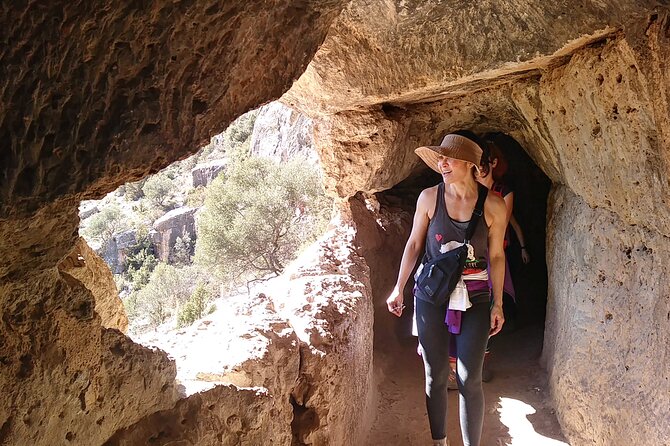
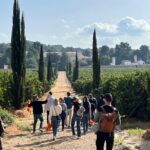
The heart of the experience starts after about 50 minutes of driving. From Calles, you ease into the hike with roughly the first 3 kilometers described as a very gentle ascent. This is a good setup. You’re not immediately wrestling steep grades, so you can get your stride under control before the trail narrows into a more single-track climb.
After that initial stretch, the path turns into a more defined single-track trail with a bit more elevation gain. The climb here is described as short, which is a relief if you’re hiking with moderate stamina rather than marathon legs. Then comes the main attraction: you reach the Peña Cortada aqueduct area and the walking gets special.
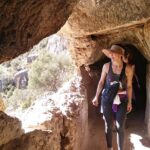
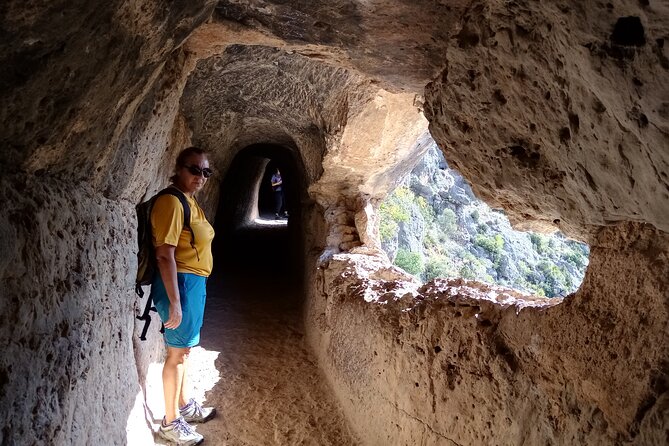
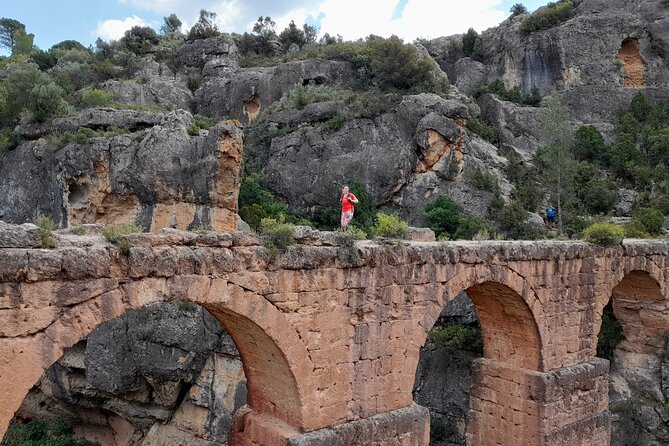
You’ll make your way through tunnels carved in rock, which changes the whole feel of the hike. Instead of just seeing infrastructure, you’re inside it—moving through the same kind of engineered space that once supported water delivery. It also gives you shade from the sun compared with open trail segments (not guaranteed, but the rock-cut sections generally help).
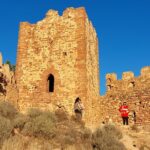
Soon after the tunnels, you reach the most impressive part: an aqueduct bridge you cross to get to the other side. This is where the photos tend to make sense. It’s the section where the aqueduct stops being a “cool detour” and becomes the main character. If you’re a person who likes viewpoints but also likes engineering, this is your payoff zone.
Practical tip: bring steady shoes. The tour emphasizes hiking, and some reviews highlight that certain parts can be more demanding than expected—especially for people in their 50s. That doesn’t mean it’s impossible. It just means you should be ready to walk carefully on trails that may include drop-offs or cliffy edges.
Acueducto de la Peña Cortada area and Chelva’s water route vibe
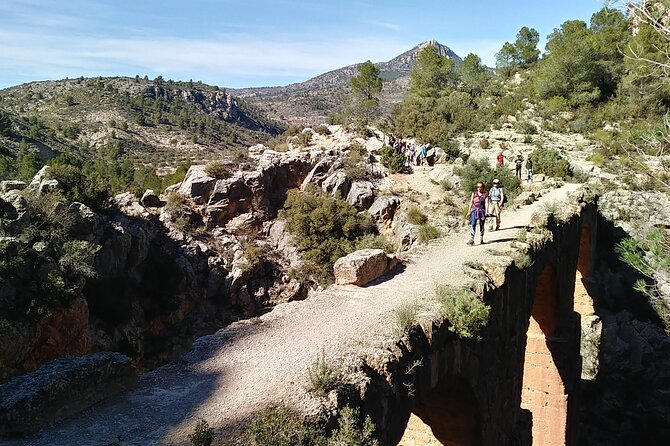
After you cross and move beyond the aqueduct’s headline bridge/tunnel sequence, the day keeps its theme: water. The route you’ll connect with is often referred to as Chelva’s Ruta del Agua—a walking itinerary that you can do from either Chelva or Calles and that works in a circular layout. In other words, the area is built for repeat enjoyment. You’re not “finishing” by getting back to a car; you’re still on a coherent scenic walk.
Here’s what that means in your real experience: you’ll keep hearing the murmur of water from numerous springs, sources, ditches, and especially the Tuéjar river (also called the Chelva river sometimes). That constant water sound can be oddly calming on a physical hike. It gives you a rhythm beyond just “up, then down.”
This part also creates a more balanced day than a pure ruin-and-photo stop. Roman engineering is spectacular, but it’s also easy to forget you’re in a landscape shaped by water systems. The Ruta del Agua segments re-anchor you in the local hydrology story.
Stop timing is described as about 1 hour for the aqueduct/water-route segment in this flow. That sounds short—until you realize the day includes tunnel walking and bridge crossing plus a town visit. The schedule keeps you moving without turning the hike into an all-day slog.
Chelva old neighborhoods: slow strolling instead of speed-rushing
At some point you’ll shift from trail to town with Chelva as a dedicated stop. This is where you get a break from the physical side of the day and let the day “cool down” a bit.
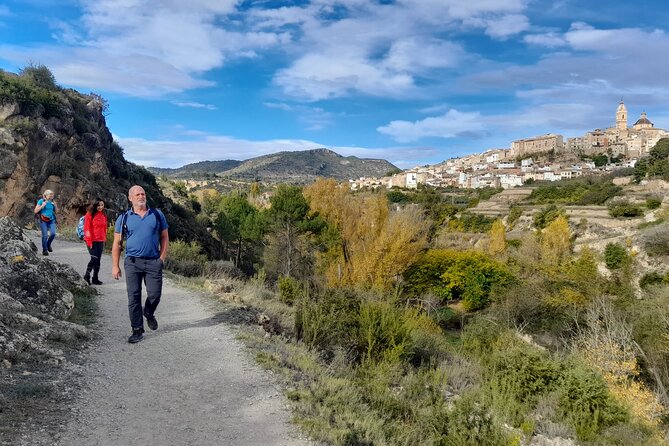
Chelva is a town in the interior of Valencia, in the La Serranía region. The place name connects to a meaning tied to forest (silva), and what you’ll notice in town is the multi-layer imprint of different cultures over time. The description highlights that Chelva’s urban center preserves traces left by Arabs, Jews, Moors, and Christians across history.
Practically, this town stop is valuable because it helps you interpret what you saw while hiking. You’re not just walking through a natural system; you’re walking through a region where water, settlement, and architecture developed together. Even if you don’t catch every detail, you can feel the texture: older blocks, historic neighborhoods, and construction styles linked to those past communities.
This is also a good place to take a slower stroll instead of treating every stop like a checklist. You’ll get about 1 hour here, so choose what you want most: a calm wander through historic streets, a coffee recharge, or just a pause to soak in the setting before the final walking portion.
Ruta del Agua again: why repeating the theme works
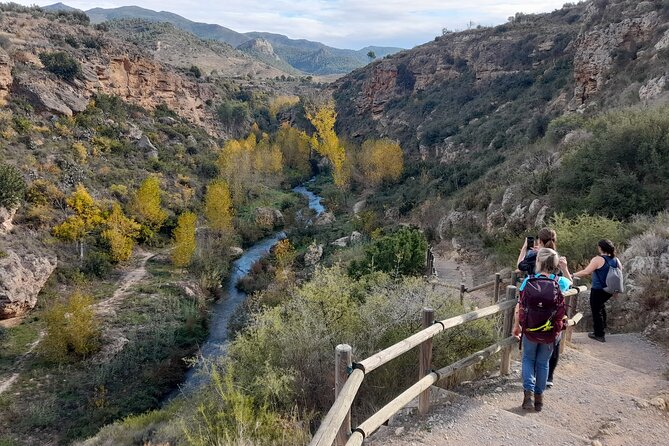
One of the most interesting design choices in this tour is how Ruta del Agua shows up more than once in the plan. In plain terms: you don’t just get a single scenic teaser. You get to experience how the water theme continues along the walk, and how the route can feel different depending on where you are in it.
The Ruta del Agua segment is described as a pleasant walk of about two hours overall with rest areas along the path, with the tour’s specific timing shown as 1 hour at this point. The point is that the route isn’t supposed to be punishing. It’s built for a steady stroll where the water sound stays present.
What I like about this approach: it helps you separate the “awe” moments (tunnels, aqueduct bridge) from the “relax” moments (water walk, rest points, river-sound continuity). You leave with two kinds of memories—one dramatic and one calming.
If you’re the type who gets restless on hikes because you’re constantly thinking about steepness, this section can be a mental reset. You can focus on the water, the feel of the air, and the rhythm of walking rather than constantly gauging effort.

Duration, group size, and how to pace yourself
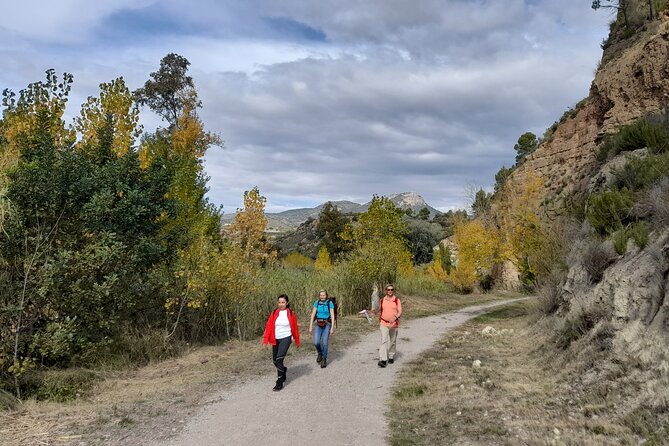
The tour runs about 5 to 6 hours. That length is the sweet spot for active travelers who want a full day but still want a return to València that doesn’t feel like a marathon.
The group size cap is 8 travelers. Smaller groups matter on a route with tunnels, bridges, and trails that can get narrow or uneven. With fewer people, you’ll have an easier time pausing for photos, moving through tight sections without a bottleneck, and adjusting your pace if you need extra time.
The physical fitness note is moderate. I’d take that seriously, especially since one review specifically pointed out that it can feel more physically demanding than anticipated for people in their 50s. If you’re unsure, consider your own hiking habits: can you comfortably walk for several hours on uneven ground, and can you manage careful footing when the trail narrows?
What you should pack: snacks, water, and footwear
Lunch isn’t included, so plan for snacks and/or a picnic lunch. Even if you don’t eat much on the trail, having something small helps you avoid the end-of-day energy crash.
Bring:
- Water (you’ll be outside for hours)
- Snacks/picnic since lunch is not included
- Sturdy shoes with grip for rock and trail sections
- A light layer if mornings feel cool around the river/water route
Also consider that the experience requires good weather. If it’s canceled for poor conditions, you’ll be offered a different date or a full refund. That’s a strong reason to keep your schedule flexible.
Price and value: what you’re paying for at $1,245
At $1,245, this isn’t a budget day. So you should ask what makes it worth it for your style of travel.
Here’s what’s clearly included:
- Private transportation
- Air-conditioned vehicle
- Mobile ticket
- Some admission elements are listed as free for the stops
With only the core tour facts given, the big value case is the combination of private transport + a focused small-group hiking experience that gives you more access than a drive-by visit. You’re not just seeing Peña Cortada from a distance—you’re walking through the aqueduct’s rock-cut tunnels and crossing its bridge, plus continuing into the Ruta del Agua water-route scenery and then getting Chelva’s historic center time.
If you compare this to DIY travel, the time savings are real: you don’t have to manage getting to Calles, coordinating the route flow, and figuring out how to connect the aqueduct walking with Chelva town time and the water-route segments.
Who gets the best value? People who:
- want a guided route structure (so the day feels “handled”)
- prefer small groups
- care about active access, not just sightseeing
Who might feel the price sting? If you’re a casual walker, or if you mainly want museum-style history with lots of interpretation. The day is set up for hiking first.
Who this hike suits best (and who should think twice)
This tour fits best if you like:
- Roman remains you can actually walk through
- active days that blend engineering + nature
- steady walking with time to pause and regroup
It may not fit as well if you strongly prefer:
- lots of formal historical explanation during the hike
- a mostly flat route
- a very kid-proof, low-risk day
One review highlight called out that the emphasis feels clearly on hiking and that more history or information would have improved the experience. So if you’re hoping for a lecture-heavy cultural tour, adjust your expectations. You’ll still be seeing historic structures and a layered town, but the format is more about walking the place than explaining it in depth at every step.
Should you book the Peña Cortada aqueduct hike?
Book it if you want a memorable day that’s more than a photo stop: tunnels through rock, a standout aqueduct bridge crossing, then a water-themed walk into Chelva with a town pause. The small group size and private transport make it easier to enjoy the hike without logistical headaches.
Consider skipping (or at least thinking hard) if you’re not comfortable with moderate hiking effort, careful footing, and trails that may include drop-offs or cliff edges. And if you’re mainly after detailed history, know this tour is structured around movement—history is part of the setting, not the main delivery.
If your ideal day is being on your feet, following a circular route that keeps the water sound going and the aqueduct moments close by, this one is a strong match.
FAQ
How long is the hike to the Peña Cortada Roman aqueduct?
The tour lasts about 5 to 6 hours.
How far is the route?
The hike follows a circular route of about 14 kilometers.
What parts of the experience are included?
You get air-conditioned vehicle transportation and private transportation, plus a mobile ticket.
Is lunch included?
No. You should bring snacks and/or a picnic lunch.
Do you need tickets for the stops?
Admission is listed as free for the aqueduct and Ruta del agua parts included in the plan.
Is pickup available and where do you meet?
You meet at Serranos Towers (Plaça dels Furs, s/n, Ciutat Vella, València) at 9:30am, and pickup is offered.
What fitness level is required?
The tour is for travelers with a moderate physical fitness level.
Is the route child-friendly and are there animals allowed?
Service animals are allowed. The hike includes hiking on trails with potential drop-offs, so it may feel more nerve-wracking for children who aren’t careful.