REVIEW · OLD TOWN & CATHEDRAL TOURS
Essential Valencia: Local Culture and Gastronomy
Book on Viator →Operated by @curiosidadesvlc · Bookable on Viator
Gothic meets markets, all in one walk. This Essential Valencia route is interesting because you move through the city’s power centers and old streets, then finish with local food-energy at the market and a special stop at the end. I especially love how the itinerary strings together landmark variety in just 2 hours 30 minutes, and how you get a tight dose of Valencia’s culture and gastronomy without feeling like you’re being rushed.
One possible drawback: it’s very weather-dependent, and you’ll be outside for long stretches, so bring a layer and plan for sun or rain.
In This Review
- Key Things I’d Prioritize Before You Go
- A 2.5-Hour Circuit That Covers the City’s Main Stories
- Palau de la Generalitat: Gothic Power Without the Heavy Detour
- Torres de Serrans: The City Gate That Grounds Your Orientation
- Barrio del Carmen: Old Valencia in Plain Sight
- Valencia Cathedral: The Largest Temple as a Visual Anchor
- La Lonja de la Seda: UNESCO Trade Power, Not Just Pretty Gothic
- Mercat Central de Valencia: Your Gastronomy Stop Should Be in the Middle
- Estacio del Nord: Spain’s Most Beautiful Station as Modernism Practice
- Ajuntament de Valencia: Municipal Style and Local Identity
- Finishing at Restaurant Secret: A Drink and a Reserved Table
- Price and Value: Why About $39.72 Feels Fair
- Who Should Book This Tour (and Who Might Skip It)
- Should You Book This Essential Valencia Walk?
- FAQ
- FAQ
- How long is the Essential Valencia tour?
- What does the tour cost?
- Is the tour offered in English?
- Where does the tour start?
- Where does the tour end?
- How many stops are included?
- Do I need to buy tickets for the stops?
- Is a mobile ticket provided?
- What happens if the weather is bad?
- Is there a cancellation policy?
- Is this tour suitable for most people?
Key Things I’d Prioritize Before You Go
- A small group (max 15): easy to hear your guide and ask questions while you’re walking.
- Seven major stops, zero museum-style add-ons: each listed admission is ticket-free, so the route feels good value.
- UNESCO on the list: La Lonja de la Seda brings big heritage weight into a short visit.
- Market time is real: Mercat Central is included, which helps the day feel like more than just sightseeing.
- Modernism and civic pride: Estacio del Nord and the Ajuntament add a different Valencia side than the Gothic lanes.
- You end with a payoff: Restaurant Secret includes a complimentary drink and a reserved table.
A 2.5-Hour Circuit That Covers the City’s Main Stories
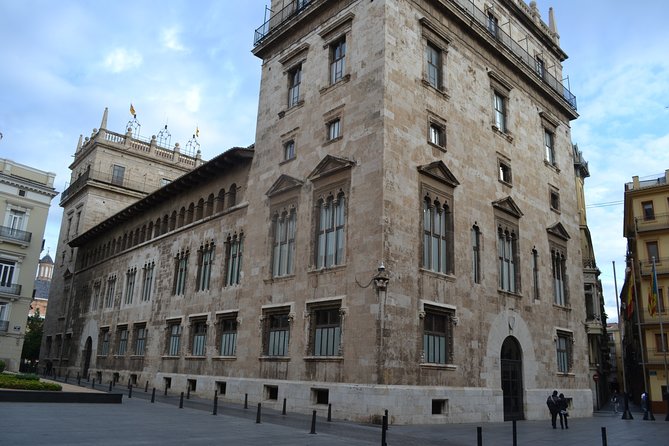
This tour is built like a smart sampler. In about 2 hours 30 minutes, you cover the places that shape Valencia’s identity: self-government, the old-city core, the big cathedral, the landmark trade hall (La Lonja), the market, and then architecture that screams Valencian modernism.
You’ll also like the pacing. Each stop is timed for a first look—enough time to understand what you’re seeing—then you’re moving again. That matters because Valencia’s center is full of small details, and a walking loop helps you connect them instead of treating each place like an isolated postcard.
And because it’s offered in English with a small maximum group size, the experience tends to feel personal rather than assembly-line. Service animals are allowed too, which is a nice practical detail if you need it.
You can also read our reviews of more tours and experiences in Valencia.


Palau de la Generalitat: Gothic Power Without the Heavy Detour
You start at the Palau de la Generalitat, the Gothic palace that served as the seat of Valencian self-government. Even if you’re not a “buildings” person, this stop helps you understand the city’s timeline fast—Valencia wasn’t just a place of churches and markets. It was also a place of rules, decisions, and civic identity.
Gothic architecture can look similar in different cities, so what makes this one worthwhile is the context: you’re not just looking at stonework. You’re seeing where governance happened. That’s a big difference. It gives you a lens for the rest of the tour, especially when you later see the Ajuntament and other civic landmarks.
The visit is short, so don’t expect a full deep study. But it’s a strong opener because it sets the mood right away.
Torres de Serrans: The City Gate That Grounds Your Orientation
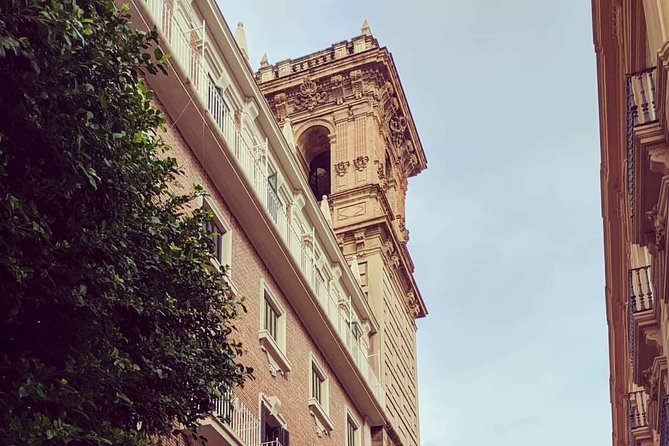
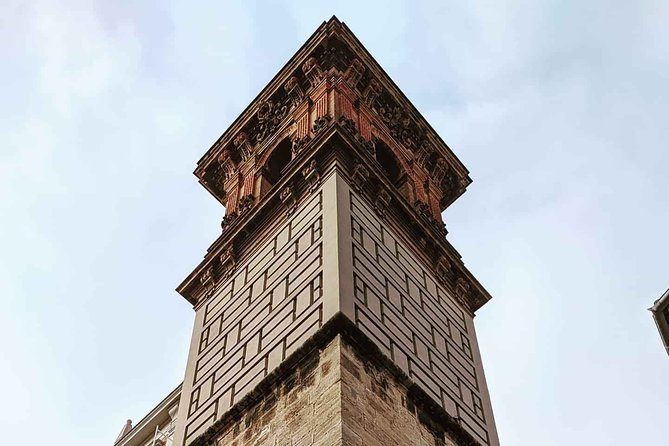
Next comes the Torres de Serrans, the main entrance gate to the city. A gate sounds simple, but it’s actually one of the best ways to orient yourself in any historic place: it tells you where the city “began” in a practical sense and helps you imagine how people entered, guarded, and moved through the streets.
This stop works well because it’s quick and visual. You’ll get a sense of scale and defensive design without having to spend extra time hunting for viewpoints. It’s also a natural transition between civic power and the old neighborhood streets that come right after.
If you’re arriving in Valencia on a day when you feel a little lost, this is the type of stop that helps your brain map the city faster.
Barrio del Carmen: Old Valencia in Plain Sight
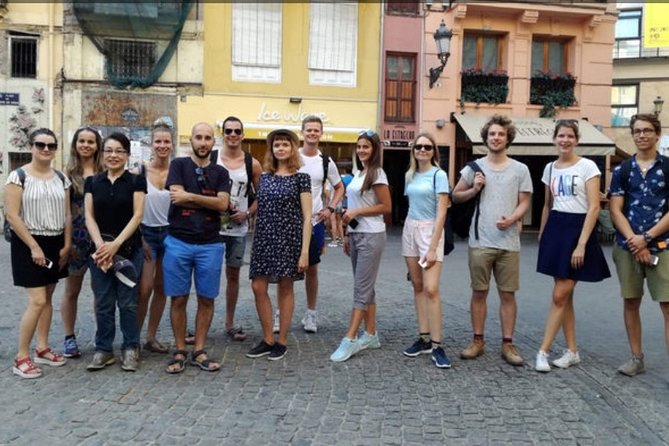
Then you walk into the Barrio del Carmen, described as the old city par excellence. This is the part of the tour where Valencia feels most like itself—tight streets, historic atmosphere, and a sense that daily life has layered onto centuries of urban design.
What I like about putting the neighborhood here, before cathedral and market stops, is that it primes you to notice details. After you’ve seen a gate and civic buildings, you’ll start spotting how those landmarks influenced street patterns, access points, and where people naturally gathered.
The stop is timed, so you won’t leave with a catalog of every alley. Instead, you’ll leave with a sharper sense of the area’s feel. And that helps later when you decide where to wander on your own.
Valencia Cathedral: The Largest Temple as a Visual Anchor
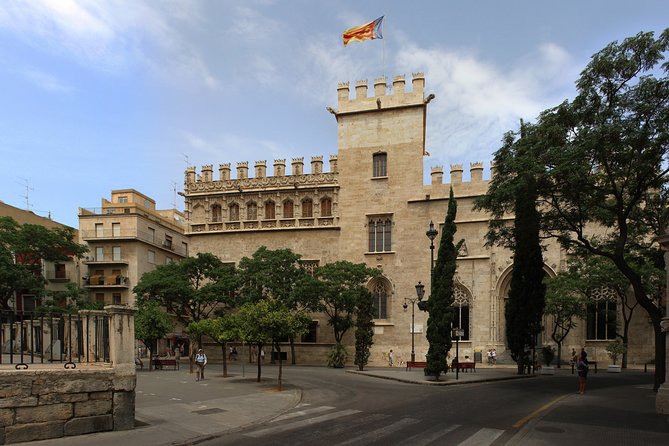
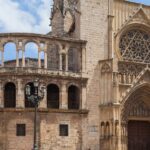
You’ll then reach Valencia Cathedral, known as the largest Valencian temple. Big cathedrals can overwhelm you if you don’t know what you’re looking for. This visit avoids that problem by treating the cathedral like an anchor point: see it, understand why it matters, then keep moving.
Even in a short stop, the cathedral helps you build a mental skyline. Once you’ve clocked where it sits, the rest of your walk feels more connected. And the cathedral’s presence also shifts the atmosphere. The streets start to feel like they’re funneling toward something.
A practical tip: wear shoes you can walk in for a couple hours. Cathedral stops usually involve time spent standing and looking around, and you’ll want to stay comfortable.


La Lonja de la Seda: UNESCO Trade Power, Not Just Pretty Gothic
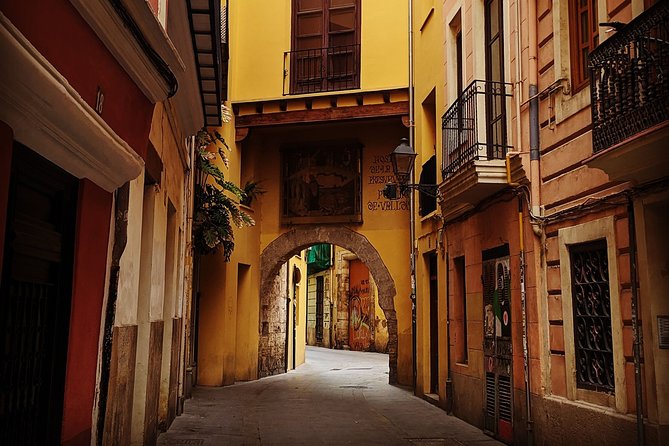
One of the most meaningful stops is La Lonja de la Seda. This is highlighted as the best example of civil Gothic in the world and as UNESCO intangible cultural heritage. That combo is important. You’re not just getting an architectural photo moment. You’re learning how commerce, law, and civic identity shaped the city.
Civil Gothic can be a new concept for you. Churches get the fame, but trade halls and public buildings shaped daily life just as much. La Lonja belongs in that category: it’s the kind of landmark that turns history from dates into real human activity—contracts, trade, and the systems people relied on.
This is one of those stops where even a short visit gives you a payoff, because it changes how you interpret other historic sites. After this, you’ll notice how Valencia’s institutions weren’t separate from its economy. They were part of the same story.
Mercat Central de Valencia: Your Gastronomy Stop Should Be in the Middle
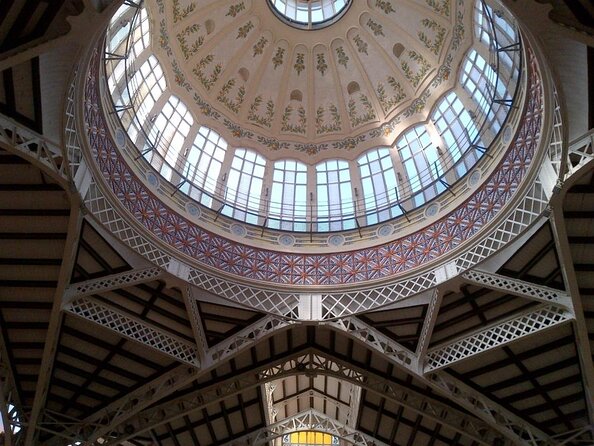
Next is Mercat Central de Valencia, described as the market and pride of Valencians. This is your gastronomy highlight, and it matters that it’s placed mid-tour. You don’t just “see the food.” You see where Valencians get supplies and where the market culture lives.
Because your time here is short, think of it like orientation for later eating. You’ll likely spot the rhythm of the place—how people browse, what looks seasonal, and what stands out visually. That gives you a better sense of what to seek when you’re hungry after the tour or when you want a more local meal.
There’s also a psychological benefit. Market stops reset your tour energy. After architecture, you get a sensory shift: smells, colors, and the everyday pulse of Valencia.
If you’re planning to snack later, this is a good time to remember what you saw. It helps you choose food that actually fits the city rather than defaulting to whatever looks easiest.
Estacio del Nord: Spain’s Most Beautiful Station as Modernism Practice
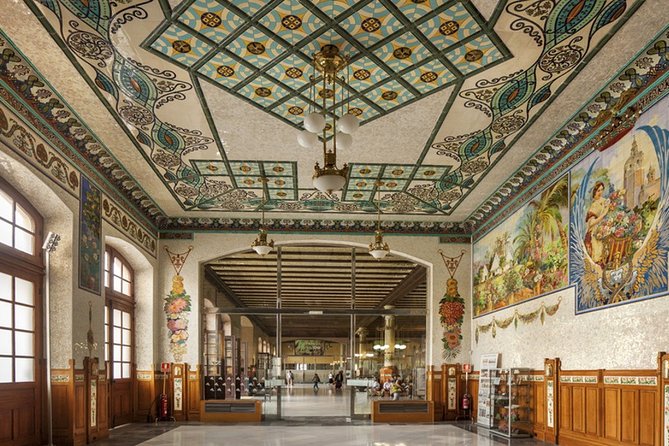
Then you arrive at Estacio del Nord, described as the most beautiful station in Spain and a full example of Valencian modernism. Stations are often treated like boring connectors. Here, it’s the opposite: you get a dose of design that explains why Valencia wasn’t stuck in medieval mode.
Modernism in architecture can be hard to appreciate at street level if you don’t know where to look. A guided stop helps you see key elements as part of a larger style language, not just decorative details. You’ll also feel the contrast in your feet and senses: you’re in a transit space, but you’re stopping for beauty and meaning.
This is a great stop if you like architecture, rail history, or city design. And even if you don’t, it provides a nice break from the older Gothic anchors.
Ajuntament de Valencia: Municipal Style and Local Identity
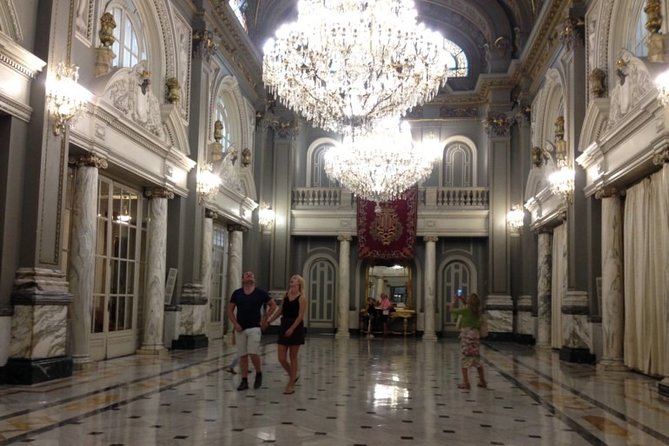
You wrap up the main sightseeing with Ajuntament de Valencia, described as modernist style municipal seat. This is where civic pride shows up again, but through a newer architectural language. Seeing the city’s governance twice—first in Gothic civic power, then in modernist municipal style—gives you a more complete sense of Valencia’s identity over time.
This stop also helps you connect themes. If you noticed how La Lonja linked the city’s economy with civic systems, then the Ajuntament ties the same idea to government and public life. It’s not just about how Valencia looks. It’s about how it organized itself.
Time is limited here too, so don’t expect a long sit-down. Instead, use the stop to get your bearings for where you might want to return later for photos.
Finishing at Restaurant Secret: A Drink and a Reserved Table
The tour ends at Restaurant Secret at C/ de Sant Martí, 11 in Ciutat Vella. The big practical perk: you’ll get a complimentary drink and a reserved table. That’s more than a nice gesture—it changes how you experience the last stretch.
Instead of dispersing right after the final photo, you land somewhere comfortable and ready to continue your evening. It also gives you a smooth transition from guided walking to independent time. If you want to stay out longer, you’re not stuck figuring out where to go when your legs are tired.
It’s also a useful signal for value. You pay for the walking experience, and you don’t have to immediately spend extra money just to feel like the day had a proper ending.
Price and Value: Why About $39.72 Feels Fair
At $39.72 per person for about 2 hours 30 minutes, this sits in the sweet spot for a central-city walking tour—especially because multiple stops list admission as ticket-free.
That matters. Some guided walks look cheap until you realize you’re paying extra for entrances. Here, the route is structured around major sights with the admissions noted as free. Add the small group size (max 15), the English-speaking guide, and the reserved table plus drink at the end, and the value story gets stronger fast.
Could you see these places on your own? Sure. But the real value is in sequencing and context—getting from Gothic governance to trade heritage to market culture without wasting hours figuring out what matters most first.
Who Should Book This Tour (and Who Might Skip It)
I’d say this tour is best for you if you want a grounded introduction to Valencia’s center without planning a full day yourself. It’s also a smart pick if you like architecture but don’t want a “stand still for hours” style tour. The mix of civic buildings, old neighborhood streets, La Lonja’s trade heritage, and the market keeps it balanced.
You might skip it if you’re the kind of traveler who hates guided structure and prefers to wander entirely on your own. You’re still outdoors and moving, but the itinerary is fixed. If you want maximum flexibility, you may prefer a self-guided route.
Should You Book This Essential Valencia Walk?
Yes, if you want a compact, well-sequenced snapshot of Valencia that connects history, civic identity, and food culture in a way that actually helps you explore afterward. The tour’s biggest strengths are practical: the short time commitment, the small group, the free-admission structure for the listed stops, and the friendly finish at Restaurant Secret with a drink and reserved table.
If weather is likely to be rough, keep an eye on conditions. Since it’s weather-dependent, you’ll get more out of it when the skies cooperate.
Book it when you want an easy first win in Valencia—then use the rest of your day to wander with a clearer sense of what you’re looking at.
FAQ
FAQ
How long is the Essential Valencia tour?
It runs for about 2 hours 30 minutes.
What does the tour cost?
The price is $39.72 per person.
Is the tour offered in English?
Yes, it’s offered in English.
Where does the tour start?
The meeting point is Pl. de Manises, 4, Ciutat Vella, 46003 València, Valencia, Spain.
Where does the tour end?
It ends at Restaurant Secret, C/ de Sant Martí, 11, Ciutat Vella, 46002 València. The end includes a complimentary drink and a reserved table.
How many stops are included?
There are 8 stops: Palau de la Generalitat, Torres De Serrans, Barrio del Carmen, Valencia Cathedral, La Lonja de la Seda, Mercat Central de Valencia, Estacio del Nord, and Ajuntament de Valencia.
Do I need to buy tickets for the stops?
Admission is listed as ticket-free for the stops included on the itinerary.
Is a mobile ticket provided?
Yes, it includes a mobile ticket.
What happens if the weather is bad?
The experience requires good weather. If it’s canceled due to poor weather, you’ll be offered a different date or a full refund.
Is there a cancellation policy?
You can cancel for a full refund up to 24 hours in advance of the experience start time. After that, the amount paid is not refunded.
Is this tour suitable for most people?
Yes, most travelers can participate, and service animals are allowed.