REVIEW · CITY OF ARTS & SCIENCES TICKETS
Valencia: Oceanogràfic, Hemisfèric & Science Museum Combo
Book on GetYourGuide →Operated by Tixalia · Bookable on GetYourGuide
The City of Arts and Sciences in Valencia is a full-day mood changer. With this combo, you get Oceanogràfic’s marine ecosystems, Prince Felipe Science Museum’s hands-on science, and the Hemisfèric’s big-screen 3D cinema in one handy day plan.
I love that the pairings make sense: living animals at Oceanogràfic, then brains-at-work at the science museum, then a film that helps everything stick in your head. The other big win is the setting itself, with architecture that feels like it belongs on another planet, especially around Oceanogràfic and Hemisfèric.
One drawback to plan around: the complex is huge, so you’ll want to pace your day. If you try to rush through all three, you’ll miss details and end up walking more than you need.
In This Review
- Key highlights to know before you go
- Oceanogràfic and the water-lily aquarium experience
- Upper levels: birds, freshwater views, and outdoor wandering
- Lower level: the main ecosystems and star animals
- Food inside the aquarium
- Príncipe Felipe Science Museum: hands-on learning that still works for adults
- What you’ll actually do there
- Time needed: plan for more than the minimum
- What makes it worth the combo
- Hemisfèric: 3D cinema plus Calatrava’s iconic design
- The building: an ovoid roof and a 3D sphere
- The film depends on your timeslot
- Headphones and audio language: double-check
- Price and value: does $54 make sense for a full day?
- Timing the day: a realistic itinerary that doesn’t burn you out
- Morning: start with Oceanogràfic
- Afternoon: Príncipe Felipe Museum while you’re still curious
- Late afternoon or early evening: Hemisfèric film
- Getting oriented: watch your navigation
- Who this combo fits best (and who should choose differently)
- Should you book the Oceanogràfic, Hemisfèric & Science Museum combo?
- FAQ
- Where do I go for Oceanogràfic?
- Where is the Prince Felipe Science Museum?
- Where is the Hemisfèric Cinema entrance?
- Is there a meeting point for this combo?
- What attractions are included in the ticket?
- Is a guide included?
- How long is the combo valid?
- Can I skip ticket lines?
- Is it refundable?
- Are there special rules for children at the Hemisfèric?
Key highlights to know before you go

- Oceanogràfic’s water-lily design: a famous structure by Félix Candela that frames your aquarium strolls
- Marine life across main ecosystems: from Arctic to Red Sea-style exhibits, with standouts like belugas, walrus, jellyfish, sea lions, and sharks
- Outdoor upper levels by a freshwater lake: pelicans, cormorants, and flamingos near the animal zones
- Interactive science in Prince Felipe Museum: hands-on exhibits, plus an auditorium where electricity demos can be a highlight
- Hemisfèric’s Calatrava architecture: a roof-and-sphere design built for 3D film viewing
- The film you watch depends on timing: pick a timeslot so you actually want the show that day
Oceanogràfic and the water-lily aquarium experience

If you only do one stop in this combo, I’d bet most people would choose Oceanogràfic. It’s the big draw, and for good reason: it houses over 500 species of marine animals, spread across themed environments that help you understand how ecosystems work.
What makes Oceanogràfic feel special is that it’s not just indoor tanks. The complex was designed by Félix Candela in the shape of a water lily, and the building itself becomes part of the experience. You’ll see that “science park” vibe right away, because the pathways, viewing angles, and exhibit zones all feel planned rather than random.
You can also read our reviews of more museum experiences in Valencia

Upper levels: birds, freshwater views, and outdoor wandering
On the upper floors, you’ll find outdoor exhibitions around a freshwater lake. This is where the experience starts to slow down in the best way. While you’re walking, you may spot pelicans, cormorants, and flamingos around the water.
This part matters because it breaks up the day. Aquarium visits can get intense: lots of crowds, lots of glass walls, lots of “look-but-don’t-touch” movement. The upper-level outdoor areas help you reset your energy before you hit the denser marine sections.
Practical tip: it can feel hot when you’re outside, and one useful trick is bringing a portable fan if you tend to get warm. Also, crowding can happen in popular areas, so if you can arrive earlier, you’ll enjoy more breathing room.
Lower level: the main ecosystems and star animals
Downstairs is where you’ll really start to get that wow factor people come for. The exhibits are built to represent major marine ecosystems, and you move through zones tied to places like the Arctic and Red Sea-style environments.
Look for the headliners:
- Belugas (often a top favorite for their look and behavior)
- Walrus
- Jellyfish
- Sea lions
- Sharks
And yes, this is the part where you’ll want your camera ready. The aquarium includes longer walk-through sections, including underwater tunnel-style viewing that makes photos easy even if you’re not trying to be an expert.
Food inside the aquarium
Oceanogràfic has places to buy food, including an underwater restaurant option. Food and drinks aren’t included with the combo ticket, so plan on budgeting for at least a snack or a meal if you stay for the long haul.
If you’re a “keep moving” type, you can do Oceanogràfic in around a half day. If you’re more of a “stop and watch” person, it’s easy to spend several hours here. Even people who plan to be efficient often end up slowing down once they’re surrounded by the animals and the exhibit pacing.
Príncipe Felipe Science Museum: hands-on learning that still works for adults
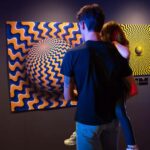
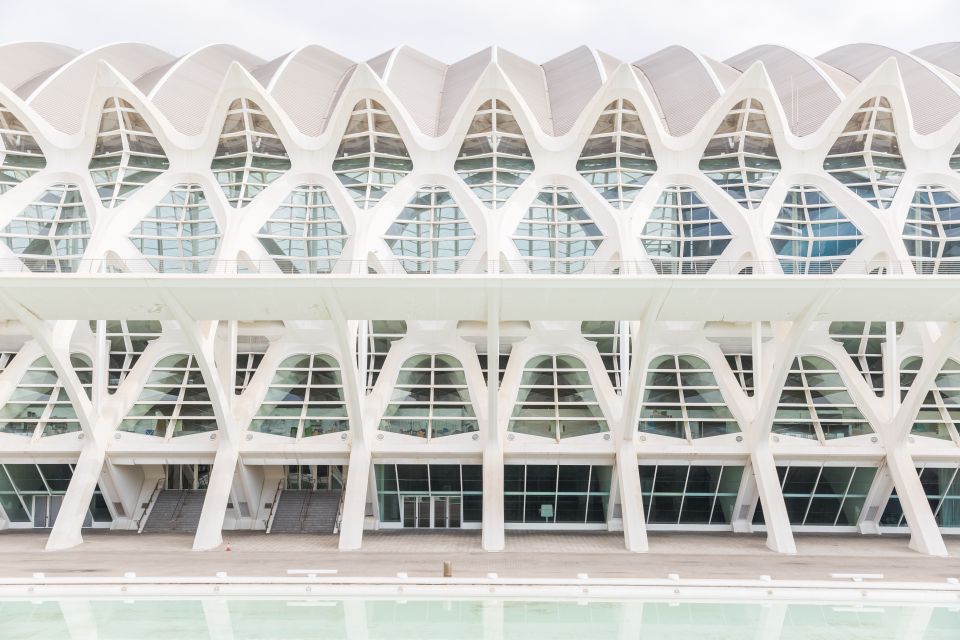
After Oceanogràfic, the Príncipe Felipe Science Museum is a nice shift. Where the aquarium gives you living examples, this museum asks you to think with your hands and eyes. It’s built around interactive exhibits, so you don’t just read panels and move on.





What you’ll actually do there
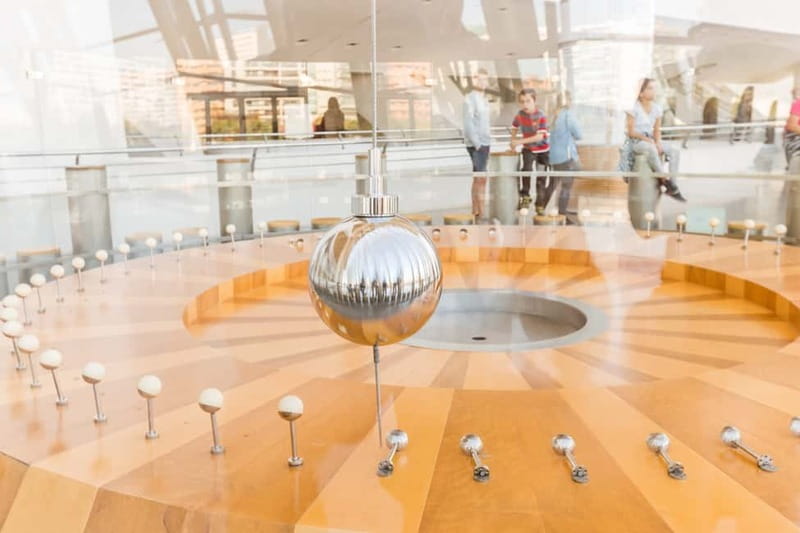
The museum encourages visitors to touch, feel, and think about scientific ideas. One of the fun elements is the “inventor” style presentation concept—an eccentric inventor demonstrates physical principles of electricity in front of an auditorium.
That auditorium aspect matters because it gives you a break from walking. It also makes the museum feel more like a show than a hallway of exhibits.
Time needed: plan for more than the minimum
A common pattern is spending a few hours here without realizing it. The museum has multiple floors and plenty of interactive stations, so you’ll get pulled into trying things out.
Also, don’t assume language will be uniform across every corner. Some areas may have English descriptions, especially in certain sections like space-related exhibits, while other parts (like a “creator” area) may be Spanish-focused. If you don’t speak Spanish, it’s still manageable because the museum is interactive, but it helps to keep expectations realistic for full comprehension everywhere.
What makes it worth the combo
This museum isn’t just an extra stop; it’s what makes the day feel like a story arc:
1) Learn through animals and habitats (Oceanogràfic)
2) Learn through cause-and-effect interactions (Science Museum)
3) Learn through film and big visual storytelling (Hemisfèric)
If you like science as a concept, not just as textbook facts, this sequencing is a win.
Hemisfèric: 3D cinema plus Calatrava’s iconic design
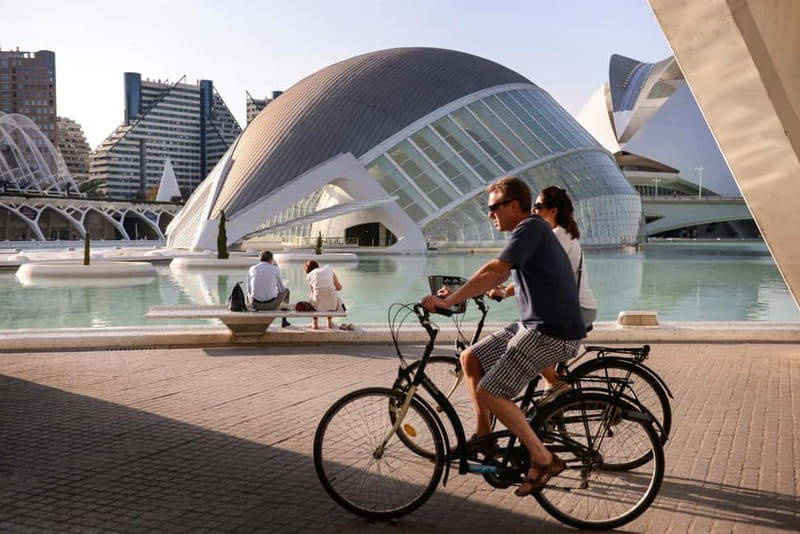
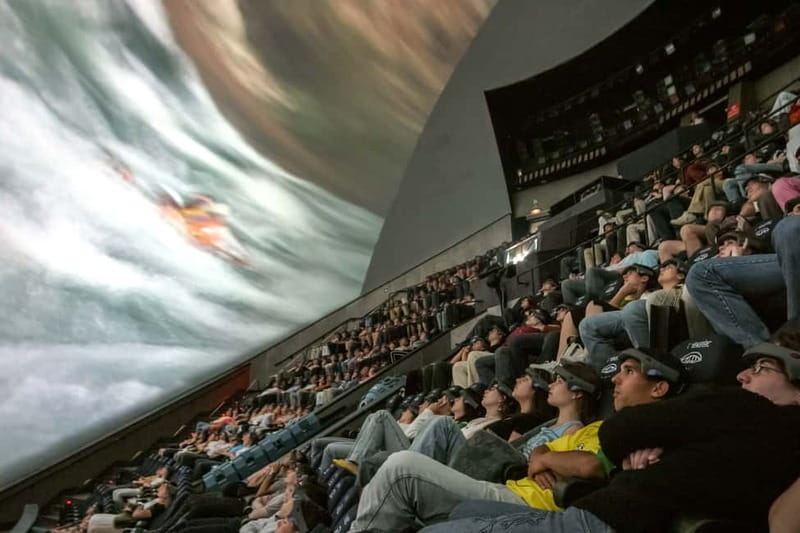
The Hemisfèric is built for visual impact. It opened in 1998 and was the first public building in Valencia’s City of Arts and Sciences. If you’re into architecture, this stop alone is worth your time.
The building: an ovoid roof and a 3D sphere
Designed by Santiago Calatrava, the Hemisfèric is known for its striking form: an ovoid roof that’s over 100 meters long, plus a large sphere that acts as the 3D projection room.
Even if you don’t care about films much, you’ll feel the effort that went into the experience before the lights even dim.
The film depends on your timeslot
At the Hemisfèric, multiple movies run, and what you see depends on the time and date you choose. So treat this like a real decision, not an afterthought.
If you’re going for a specific subject, check the schedule ahead of time when possible. People have watched shows ranging from documentaries to family-friendly options, including a film concept tied to natural light and skies.
Headphones and audio language: double-check
A practical concern that can ruin a show is audio language. One person mentioned that they weren’t able to get the English option through the headphones during their screening, which turned the experience frustrating.
So before the movie starts, do a quick check: confirm the audio language you want is available and working. It’s a small step that can save your entire session.
Also note: the cinema show is relatively short compared with the other stops. Plan on around 45 minutes to an hour for the viewing, then you’ll be back on your feet exploring the grounds.
Price and value: does $54 make sense for a full day?
At about $54 per person, this combo is trying to solve a common problem in Valencia: individual tickets add up fast, and the City of Arts and Sciences is spread out enough that logistics can get annoying.
What makes the price feel more reasonable is that you’re buying access to three different “learning styles” in one ticket:
- Oceanogràfic for the living animal exhibits and large-scale aquarium layout
- Príncipe Felipe Museum for interactive science stations and demos
- Hemisfèric for a 3D cinematic experience in a major architectural space
Also, since the ticket is designed as a combined entry, you can skip the ticket line at the venues, which saves time when you’re trying to fit everything into a single day.
My honest take: this combo is strongest when you actually want all three parts. If you’re only interested in the aquarium, you may feel the rest is extra. If you’re open to science and film, it’s a solid use of time—and a good match for both adults and kids.
Timing the day: a realistic itinerary that doesn’t burn you out
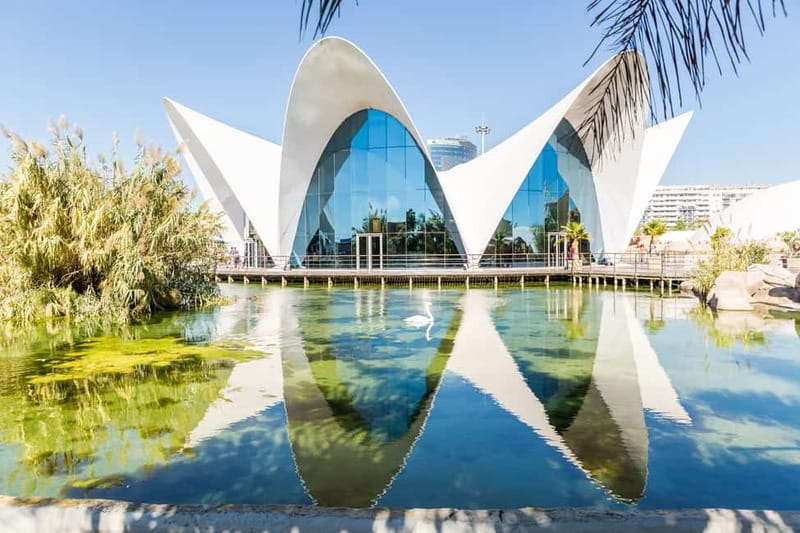
The complex is big, and the walking adds up. If you try to do Oceanogràfic, the museum, and Hemisfèric all at top speed, you’ll end the day tired and slightly annoyed.
Here’s a practical pacing strategy that works well:
Morning: start with Oceanogràfic
Go early if you can. You’ll reduce crowd stress and get better viewing flow in the busiest areas.
Aim to do:
- upper lake area first (pleasant outdoor start)
- then head into the main marine zones
- stop often to watch animals rather than rushing from sign to sign
If you get pulled into star exhibits, that’s not a failure. It’s the whole point.
Afternoon: Príncipe Felipe Museum while you’re still curious
Once you’ve had your animal dose, shift to interactive science. This is also when you can slow down your pace because the museum invites participation.
If you didn’t manage much time in Oceanogràfic, the museum can still rescue your day since it’s easy to “choose your own adventure” through stations.
Late afternoon or early evening: Hemisfèric film
Pick the showtimes so you don’t end up stressed. Remember: the film schedule can affect what you get to watch, and you want to be in the right mood for it.
Also, keep in mind there’s no meeting point for the combo. You’ll be responsible for moving between the venues on your own.
Getting oriented: watch your navigation
One useful warning from real-world experience: directions can point you to the wrong side of the Hemisfèric. So when you’re walking in, don’t just trust the first turn blindly. Follow signage for the entrance and take a minute to double-check you’re approaching the correct side.
Who this combo fits best (and who should choose differently)
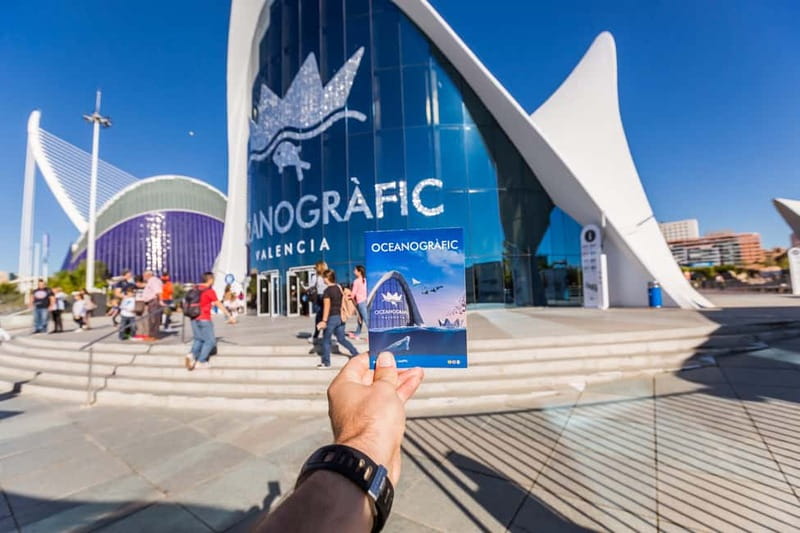
This is a great fit if:
- you love aquariums and want more than a quick look
- you like hands-on science exhibits, not just viewing
- you enjoy a planned “3D film moment” that ties everything together
- you’re visiting with kids or teenagers who need variety
It’s less ideal if:
- you only want one attraction and don’t care about the others
- you hate walking big complexes
- you’re very language-dependent and expect fully English info everywhere without variation
Also, if your schedule allows, some people split the City of Arts and Sciences across more than one day. This combo can fill one day, but the overall site is massive, and you might feel like you’re speed-running the bigger context.
Should you book the Oceanogràfic, Hemisfèric & Science Museum combo?

Book it if you want an efficient, high-value City of Arts and Sciences day. The combination works because it’s not repetitive: animals, interactive science, then a cinematic 3D finish. At $54, you’re paying for variety and scale, not just one attraction.
Don’t book it if you’re only interested in the aquarium and you know you’ll skip the rest. In that case, you’d likely get better value by choosing only what matches your interests.
If you do book, my advice is simple: prioritize Oceanogràfic timing, schedule the Hemisfèric based on the film you actually want, and give yourself enough time in the museum to touch and try things. If you do that, you’ll leave with the best kind of travel memory: a day where science felt alive.
FAQ
Where do I go for Oceanogràfic?
Oceanogràfic is at C/ d’Eduardo Primo Yúfera, 1.
Where is the Prince Felipe Science Museum?
The museum (Museo de las Ciencias Príncipe Felipe) is listed in the Quatre Carreres area.
Where is the Hemisfèric Cinema entrance?
The Hemisfèric is at Av. del Professor López Piñero, 7.
Is there a meeting point for this combo?
No, there is no meeting point.
What attractions are included in the ticket?
Entrance is included for Oceanogràfic, the Príncipe Felipe Science Museum, and the Hemisfèric.
Is a guide included?
No guide is included.
How long is the combo valid?
The ticket is valid for 1 day, starting from the first activation.
Can I skip ticket lines?
Yes, the ticket is set up so you can skip the ticket line.
Is it refundable?
No, it’s non-refundable.
Are there special rules for children at the Hemisfèric?
Children under 4 enter for free. For children age 0–3 at the Hemisfèric, they must sit on laps.