REVIEW · OLD TOWN & CATHEDRAL TOURS
Essential Valencia Tour
Book on Viator →Operated by TRENCADÍS Turisme Cultural · Bookable on Viator
Valencia starts making sense fast. This essentials walk is built to help you get oriented, spot the big landmarks, and understand why they matter. I like the tight 2-hour format that still hits the main monuments, and I also like how the route focuses on places tied to power and daily life, especially La Lonja de la Seda. The one thing to consider is that not every stop is ticket-free, so you may want a few euros set aside for entrances like city hall and La Lonja.
You’ll move through the historic center at a comfortable pace for first contact with Valencia’s architecture and civic culture. Expect a small group (max 20), a mobile ticket, and frequent short stops where you can actually look up instead of just walking past.
If you’re the type who hates delays, keep an eye on timing and meeting point details. There is at least one past report of a guide not showing up, so it’s smart to arrive a few minutes early and have your booking details ready.
In This Review
- Key highlights to know before you go
- Why this 2-hour Valencia highlights walk works so well
- Getting oriented fast: from Torres de Serranos to the cathedral area
- Ajuntament de Valencia: a city hall you actually want to look at
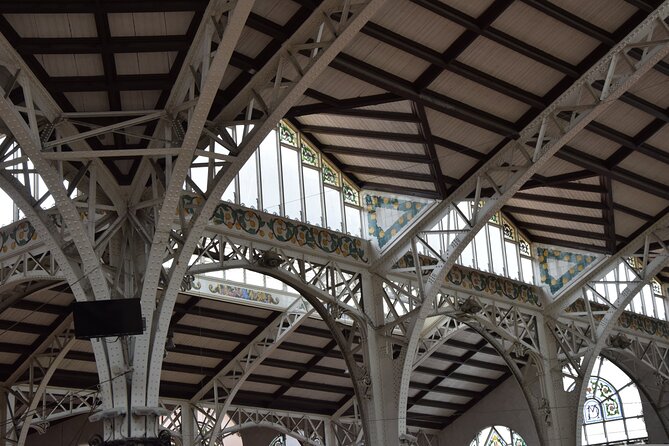
- Mercat Central de Valencia: market life, not a tourist set
- A major Baroque church stop: what to look for in the details
- La Lonja de la Seda (UNESCO): Valencia’s trade wealth in Civil Gothic form
- The city’s first commercial square: why a shape can become a signature
- Santa Catalina Church and the Caterineta bell tower
- Valencia Cathedral: using the guide to find the three doors
- Basilica de la Virgen de los Desamparados: the patron saint connection
- Headquarters of the Valencian Government and the Gothic seat of power
- Ending at Plaça de la Mare de Déu: what to do right after
- Should you book Essential Valencia Tour?
- FAQ
- How long is the Essential Valencia Tour?
- How much does the tour cost?
- What is the meeting point and where does the tour end?
- Is admission included for all stops?
- Are there small groups?
- Will I receive a mobile ticket?
- What happens if the weather is poor?
- Can I get a full refund if I cancel?
- Are service animals allowed?
Key highlights to know before you go
- Torres de Serranos start point: You begin where the old city defenses still look serious and photogenic.
- UNESCO La Lonja de la Seda: A major Civil Gothic site tied to Valencia’s trade power.
- Mercat Central de Valencia: A functioning traditional market, not just a pretty backdrop.
- Caterineta bell tower at Santa Catalina: The city’s “icon” bell tower shows up in a quick, photo-friendly stop.
- Cathedral three doors focus: You’re guided to notice architecture instead of guessing what you’re looking at.
- Basilica of the patron saint: You end up at the Virgen de los Desamparados area, key to local identity.
Why this 2-hour Valencia highlights walk works so well
This tour is designed for the first day in Valencia when you want quick context, not a long, exhausting marathon. In about two hours, you cover the kind of sights you’ll keep seeing again later—city institutions, old trade wealth, major churches, and squares that shape street life.
For me, the value is the balance: you get big-name monuments, but the route also includes places that explain how the city functioned day to day. Mercat Central de Valencia isn’t just an indoor hall; it’s a living market that keeps feeding locals with fresh products. Then you pivot from food and commerce to civic power and religious identity.
One practical reason this works: the walking is concentrated in the old center, and the itinerary ends near key cathedral-area squares. That means you can roll right into self-guided exploring afterward without re-tracing your steps. The small group size (up to 20) also makes it easier to ask questions during those short stops.
You can also read our reviews of more tours and experiences in Valencia.


Getting oriented fast: from Torres de Serranos to the cathedral area
Your walk starts at Torres de Serranos on C. de la Blanqueria (Ciutat Vella). This is a great opener. The towers are dramatic enough that they set the tone instantly: old Valencia had walls, and people built power into stone.
From there, you move through central streets with frequent viewpoint-style pauses. The itinerary is structured so you don’t spend your entire time inside a single building or in one long line. Instead, you get a sequence of short “look closely” moments—enough time to understand what you’re seeing and enough time left to enjoy the city streets.
You’ll also end at Plaça de la Mare de Déu. That drop-off location matters. You’re not sent out to some far corner; you finish where the historic heart is still active and where you can keep exploring churches, plazas, and lanes at your own pace.
Ajuntament de Valencia: a city hall you actually want to look at
One early stop is Ajuntament de Valencia, the city hall. It’s Neoclassical in style, and that combo is worth noticing. Neoclassical architecture can feel formal from a distance, but up close you’ll see how it turns civic authority into a visible statement.
The stop is short, so you’re not going to get a deep building tour. What you do get is guided attention: where to look, what style cues matter, and how a city’s political center often sits right inside the story of a place’s growth.
Drawback to know: the admission ticket isn’t included here. So if you want to go inside, plan for that extra entry cost. If you’re more of an outside-photo-and-street-watching type, you can still enjoy this stop for the architecture and context.
Mercat Central de Valencia: market life, not a tourist set
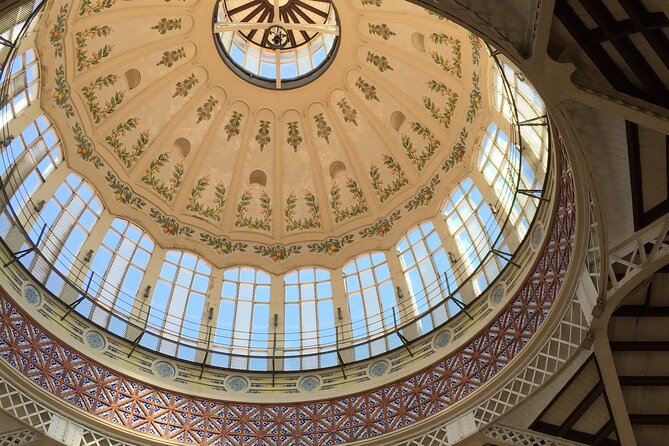
Next comes Mercat Central de Valencia. This is a true symbol of the capital, and the key word in that idea is capital. A big city doesn’t just have grand monuments; it has systems for feeding people and circulating goods.
The tour uses the market as a living snapshot of local routines. The idea is simple: you see a traditional market that continues to supply inhabitants with fresh products. That gives you a better feel for Valencia as a working city, not just a museum of stone.
The time here is brief, but it’s the kind of stop where you can still take in details—structure, layout, and the daily “now” energy of people handling goods. Another plus: it’s listed as free for admission, so you’re not forced into extra ticket costs to enjoy it.
A major Baroque church stop: what to look for in the details
Between the market and La Lonja, the route includes one of Valencia’s most important churches with a prominent Baroque style. Since the tour doesn’t dwell long here, your advantage is using the guide to point your eyes in the right direction.
Baroque often means drama: strong contrasts, ornate forms, and a sense of movement. Even if you’re not an expert, having someone orient you to what’s characteristic helps you get more out of the visit than a quick glance.
If you prefer time inside churches, note the structure here seems built for short viewing rather than a long interior session. That doesn’t make the stop less meaningful—it just fits the overall essentials pace.



La Lonja de la Seda (UNESCO): Valencia’s trade wealth in Civil Gothic form
This is the headliner: La Lonja de la Seda. It’s one of the great jewels of European Civil Gothic architecture and it’s a UNESCO World Heritage site. Even if Civil Gothic isn’t a term you use at home, the practical takeaway is clear: this is a monument to how Valencia did business.
A guided visit matters here because trade buildings can be easy to misunderstand if you only know the exterior. The point of the stop is to connect architecture to function. You’re seeing how wealth and commerce left fingerprints in stone—then you get to place it inside the story of a city that mattered to Mediterranean trade.
Admission is not included for this stop, so you’ll want to budget for entry if you want to go in. The good news is that the time you spend is targeted: enough for the important recognition points, without turning the tour into a full-day museum crawl.
The city’s first commercial square: why a shape can become a signature
Another short stop highlights a key square linked to the city’s early commercial life. It’s famous for its shape, and that’s the kind of detail that sounds minor until you’re standing there.
In city design, squares aren’t just empty space. They’re where crowds form, where vendors set up, and where the geometry of a place influences movement and visibility. When a square becomes famous for a specific shape, it usually means that layout helped it work as a meeting and trading point.
This stop is quick, so treat it as a mental bookmark. Once you see it during the walk, you’ll be more likely to notice similar planning choices as you continue exploring on your own.
Santa Catalina Church and the Caterineta bell tower
Santa Catalina Church (Iglesia de Santa Catalina) is a fast, memorable stop because of the Caterineta bell tower. That tower is one of Valencia’s symbols, and the tour uses it as a way to help you recognize local identity in a single view.
The benefit of placing this stop here is pacing. You’ve already taken in trade power (La Lonja) and major religious architecture (the Baroque church). Santa Catalina shifts your focus to a smaller but instantly recognizable landmark, the kind you’ll remember later when you’re hunting for photos.
Admission is listed as free, which makes it easy to enjoy without adding costs. The stop is also long enough for photos and a quick understanding of why the bell tower matters in the broader skyline of the city.
Valencia Cathedral: using the guide to find the three doors
The walk then moves to the Cathedral of Valencia, with a focus on its three doors and its distinctive architecture. This is one of the best ways a guided walk earns its keep. Cathedrals can be intimidating because they’re huge and stylistically mixed over time. Without direction, you might miss what’s actually significant.
The guide helps you look at the entrances as part of the story. Doors aren’t just decorative here; they’re meant to be noticed, and they help you understand how the cathedral’s presence shaped the surrounding streets.
The tour also frames this cathedral-area exploration as part of the city’s core squares—the historic heart. So even though the stop itself may feel brief, it sets you up to keep exploring the immediate area after the walk ends.
Basilica de la Virgen de los Desamparados: the patron saint connection
Next is Basilica de la Virgen de los Desamparados, where you’ll encounter the image of Valencia’s patron saint, the Virgen de los Desamparados. This is a key cultural anchor.
For locals, this isn’t abstract religious art. It ties into identity, celebrations, and the way Valencia frames protection and belonging. Even if you’re not religious, it helps to understand why the city rallies around this figure.
Admission is marked free on this stop, which makes it easy to include in your day without extra planning. The tour time is short, but it gives you the important context so you don’t just see a church—you connect it to why it matters.
Headquarters of the Valencian Government and the Gothic seat of power
Then you reach the headquarters of the Valencian Government, described as one of the Gothic jewels of the city. This is a smart pairing after the basilica: you go from spiritual authority to civic authority in a nearby geographic story.
Gothic architecture here matters less as a style label and more as a symbol of governance. Stone tells people where power lives. If you like architecture that has political weight, this stop is a quiet but meaningful moment in the route.
Admission details aren’t listed for this segment, so plan your timing based on the fact that the stop appears built for viewing rather than a full interior tour.
Ending at Plaça de la Mare de Déu: what to do right after
The walk finishes at Plaça de la Mare de Déu, in Ciutat Vella. Ending at a square like this is practical. Squares are where it’s easiest to find your bearings, grab a drink or snack, and pick which streets to explore next.
From here, you can extend your day toward the cathedral area, continue wandering through narrow lanes, or head back toward market streets if you want something food-focused. Since you’ve already been guided to notice architecture, you’ll start seeing the city differently than you would on a first pass.
If you only have a couple hours in Valencia, this is a strong use of time. You leave with the main landmarks in place in your mental map, plus the sense of why each one exists.
Should you book Essential Valencia Tour?
I’d book this if you want a first-day essentials walk that hits the biggest Valencia landmarks without turning your afternoon into an all-day project. The price is low for what you get—major monuments like La Lonja de la Seda, plus orientation through the historic center. It also suits you if you like guided context. A strong guide can make architecture and plazas feel logical instead of random.
You should think twice if you don’t handle walking schedules well or if you hate any chance of ticket add-ons, since at least Ajuntament de Valencia and La Lonja de la Seda have admission not included. And if you’re extremely time-sensitive, be aware there has been a reported no-show issue in the past, so it’s worth arriving early and keeping your booking info accessible.
If you fall somewhere in the middle, that’s probably most people. This tour is a good value way to get oriented, then spend the rest of your time wandering at your own speed.
FAQ
How long is the Essential Valencia Tour?
The tour lasts about 2 hours.
How much does the tour cost?
It costs $15.42 per person.
What is the meeting point and where does the tour end?
The tour starts at Torres de Serranos (C. de la Blanqueria, 1, Ciutat Vella) and ends at Plaça de la Mare de Déu (Plaça de la Mare de Déu, 4, Ciutat Vella).
Is admission included for all stops?
No. Ajuntament de Valencia and La Lonja de la Seda are listed as admission ticket not included. Mercat Central, Santa Catalina Church, Basilica de la Virgen de los Desamparados, and other viewing stops are listed as free where noted.
Are there small groups?
Yes. The tour has a maximum of 20 travelers.
Will I receive a mobile ticket?
Yes, the tour uses a mobile ticket.
What happens if the weather is poor?
The experience requires good weather. If it’s canceled due to poor weather, you’ll be offered a different date or a full refund.
Can I get a full refund if I cancel?
Yes. You can cancel up to 24 hours in advance for a full refund. If you cancel less than 24 hours before the start time, the amount you paid is not refunded.
Are service animals allowed?
Yes, service animals are allowed.