REVIEW · CITY OF ARTS & SCIENCES TICKETS
The City of Arts and Sciences in Valencia
Book on Viator →Operated by alapontasins.com · Bookable on Viator
Valencia has a strange superpower: futuristic design. This guided walk through the City of Arts and Sciences helps you read the buildings—why they look like they do, and how the whole complex fits together in the city. You get an easy rhythm for seeing the big architectural landmarks plus a finish at La Marina de Valencia by the waterfront.
What I really like is the focus on the how and why behind the architecture, not just posing for photos. And with Enrique leading the tour, the explanations land fast, with clear English and the kind of patience that makes questions feel welcome—plus shade stops and elevators when possible for the slower pace you might need.
One consideration: even though the tour is offered in English, groups can include people who also speak other languages, and that can slow the pace with occasional back-and-forth at each stop. It’s still a great outing, but if you prefer a totally single-language flow, plan for a little variation.
In This Review
- Key highlights you’ll actually care about
- Why Valencia’s City of Arts and Sciences feels futuristic
- Meet at the Tesla charger: timing and the private-group feel
- Stop 1: Museo Príncipe Felipe and the science-first mood
- Stop 2: Hemisfèric and the building-as-instrument idea
- Stop 3: Palacio de las Artes Reina Sofía (the opera house you can read from outside)
- Stop 4: L’Umbracle Terraza for shade, pauses, and “slow down” time
- Stop 5: La Marina de Valencia and the America’s Cup Port finish
- Enrique’s guiding touch: how architecture lessons become usable
- Pace, walking comfort, and who this tour fits best
- Practical value: why a guided walk beats going solo here
- Should you book this City of Arts and Sciences tour?
- FAQ
- How long is the City of Arts and Sciences experience?
- What languages is the tour offered in?
- Is this a private tour?
- Do I get a mobile ticket?
- Where do we meet for the tour?
- What time does the tour start?
- Is the tour generally walkable for most people?
- What happens if it’s bad weather?
- Are service animals allowed?
Key highlights you’ll actually care about
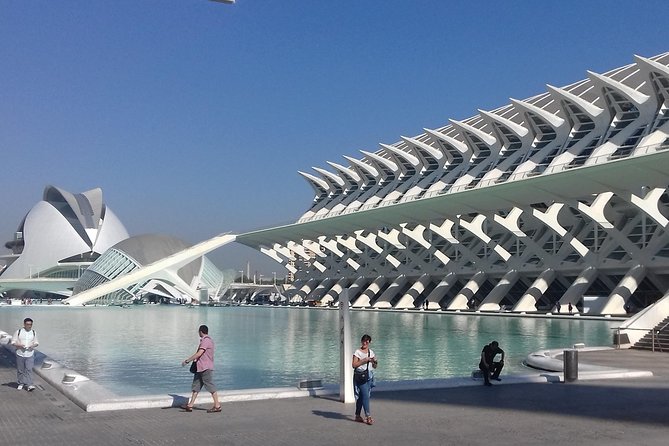
- Modern science-meets-design architecture across multiple landmarks in one walk
- Enrique’s guiding style: clear explanations, good timing, and lots of room for questions
- Viewpoints and “best angle” stops, so you don’t just see the buildings—you understand their layout
- L’Umbracle Terraza breaks up the walk with a better chance to pause and breathe
- Finish at La Marina for a change from futuristic shapes to coastal energy
- Mobile ticket + private group means your experience stays focused on your party
Why Valencia’s City of Arts and Sciences feels futuristic
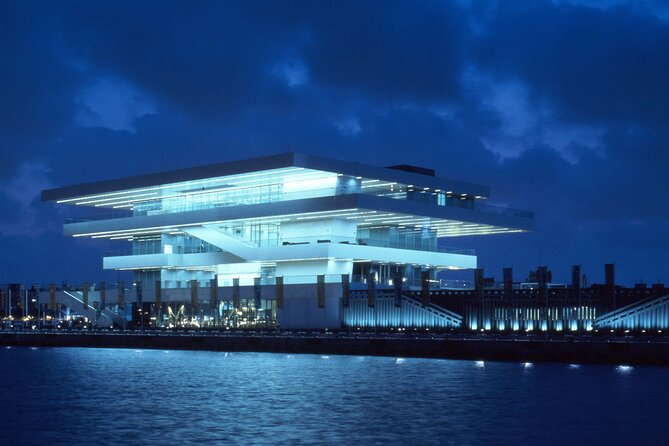
The City of Arts and Sciences is one of those places where the buildings don’t just sit there. They act—as landmarks, as meeting points, and as giant pieces of engineering you can see from a bunch of different angles.
A major reason it works is that you’re not getting a single-theme museum. You’re seeing a whole modern “city within a city,” tied together by water-adjacent design, dramatic geometry, and wide public spaces. And when you have a guide, the place stops feeling random. You start noticing how the shapes relate to each other and how the complex is meant to guide your movement from one signature structure to the next.
You can also read our reviews of more city tours in Valencia



Meet at the Tesla charger: timing and the private-group feel
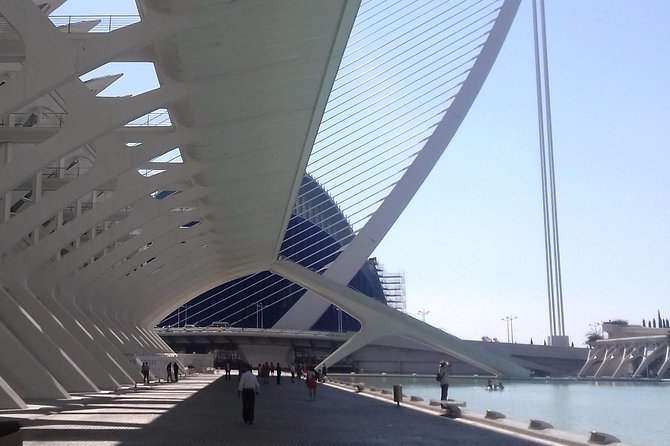
This tour starts at 10:30am at the Tesla Destination Charger, Carrer del Pintor Maella, 37, Camins al Grau, 46023 Valencia. It ends back at the same meeting point. It’s about 2 hours 40 minutes total, which is long enough to see the major sites without turning into a full-day mission.
One of the underrated wins here is that it’s a private tour/activity. That matters because you don’t have to compete with a crowd. You can ask follow-up questions, linger at a viewpoint, and adjust your pace as needed. I also like that it’s set up for service animals and that most travelers can participate, which tells you it’s not designed for some extreme fitness level.
Do note the walk is real. Some people mention it can feel longer than two hours for slow walkers. The good news: the guide can help you manage it—finding shaded spots and using elevators when possible.
Stop 1: Museo Príncipe Felipe and the science-first mood
You start at Museo de las Ciencias Príncipe Felipe, and right away the area sets a tone: this is science as architecture. Even if you’re not planning to spend hours inside exhibits, the building works as a visual lesson. It’s the kind of landmark that shows you the complex’s thinking from the outside—clean lines, big forms, and a clear sense of planning.
Why this stop matters: it gives you a baseline for what you’ll see next. Once you understand the style and the mindset behind this first structure, the rest of the complex clicks faster. Instead of standing in front of impressive shapes, you’re starting to recognize how the designers are using scale, angles, and materials to create a public “learning zone” in the middle of Valencia.
Stop 2: Hemisfèric and the building-as-instrument idea
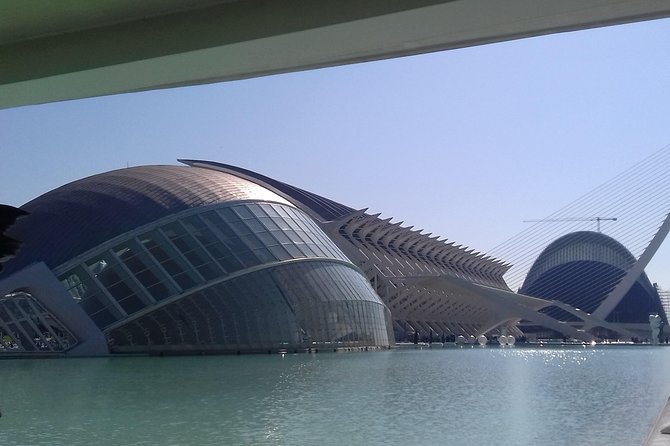
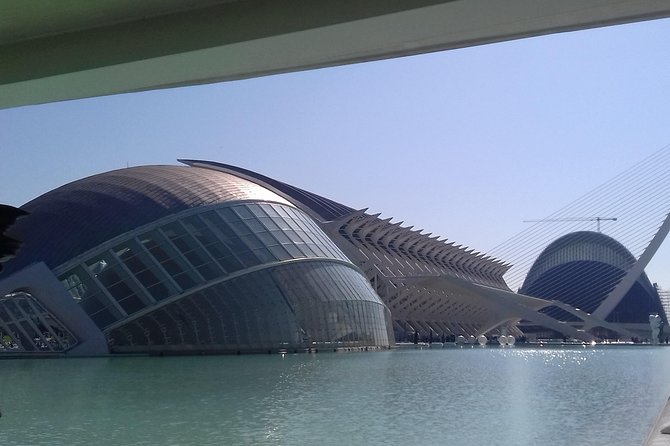
From Hemisfèric, the big theme becomes perspective. This is one of the signature silhouettes in the City of Arts and Sciences, and it’s the kind of structure you’ll appreciate more when someone points out where to stand for the best views.
Here’s the practical benefit for your visit: Hemisfèric is a natural turning point. You’re moving through the complex, and the guide helps you position yourself so you see how the site opens up and how the next landmark lines up. It makes photos better, sure. But it also makes the walk feel less like aimless wandering.
Stop 3: Palacio de las Artes Reina Sofía (the opera house you can read from outside)
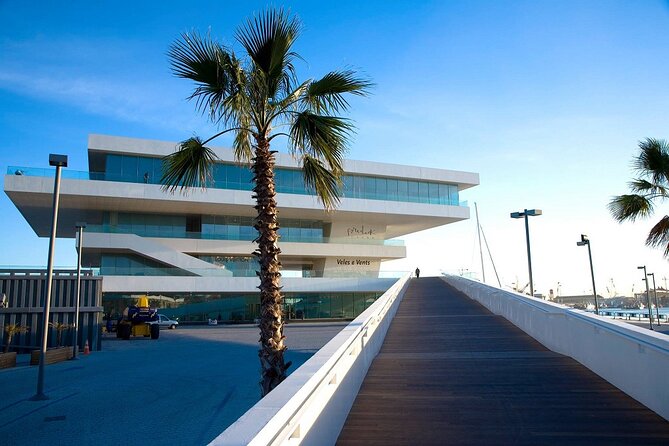
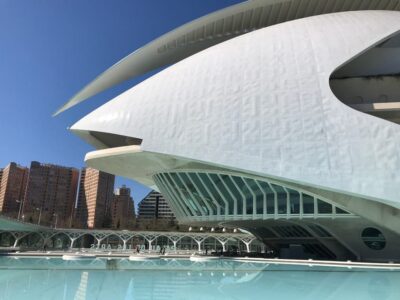
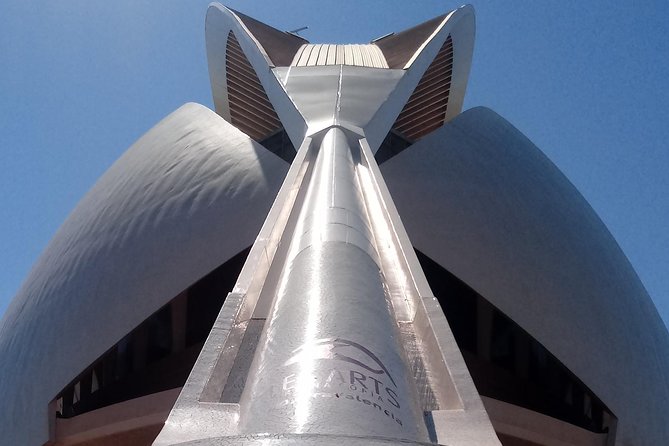
Palacio de las Artes Reina Sofía is the drama part of the complex. It’s the opera house in both name and mood, and even if you’re not going inside, the exterior still tells a story about the building’s purpose.
One balancing point to keep in mind: this tour is mainly about architecture and the design/engineering story, not about extended interior time inside venues like the opera or aquarium areas. You’ll learn about what you’re seeing, and you’ll get the key sightlines. If you want a deep interior visit, you might need to plan that separately with separate tickets or schedules.
Still, don’t skip this stop. The building’s scale and shape make it a perfect place to understand why the complex feels so intentional. It’s not just “futuristic.” It’s structured.





Stop 4: L’Umbracle Terraza for shade, pauses, and “slow down” time
L’Umbracle Terraza is where the walk gets more comfortable. It’s a terrace space—good for taking a breather without giving up on the views. If you’re traveling with older family members or you’re simply planning your energy, this kind of stop is a big deal.
I like terrace moments because they help you reset your brain. You’ve been absorbing shapes and explanations for a while; now you can sit, compare what you’ve learned across different buildings, and get your photos without rushing. One review also highlighted elevators when possible and shade breaks—this is the kind of area where that comfort can matter.
Stop 5: La Marina de Valencia and the America’s Cup Port finish
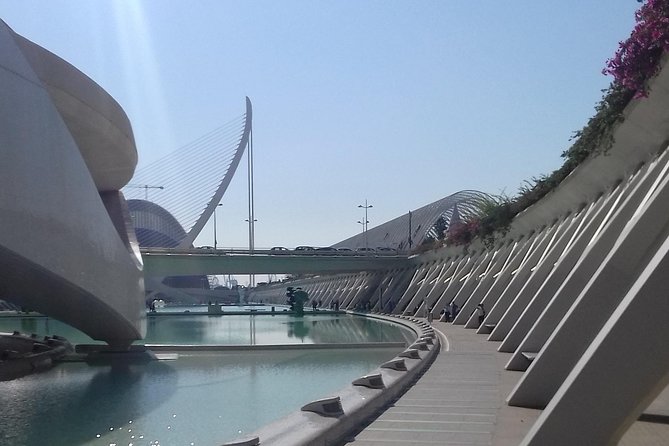
The tour’s final phase moves you toward La Marina de Valencia, the area tied to the America’s Cup Port. This is a smart shift. You go from science-and-arts architecture to a more open, coastal atmosphere, where your eyes can rest on water and boats instead of scanning futuristic structures.
If you only visit the City of Arts and Sciences on your own, it’s easy to treat it like a standalone attraction. Ending at La Marina helps you connect it to the wider waterfront story of Valencia—modern, active, and very much part of daily life around the port.
And it’s also a good “wrap-up” zone. By the time you reach the waterfront, you’ve learned what to look for. You can then enjoy the area as a place, not just a set of buildings.
Enrique’s guiding touch: how architecture lessons become usable
What separates a good architecture walk from a photo walk is interpretation. In this case, Enrique’s approach comes up again and again: clear explanations, friendly communication, and a sense that the tour should feel organized rather than rushed.
Several reviews also point to two helpful details:
- Equal attention to each stop, so you don’t feel like one landmark gets all the time.
- A pace that can adapt—finding seating in shade, using elevators when possible, and staying considerate if someone needs a slower rhythm or extra care (like mobility aids).
There’s also an interesting design angle you’ll hear: the complex is strongly associated with architect Santiago Calatrava, and you may learn that he engineered and designed most of the buildings, with one major piece coming from another source. That kind of detail gives you a framework, so when you see a different-looking structure, you understand why.
Pace, walking comfort, and who this tour fits best
This is best for you if you like modern architecture, want context beyond the obvious, and have a limited window in Valencia. It’s also a great option if you’re the kind of person who notices details—angles, materials, layout—because the guide turns those details into a story you can remember.
It may be less ideal if:
- You strongly dislike walking and can’t manage a longer stroll.
- You need a very strict, single-language experience with no back-and-forth.
That second point is worth flagging. Even though the tour is offered in English, some groups can include multiple languages, and that can cause delays at each stop while the guide adjusts. The upside is that communication is still handled, and the tone stays friendly. The downside is time can feel uneven if you’re expecting a fully uniform language flow.
If you’re bringing family, this tour can work well because it’s private and can be adjusted. Just go in knowing it’s multiple outdoor sites and you’ll want to wear comfortable shoes.
Practical value: why a guided walk beats going solo here
Yes, you can visit the City of Arts and Sciences on your own. But here’s what you gain with a guide:
- You learn the structure of the place. The complex is big and visually complex. Without context, you can end up treating it like a list of landmarks.
- You get better sightlines. The guide helps you stand in the spots that reveal shape, scale, and layout.
- You save mental effort. Instead of trying to figure out what you’re looking at, you get explanations that match what you’re seeing right now.
That’s why this feels like good value even without getting into ticket pricing. You’re buying clarity, not just movement.
Also, the tour is weather-dependent. If conditions are poor, you’ll be offered a different date or a full refund. That matters because a wet, slippery walk through outdoor areas is not the kind of experience you want to force.
Should you book this City of Arts and Sciences tour?
Book it if you want a smart, not-too-long walk through Valencia’s most famous modern architecture, and you’d enjoy having someone like Enrique connect the dots between the buildings and the city around them. It’s especially good if you care about design, engineering, and “why it looks the way it does.”
Skip it or look for an alternative if you hate walking, need long indoor time inside specific venues, or want zero language switching. This tour is best treated as an architectural walk with a waterfront finish—not a deep-dive interior museum day.
If your time in Valencia is tight and you want the highlights done in a way that makes sense, this is a strong choice.
FAQ
How long is the City of Arts and Sciences experience?
It runs for approximately 2 hours 40 minutes.
What languages is the tour offered in?
The tour is offered in English.
Is this a private tour?
Yes. It’s a private tour/activity, and only your group participates.
Do I get a mobile ticket?
Yes, it includes a mobile ticket.
Where do we meet for the tour?
The meeting point is the Tesla Destination Charger, Carrer del Pintor Maella, 37, Camins al Grau, 46023 València, Valencia, Spain.
What time does the tour start?
The start time is 10:30am.
Is the tour generally walkable for most people?
Most travelers can participate, but it involves a long walk, so comfortable shoes help.
What happens if it’s bad weather?
This experience requires good weather. If it’s canceled due to poor weather, you’ll be offered a different date or a full refund.
Are service animals allowed?
Yes, service animals are allowed.