REVIEW · TOUR REVIEWS
VALENCIA ESSENZIALE + SITI PATRIMONIO UMANITÀ (ITALIANO)
Book on GetYourGuide →Operated by Turiart · Bookable on GetYourGuide
Two hours can feel like a shortcut through centuries. This guided walk through Valencia’s historic center zeroes in on three UNESCO World Heritage sights, with tickets included and local stories built for real understanding.
I especially love that you get inside major monuments instead of just looking at them from the street, and Lonja de la Seda is a highlight for the way trade, money, and architecture all show up in one place. I also like the optional tapa + drink at the end, because it turns the tour into an easy first meal without you having to plan. One consideration: it’s only a 2-hour route, so you’ll cover a lot of ground fast, and you may want extra time afterward if you want slow photo stops.
In This Review
- Key Things You’ll Notice on This Valencia Walk
- A Two-Hour UNESCO Walk for $21: Is It Good Value?
- Meet at Estación del Norte: Easy Start, Central End
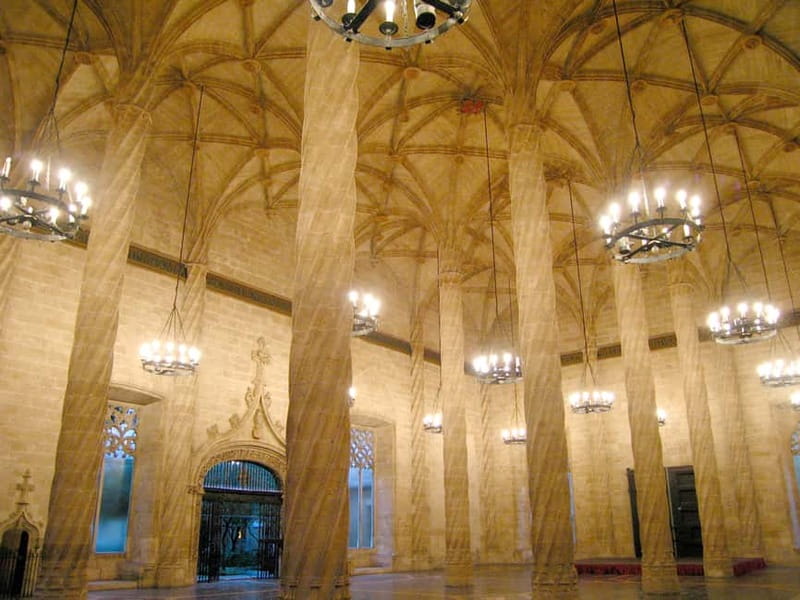
- Lonja de la Seda Entry: Where Trade Made Valencia
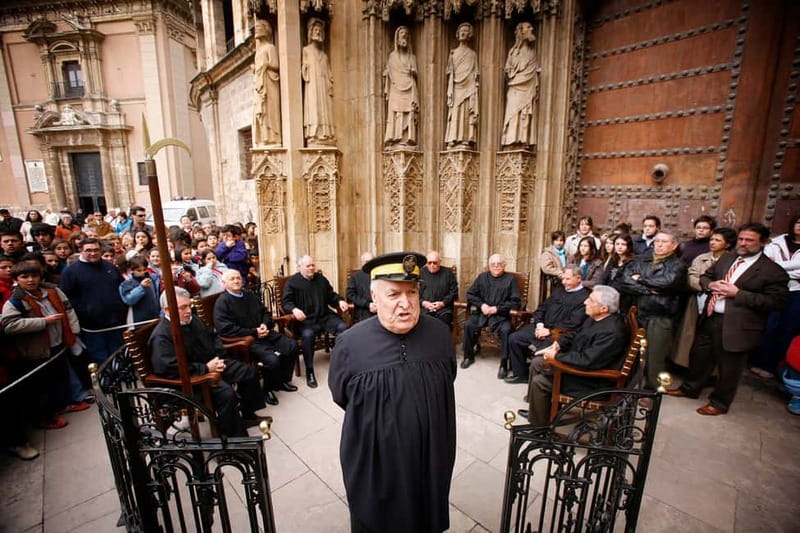
- The Tribunal de las Aguas: Water Rules With Real Teeth
- City Hall Stop: Valencia’s Civic Heart in Walking Distance
- Fallas Through the Lens of UNESCO
- The Optional Tapa + Drink Finale: Make It an Easy First Night Meal
- What to Bring and How to Prepare for a Smooth Walk
- Who This Tour Best Suits
- Should You Book This Tour?
- FAQ
- FAQ
- How long is the Valencia Essenziale tour?
- How much does the tour cost?
- Where do I meet the tour?
- What UNESCO-related sites does this tour focus on?
- Are entrance tickets included?
- Is the tapas and drink included?
- What language is the live guide?
- Is the tour wheelchair accessible?
- What should I bring?
- What if I need to change plans?
Key Things You’ll Notice on This Valencia Walk
- Three UNESCO properties in one outing: Lonja de la Seda, the Water Tribunal, and Fallas context.
- Monuments with entry tickets so you’re not stuck outside in the middle of the best parts.
- A local guide who tells the story in plain language (you’ll feel the difference right away at Lonja).
- Tribunal de las Aguas stays relevant because the tradition is still connected to how water is managed.
- Fallas explained as more than a spectacle: you’ll get why UNESCO takes it seriously.
- A guided stop for tapas near the end if you pick the optional tasting.
A Two-Hour UNESCO Walk for $21: Is It Good Value?

At $21 per person for a roughly 2-hour walking tour, you’re paying for two things: guided interpretation and entry tickets to key sites. If you’ve ever walked through a UNESCO site with no context, you know how much you miss. Here, you get the stories tied directly to what you’re seeing.
The value is strongest if you want a short, focused “Valencia essentials” loop. You’ll hit the major UNESCO anchors—Lonja de la Seda, the Tribunal de las Aguas, and the UNESCO-linked Fallas tradition—plus a stop connected to Valencia’s civic center (City Hall). That’s a lot to compress into two hours, which is exactly why this kind of tour works.
The one drawback is time pressure. This isn’t a sit-down museum day. It’s a walking-and-learning format, so expect quick transitions and keep your shoes ready for uneven old-street surfaces.
You can also read our reviews of more tours and experiences in Valencia.

Meet at Estación del Norte: Easy Start, Central End
I like that the meeting point is clear and practical: Estación del Norte (North Station), West Tower on the ground floor, at Carrer de Xàtiva, 24. If you’re using metro, the station is listed as Xàtiva.
From a logistics standpoint, this matters. Valencia’s historic center is best explored on foot, but you don’t want to start your morning with a complicated transfer. With the tour starting at a major rail hub, you can arrive from the city or the airport area and get going.
The tour also ends back at the same meeting point. That gives you a clean landing zone for lunch, a metro ride, or a post-tour wander. No hunting for a random final stop.
Lonja de la Seda Entry: Where Trade Made Valencia
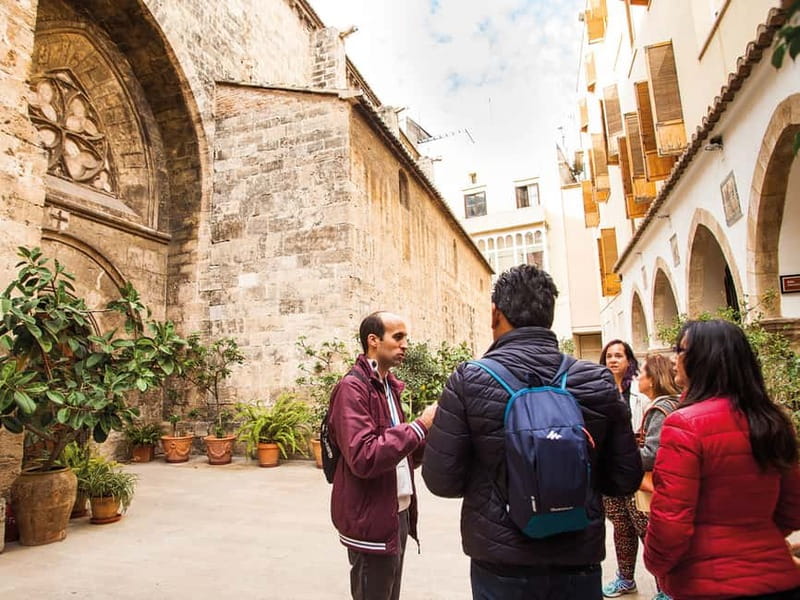
You’ll enter Lonja de la Seda (Silk Exchange), and that’s a big deal. When a historic building is UNESCO-listed, it’s usually because the architecture and the function tell a story at the same time. In Valencia, the Silk Exchange is exactly that: commerce made visible in stone.
What to watch for is how the space feels designed for business life—meeting, negotiation, movement. The guide’s job here isn’t just to point out features. It’s to connect the building to why it became a symbol: Valencia was built by people who traded, organized, and built institutions around economic power.
Even if you’re not a “history architecture” person, the Silk Exchange can still click because you can experience it like a working environment, not just a monument. Expect the explanation to bring the place alive, and don’t be surprised if you start noticing details you’d usually skip—columns, the rhythm of spaces, the overall sense of order.
A practical tip: bring your attention, not just your phone. This is one of those sites where the guide’s pacing helps you look in the right places without feeling rushed.
The Tribunal de las Aguas: Water Rules With Real Teeth
One of the most interesting parts of Valencia is that some traditions aren’t frozen in the past. The tour focuses on the Water Tribunal (Tribunal de las Aguas), one of Valencia’s UNESCO World Heritage properties.
Here’s what makes this stop more than a photo break: it connects a cultural tradition to daily life. Water management sounds boring until you realize it’s essential, and rules matter when livelihoods depend on them. The guide’s storytelling helps you understand why the tribunal is still meaningful—because the system is built around accountability.
What I love about tours like this is that they don’t treat UNESCO as trivia. They treat it like a living framework—who decides, how decisions happen, and why the tradition survived. In the Water Tribunal’s case, you’re seeing how community regulation became a cultural institution.
If you want a memorable contrast, pair Lonja with Tribunal in your mind: one is civic-economic architecture tied to trade; the other is a living governance tradition tied to water. Valencia holds both kinds of cultural power.
City Hall Stop: Valencia’s Civic Heart in Walking Distance
The itinerary includes entrance to Valencia’s City Hall, which is a smart move for anyone who thinks Valencia is only about markets and monuments. City Hall represents how power and administration played out in the city’s physical space—decision-making made visible.
This stop works best if you let the guide guide your attention. Instead of treating it like another building to pass through, listen for the connections between civic institutions and the UNESCO sites. City Hall fits naturally after the Silk Exchange and tribunal themes because it reinforces the idea that Valencia’s culture is partly about organization: who runs things, how rules are set, and how public life takes shape.
In practical terms, City Hall also gives you a pause from pure outdoor walking. That matters when you’ve got a short 2-hour window and want the experience to feel complete.


Fallas Through the Lens of UNESCO
Fallas can’t be explained in one sentence, and this tour doesn’t try to. It frames the festival as an annual tradition featuring ephemeral art, fire, and fireworks, and it connects that to why it’s on UNESCO.
The key thing you get is context. A lot of people experience Fallas as an event on social media. This tour helps you understand it as cultural expression that takes effort, community involvement, and creativity—then disappears on purpose. That’s a totally different lens than treating it as just big entertainment.
Also, Fallas is a reminder that UNESCO doesn’t only honor buildings. It honors ways of living, celebrating, and making meaning. When you connect that to the other two UNESCO properties on your route, you start to see Valencia as a city that values institutions and shared traditions.
Even if you visit outside peak Fallas dates, the guide’s explanation helps the festival feel like part of the city’s calendar and identity, not a random moment of spectacle.
The Optional Tapa + Drink Finale: Make It an Easy First Night Meal
At the end of the tour, you can choose an optional tapa + drink tasting. This is a good option because the tour ends near the city center, and your guide will show you a special place to eat.
I like this setup because it solves a common problem: you’re hungry, it’s late enough that you want something close, and you still want quality. Instead of hunting for reviews or asking strangers in broken Spanish, you get guided direction right when your timing is best.
Keep your expectations realistic: this is not an all-out dinner. It’s a finishing touch—an easy way to stretch your experience into a relaxed meal without losing momentum.
If you skip it, you’ll still be placed near the central area where you can continue wandering on your own. Either way, you leave with a sense of how the historic core is laid out.
What to Bring and How to Prepare for a Smooth Walk
Before you go, a few small things make the tour easier:
- You’ll want a face mask or protective covering (it’s listed as required to bring).
- Wear comfortable shoes. The route is a walking tour through historic streets, and old-city pavement can be uneven.
- If you want a different language group, note that any change is subject to availability and costs an extra 5€ per person.
If you’re using mobility aids, the activity is listed as wheelchair accessible. That’s helpful for planning your day, especially in older European centers where accessibility can vary block to block.
Also, consider how much time you want after the tour. Because the route is compact, you may want to go back to one stop you liked most—Lonja or Tribunal are the usual favorites—just to take it slower.
Who This Tour Best Suits

This tour fits travelers who want focus. If you like walking through a historic center but hate endless aimless sightseeing, you’ll probably enjoy the structure. You’ll also like it if you want UNESCO context without spending an entire day planning tickets, transport, and entry times.
It’s a strong choice for:
- First-time visitors who want Valencia essentials in a short window
- People who want a guided explanation at UNESCO sites, not just a stamp on a passport
- Anyone interested in how traditions become recognized and preserved
It’s less ideal if you want long stops, quiet museum pacing, or deep independent exploration of each site. In two hours, you’ll see the highlights and understand the big picture, then you’ll likely want extra time to repeat your favorite moment.
And yes, the guide quality matters. The shared experiences highlight guides who keep the energy up and tell stories in a way that makes monuments feel personal. If you end up with a guide like the Sara mentioned in one of the shared accounts, you’ll likely walk away feeling like you understand Valencia more than you did at the start.
Should You Book This Tour?
If your goal is a short, high-impact UNESCO experience in Valencia, I’d book it. The mix of entry tickets and interpretive guidance gives you value beyond what you’d get from self-guided wandering—especially since the tour is designed around the city’s three UNESCO World Heritage properties.
Book it now if:
- you only have a couple hours in the historic center
- you want a guided introduction to Lonja de la Seda, Tribunal de las Aguas, and Fallas context
- you like the idea of an optional tapas + drink finale
Skip it if you want a slow, in-depth museum-style visit or you’re already planning to visit each UNESCO site on your own with extra time for lingering. But for most people doing Valencia efficiently, this is a smart, well-scoped way to see the city’s most important UNESCO story beats.
FAQ
FAQ
How long is the Valencia Essenziale tour?
The duration is listed as 2 hours.
How much does the tour cost?
The price is $21 per person.
Where do I meet the tour?
You meet at the Tourism Hub at Estación del Norte (North Station), Valencia, West Tower on the ground floor, Carrer de Xàtiva, 24. The metro station is Xàtiva. The tour ends back at the same meeting point.
What UNESCO-related sites does this tour focus on?
The tour focuses on three World Heritage properties: the Lonja de la Seda (Silk Exchange), the Water Tribunal (Tribunal de las Aguas), and Fallas.
Are entrance tickets included?
Entrance fees are included for the Silk Exchange (Lonja de la Seda) and Valencia’s city hall. The overview also describes entry tickets for the Tribunal de las Aguas.
Is the tapas and drink included?
Tapas + drink is optional. You can choose the option at the end of the tour.
What language is the live guide?
The tour language is Italian.
Is the tour wheelchair accessible?
Yes, the activity is listed as wheelchair accessible.
What should I bring?
You should bring a face mask or protective covering.
What if I need to change plans?
You can cancel up to 24 hours in advance for a full refund, and you can reserve now and pay later. If you want to change the group by language, it’s subject to availability and costs an extra 5€ per person.