REVIEW · SEGWAY TOURS
Valencia Arts and Sciences Segway Tour
Book on Viator →Operated by Segway Trip Valencia · Bookable on Viator
Segways make Valencia’s architecture feel close and fast. This 1.5-hour electric tour blends an art historian’s storytelling with high-impact sights designed by Santiago Calatrava, moving you from the historic center into the futuristic City of Arts and Sciences with far less effort than walking. I especially like the art-forward guide approach (you’re not just cruising for photos) and the way the route strings together major landmarks in one smooth loop.
The one real thing to consider is weather. This experience is operated only in good conditions, so if it’s canceled for poor weather you’ll need to take an alternate date or get a full refund.
In This Review
- Key things to know before you go
- Why the City of Arts and Sciences deserves Segway time
- Meeting at Segway Trip Valencia and learning the basics
- Torres dels Serrans and the shift from old Valencia to new
- Jardi del Turia: using the gardens as your “reset”
- Palacio de la Música and modernism in the city streets
- The bridge and promenade sequence that keeps you moving
- L’Hemisfèric and the concave-screen idea
- L’Àgora, L’Umbracle, and the “designed outdoors” feeling
- Science and the environment: Príncipe Felipe and what you’re really seeing
- L’Oceanogràfic: the aquarium stop and the big-city scale
- Palau de les Arts Reina Sofía and the opera-house presence
- Private attention and beginner-friendly confidence
- Price and timing: is $60.07 worth it?
- Getting the most out of the route (without overthinking it)
- Who should book this Segway tour?
- Should you book the Valencia Arts and Sciences Segway tour?
- FAQ
- How long is the Valencia Arts and Sciences Segway tour?
- Is the tour private?
- What language is the tour offered in?
- Where do you meet and where does the tour end?
- What’s included for safety?
- What happens if the weather is poor?
Key things to know before you go
- Art historian-led interpretation: You’ll get context for what you’re seeing, not just names.
- Electric Segway + helmet + orientation: You’ll get coached before you start rolling.
- A tight circuit in 1 hour 30 minutes: Perfect when you want the big hits quickly.
- Private group format: Only your group rides together with your guide.
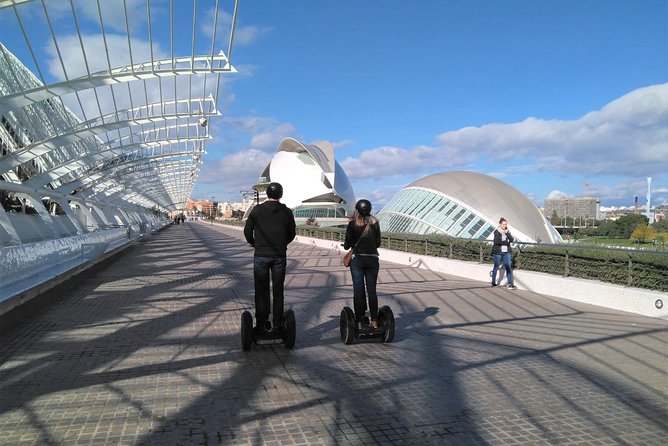
- City of Arts and Sciences highlights in sequence: Bridges, theaters, science buildings, and the aquarium area.
Why the City of Arts and Sciences deserves Segway time
Valencia’s City of Arts and Sciences is the kind of place that looks better the faster you move through it. The structures aren’t just tall. They’re sculptural. Curves, bridges, dramatic angles, and massive indoor complexes all sit in one designed zone. If you’re on foot, you can end up hopping between far-apart buildings with long stretches of plain “getting there” time.
On a Segway, you trade some walking for better pacing. You still get stops and viewpoints, but you’re also able to connect the dots between the historic side of town and this modern pocket built as a cultural and entertainment hub. The tour is also designed for people who like architecture and want to understand why these buildings look the way they do.
A big plus here is that your guide is an art historian, which changes the tone. You’re guided through scenes and concepts, like how the complex fits into Valencia, and what to notice when you’re looking at the buildings themselves. Even if you’re not a committed architecture nerd, you’ll likely find that the explanations help you see details you would otherwise miss.
You can also read our reviews of more tours and experiences in Valencia.



Meeting at Segway Trip Valencia and learning the basics
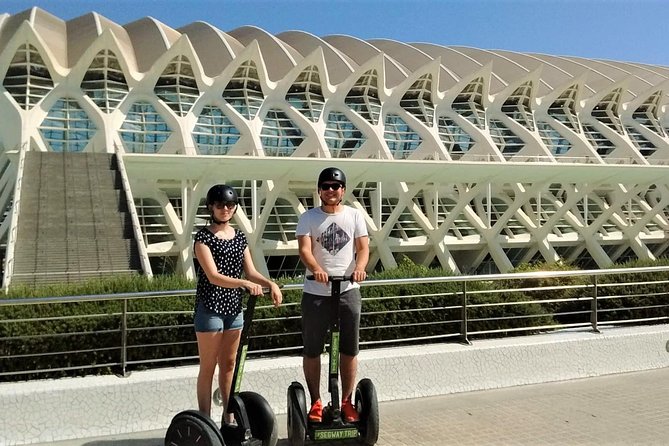
You start behind Serranos Towers at Segway Trip Valencia, on Carrer de Nàquera, 6 in Ciutat Vella. It’s a practical setup because the meeting point is in the historic center area, and the tour is listed as being near public transportation. That matters if you want to stitch this into the rest of your day without adding taxi time.
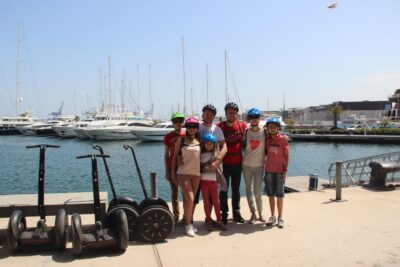
Before you head out, you’ll be given a helmet and a short orientation on handling the electric scooter. This is where the experience can make or break: if you’re comfortable standing and you can follow simple movement instructions, you’re in good shape. If you’re nervous, you’ll still likely be okay, because the guide’s job is to keep things controlled and safe.
The guides mentioned in recent comments include Sebastian, Julia, David, Eric, and Chelo. The common thread is that they focus on both information and getting riders comfortable—so beginners in the group aren’t left to figure it out on their own.
Torres dels Serrans and the shift from old Valencia to new
Your first stop is Torres dels Serrans, part of Valencia’s historical center. This is a smart warm-up. You’re starting your ride in a zone that still carries the city’s older identity, so the contrast with the City of Arts and Sciences doesn’t feel random.
Torres dels Serrans is also a reminder that Valencia isn’t only the futuristic complex. It’s a layered city. Seeing the towers early gives you a reference point while the guide connects the history you’re in to the modern cultural plan you’re about to enter.
You’ll have about 10 minutes here, and admission is listed as free. In practice, that’s enough time to look around, take photos, and let the history discussion land before you roll onward.
Jardi del Turia: using the gardens as your “reset”
Next you’ll spend time in Jardi del Turia (the Turia Gardens), with about 15 minutes set aside. This is one of those Valencia areas that helps the city feel livable. It’s also an easy mental reset after the older-stone feel of the towers.
I like this stop because it’s not just a break. It’s part of how the route makes sense. The Turia Gardens act like a corridor that runs through the city, letting you move between major zones without losing the thread of the day.
Admission is listed as free, so you’re not stuck managing another ticket window. It’s also a good moment to catch your breath and get your bearings—especially if this is your first time riding.
Palacio de la Música and modernism in the city streets
The tour includes Palacio de la Música de Valencia, described as an emblematic work of modernism. This is a key stop if you care about how Valencia expresses style through architecture.
Modernism here isn’t just decoration. It’s about form—how buildings reflect the mood of their era. When a guide points out what to notice, you’ll usually spot patterns, structure, and details that photographs won’t fully communicate.
You’ll get roughly 10 minutes at this location with admission listed as free. The real value is that you’re not only seeing the external look. Your guide uses it as a moment to connect culture and design, building toward the big architectural statement of the City of Arts and Sciences.


The bridge and promenade sequence that keeps you moving
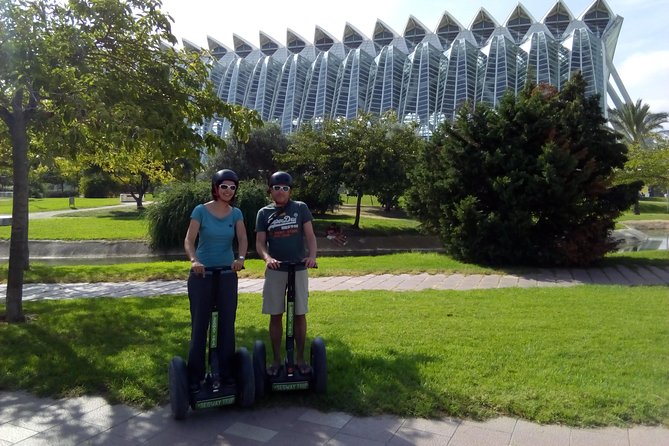
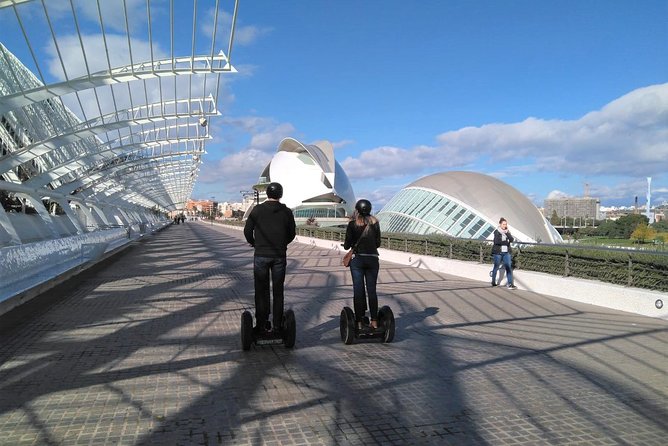
As your route continues, the tour threads through the kind of visual connections that make the complex special: bridges, promenade areas, and crafted spaces that help you move from one “chapter” of the City of Arts and Sciences to the next.
You’ll see landmarks including Trinidad Bridge and Exposición Bridge, plus landscaped promenade and exhibition areas with views across the whole complex. The benefit of this sequence is timing. You’re not waiting until the end to see the panorama. You’re getting those wide views while you’re still fresh, so the whole site starts to click as a designed system rather than separate buildings.
If you love photos, this is where you’ll feel the payoff of being on wheels. You can reach viewpoints without losing an hour to walking between them.
L’Hemisfèric and the concave-screen idea
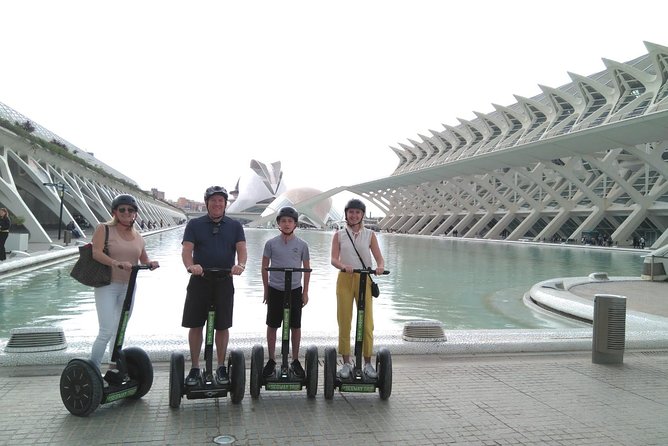
The itinerary includes L’Hemisfèric, a building with a famous “living room” concept and a concave screen. In plain terms, it’s the type of place where the architecture supports the experience inside: the building shape helps frame what you would see or do there.
Even if you’re not going inside for a show or film during this specific ride, having the explanation matters. A guide can help you notice how the architecture is meant to shape attention—how the building seems to pull you toward the center experience.
This stop helps balance the tour: you get both the exterior drama of Calatrava’s lines and the sense that these are cultural venues, not just impressive backdrops.
L’Àgora, L’Umbracle, and the “designed outdoors” feeling
Two other stops in the complex are L’Àgora and L’Hemisfèric L’Umbracle (the route description includes L’Umbracle as well).
What I find valuable about these stops is that they underline how the City of Arts and Sciences isn’t only indoor museums and theaters. It’s also planned outdoor space—places that are meant for circulation, views, and public life.
When a guide points out the purpose of each zone, you stop thinking of it as “a big building cluster” and start noticing how the site manages movement. That makes your experience more satisfying, especially if you’re short on time and want to leave with a real understanding.
Science and the environment: Príncipe Felipe and what you’re really seeing
You’ll also visit the science side of the complex, including the Science Museum Príncipe Felipe (listed as a museum dedicated to science and the environment in the tour info). Even if you only have exterior time during the Segway circuit, this is still a crucial part of why the City of Arts and Sciences is more than a skyline.
The title signals the theme: science isn’t tucked away. It’s treated as a public culture focus. If you’ve ever wished a museum day came with a “why this place exists” context, this kind of guided stop gives you that framing.
L’Oceanogràfic: the aquarium stop and the big-city scale
Your route includes L’Oceanogràfic, described as the largest aquarium in Europe. That’s a strong hook for any animal or ocean fan, but it’s also a useful marker for scale.
Even with limited time, the stop helps you visualize the size of the complex and how it spans multiple interests: science, animals, environment, and entertainment. If the City of Arts and Sciences looks like a giant playground on the map, this is the reality check moment where you see that the site really is built to host major attractions.
Palau de les Arts Reina Sofía and the opera-house presence
Another standout listed is the opera house Palau de les Arts Reina Sofía. This is one of the buildings that often wins people over because it looks theatrical before you even hear a note.
As you move through the complex, the opera venue adds cultural texture. You’re not only seeing museum-like spaces. You’re seeing a city built to support performances, exhibitions, and public events.
This stop also helps architecture lovers because opera houses often require specific design choices—acoustics, audience sightlines, and symbolic form. A good guide will help you notice those cues from outside.
Private attention and beginner-friendly confidence
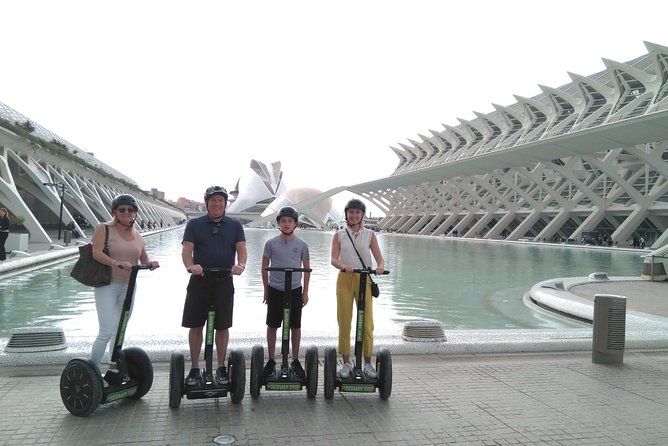
This is a private tour, meaning only your group participates. That matters more than people expect, especially for Segways.
In the tour feedback, the guides are praised for keeping things friendly and controlled, including for riders who were nervous. One review specifically notes that a guide took extra care with a lady in the group who felt anxious. Another rider mentioned that the Segways were easy to manage, and even shared that they were nearly 78 and still tried it anyway.
I take that as a signal: the guides understand that confidence varies. You’ll get the most out of the experience if you’re honest at the start. If you need a slower pace during the first minutes, say so. The route includes multiple stops and enough time that your guide can manage the group.
Price and timing: is $60.07 worth it?
At $60.07 per person for about 1 hour 30 minutes, the value depends on what you’d otherwise do with your time. If you’re only planning to walk around the City of Arts and Sciences on your own, you’ll likely spend a lot of energy moving between distant points and you may miss the “why this design” explanations.
This tour tries to solve both problems:
- Speed: You cover major landmarks efficiently.
- Meaning: You get an art historian guide guiding your attention.
- Convenience: You don’t need to assemble a multi-stop plan.
Also, the tour is typically booked about 21 days in advance on average. That doesn’t mean you can’t book last minute, but it does suggest the time slots can fill. If you have a specific day and a limited window in Valencia, lock in your departure time when you can.
Departure times are available at different points in the day, so choose based on your energy level. Morning and early afternoons often feel smoother for visibility and walking connections around the city center before the main complex.
Getting the most out of the route (without overthinking it)
You’ll return to the starting point at the end, so the ride feels like a complete loop rather than a one-way slog. The route includes:
- Serranos Towers
- Turia Gardens
- Palacio de la Música
- Multiple buildings and bridges inside the City of Arts and Sciences area, including L’Oceanogràfic and the major cultural venues
A good way to enjoy a ride like this is to decide in advance what you want most: architecture context, big-photo angles, or a quick tour of the whole complex. Then pay attention when the guide points out a specific detail. It’s the difference between seeing buildings and actually understanding them.
If you’re the type who likes to ask questions, a private format makes that easier. You’ll also likely have more time to stop for small moments—like lingering on a viewpoint—without worrying about holding up strangers.
Who should book this Segway tour?
This tour fits best if you want:
- Architecture-focused storytelling in a short amount of time
- A fun way to cover the City of Arts and Sciences without exhausting walking
- A private experience with a guide who can slow down if needed
It may not be for you if you’re uncomfortable with standing for short stretches or if you strongly prefer to wander without following an order. Also keep an eye on the weather requirement; this type of outdoor ride makes conditions matter.
If you love modernist design and you want to understand Valencia’s cultural planning—science, performance, public space—this is an efficient hit of it all.
Should you book the Valencia Arts and Sciences Segway tour?
If your schedule is tight and you want the most important parts of Valencia’s big modern complex—plus a bit of the historic context—this is a smart use of time. The art historian guide is what turns it from a simple sightseeing ride into something you’ll remember for the explanations, especially around Calatrava’s work and how the complex is structured as a cultural zone.
I’d book it if:
- You like architecture and want guided context
- You want a fun, efficient way to cover a lot in 90 minutes
- You value a private tour and want personal attention during the ride
I’d think twice if:
- You can’t handle outdoor weather changes, since the tour depends on good conditions
- You dislike guided routes and would rather explore slowly on your own
If you meet those basics, you’ll likely leave with a much clearer picture of how Valencia’s history and future sit side by side.
FAQ
How long is the Valencia Arts and Sciences Segway tour?
The tour runs for about 1 hour 30 minutes.
Is the tour private?
Yes. This is a private tour/activity, so only your group participates.
What language is the tour offered in?
It is offered in English.
Where do you meet and where does the tour end?
You meet at Segway Trip Valencia on Carrer de Nàquera, 6 in Ciutat Vella. The activity ends back at the meeting point.
What’s included for safety?
You’ll receive all accessories needed for your security, including a helmet, and you’ll get an orientation before you ride.
What happens if the weather is poor?
This experience requires good weather. If it’s canceled due to poor weather, you’ll be offered a different date or a full refund.