REVIEW · OLD TOWN & CATHEDRAL TOURS
Valencia: Medieval Old Town Segway Tour
Book on GetYourGuide →Operated by Segway Trip Valencia · Bookable on GetYourGuide
Segway + Old Town is a smart combo. In just one hour, you roll past Valencia’s medieval landmarks and learning stops that you’d otherwise skip while shuffling on foot. What makes it work is the mix: you get a quick training session, then a guided loop that covers serious sights without feeling rushed.
Two things I like a lot: the route hits big-name medieval markers like Serranos Towers and the Silk Exchange (Lonja), but you also pass through lesser-noticed streets that give the neighborhood texture. And the guides have a reputation for patient coaching and real personality, with names like Sebastian, Clemencia, Julia, and Eugene showing up in reviews.
One possible drawback: it’s not a slow, museum-style history tour. One reviewer called it more of a sightseeing ride than strictly medieval-focused, so if you crave deep academic detail, you may want a more history-heavy option on top of this.
In This Review
- Key highlights worth your attention
- Why an hour on a Segway makes medieval Valencia click
- The training: how you get comfortable fast
- Serranos Towers to El Carmen Square: the Old Town’s opening act
- Portal de la Valldigna and the Arabic city walls: the story changes here
- San Nicolás and the Silk Exchange (Lonja): the Gothic spotlight
- Central Market, Plaza Redonda, and Santa Catalina: local daily life on wheels
- Valencia Cathedral, the Archbishop’s Palace, L’Almoina, and Virgin Square
- Price and value: is $41 for an hour money well spent?
- Who should book this Segway Old Town tour
- Should you book this tour?
- FAQ
- How long is the Valencia Medieval Old Town Segway tour?
- How much does it cost?
- Where is the meeting point?
- What’s included in the price?
- Are there entrance fees included for monuments or museums?
- What sites will the tour pass during the ride?
- What languages is the guide available in?
- Is it suitable for children or minors?
- What are the height and weight requirements?
Key highlights worth your attention
- Small group of up to 7 keeps the tour feeling personal, not like a conveyor belt
- First-time Segway friendly: guides often build confidence right away before the sightseeing loop
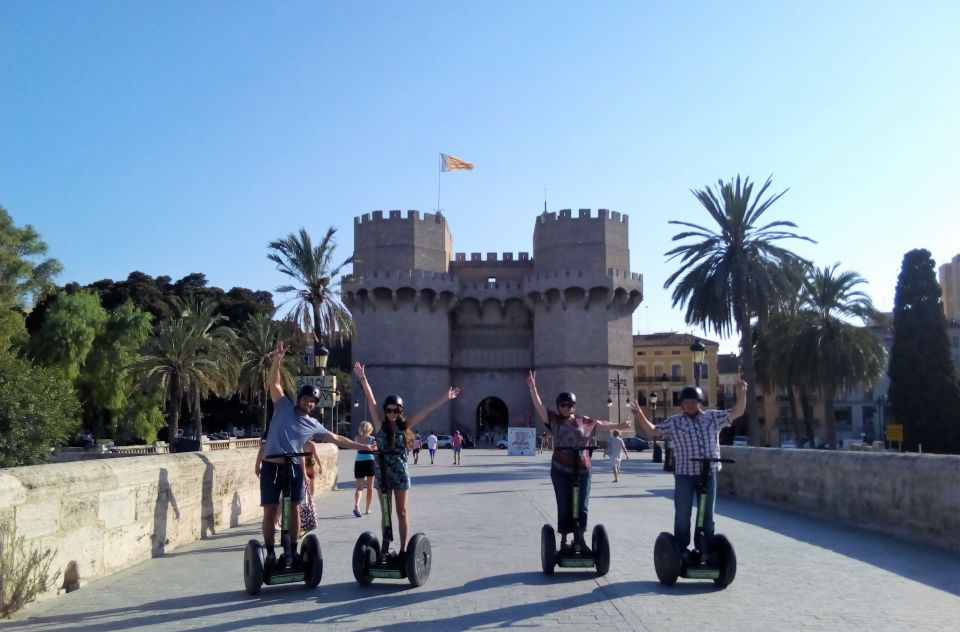
- Medieval-heavy stops like Serranos Towers and the Silk Exchange (Lonja) give you real anchor points
- Arabic city walls segment plus Portal de la Valldigna adds the layered history people forget
- Lots of “see it from the street” variety: cathedral area, markets, plazas, and churches in one loop
Why an hour on a Segway makes medieval Valencia click
Valencia’s Old Town is a lot to process. Streets twist, landmarks pop up around corners, and the city’s story changes across centuries. Walking works, but you can end up doing the “big photo, big hurry” routine.
This 1-hour Segway format solves that. You cover more ground without the fatigue that makes you miss details. The guide’s job isn’t just pointing out places. They connect what you’re seeing to legends and history—so the ride turns into a moving “how did this city become this” lesson.
And because you’re not stuck in a single plaza waiting for everyone to catch up, you get that rare combo: you see the highlights and you still feel like you’re moving through real neighborhoods. It’s also a good way to get your bearings. If you’re spending only a couple days in Valencia, this can act like a launchpad for the rest of your plan.
You can also read our reviews of more tours and experiences in Valencia.



The training: how you get comfortable fast
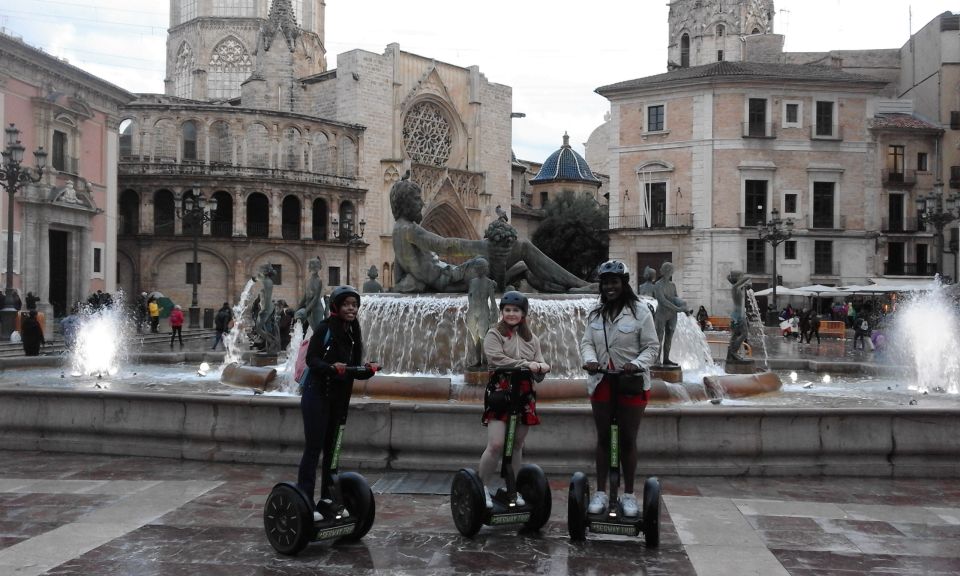
Before you start sightseeing, you’ll do a short practice session so you can handle the Segway confidently. The good news: reviews repeatedly mention that the coaching is practical and patient, especially for first-timers.
If you’re nervous about balancing, plan to lean into the training time. Many people pick up the basics quickly, but the guide’s tone matters. In reviews, guides like Sebastian, Julia, Lucas, David, and Eric are described as helpful teachers who make you feel safe before the group rolls into the busier lanes.
You’ll also be wearing a helmet (required), and if the weather turns, you get a raincoat. That matters because you’re learning a ride device and navigating a historic street layout at the same time. A calm start helps everything else feel smoother.
Serranos Towers to El Carmen Square: the Old Town’s opening act
Your route begins where the medieval vibe is loudest. Serranos Towers are your first major anchor point. Even if you don’t go inside (entrance fees are not included), seeing these towers from the street gives you an instant sense of Valencia’s defensive past. They look like built stone history, and your guide will help you read the city through that lens.
From there, you continue through El Carmen Square. This is where the atmosphere starts doing the work. You’re moving along streets that have served locals for ages, and you get glimpses of buildings and corners that feel lived-in rather than staged for tourists.
What I find valuable here is pacing. You’re not spending 30 minutes trying to find the “right angle” for photos. The guide keeps you flowing, and you get multiple views with less walking fatigue. The result is that you actually remember what you saw, instead of only what you took a picture of.
A small watch-out: Old Town streets can feel tight. If you’re someone who struggles with close spaces, just remember that the group is capped (up to 7), and you move under guidance rather than negotiating on your own.
Portal de la Valldigna and the Arabic city walls: the story changes here
One of the most interesting segments of the tour is the history you don’t always expect. You pass Portal de la Valldigna and the Arabic city walls.
This matters because Valencia isn’t only medieval “Christian Europe.” It’s also a crossroads city with layers from earlier periods. The walls and gateways help you picture how the city defended itself and how the urban layout formed. Your guide will bring in legends and context, which can make the stones feel like a plot rather than a wall.
When I think about a one-hour tour, I want at least one stop that feels like it adds a new chapter. This section does. It’s not just another landmark checklist. It gives you a shift in perspective, and it’s the kind of detail that can make the rest of your Valencia wandering make more sense.
San Nicolás and the Silk Exchange (Lonja): the Gothic spotlight
Next up is San Nicolás Church. Churches like this often feel like a “wow” moment because you catch them at street level—close enough to notice design details without the pressure of a long museum visit. Even if you just view from outside, it’s an important piece of the Old Town’s artistic identity.
Then you reach the Silk Exchange Market (Lonja). This is one of Valencia’s big cultural signposts, and it’s the sort of site that can anchor your entire trip in one stop. The exterior and the surrounding area tell you you’re in a city that traded, built wealth, and left a mark through architecture.
Since monument entrance fees aren’t included, you’re not doing a full inside visit here. But for many visitors, that’s actually a smart trade: in one hour, you still get the “I’ve been there” feeling and the historical framing, while saving time for meals or a longer visit later.
If you love architecture, this segment is the one where you’ll likely slow down mentally. The guide’s explanations can help you connect the church and civic-commercial site to the way Valencia grew.



Central Market, Plaza Redonda, and Santa Catalina: local daily life on wheels
After the medieval anchors, your route continues through areas that feel more like how people live and move through the city day to day.
You pass the Central Market, one of Valencia’s most recognizable food and shopping hubs. You might not stop for an extended browse, but seeing it from your moving route still helps you map where daily life sits in relation to the monuments.
Then there’s Plaza Redonda, a round square that stands out visually and gives the tour variety. A quick pass like this works well on a Segway because you get a momentary “pause” view without turning the tour into a long stop-and-go schedule.
You also go by Santa Catalina Church, which keeps the religious architecture thread going while offering a different streetscape character than the bigger cathedral-zone areas. It’s the kind of place that can be easy to miss if you’re only following the most famous postcard routes.
The practical upside: by now, you’re comfortable on the Segway, so you can focus less on balance and more on the guide’s stories and the way neighborhoods connect.
Valencia Cathedral, the Archbishop’s Palace, L’Almoina, and Virgin Square
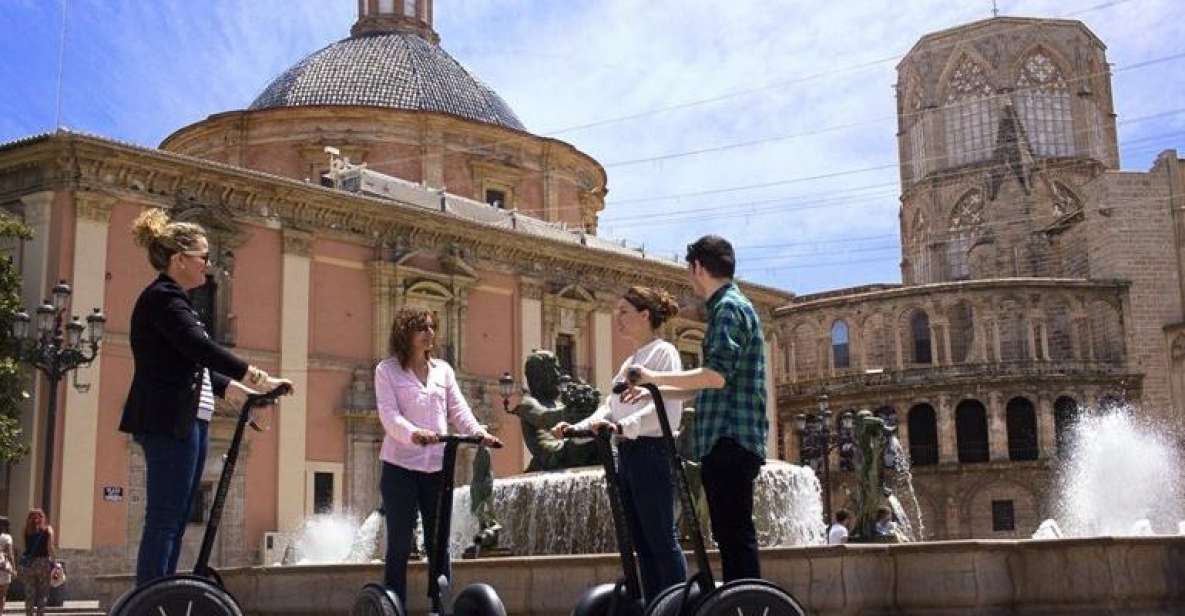
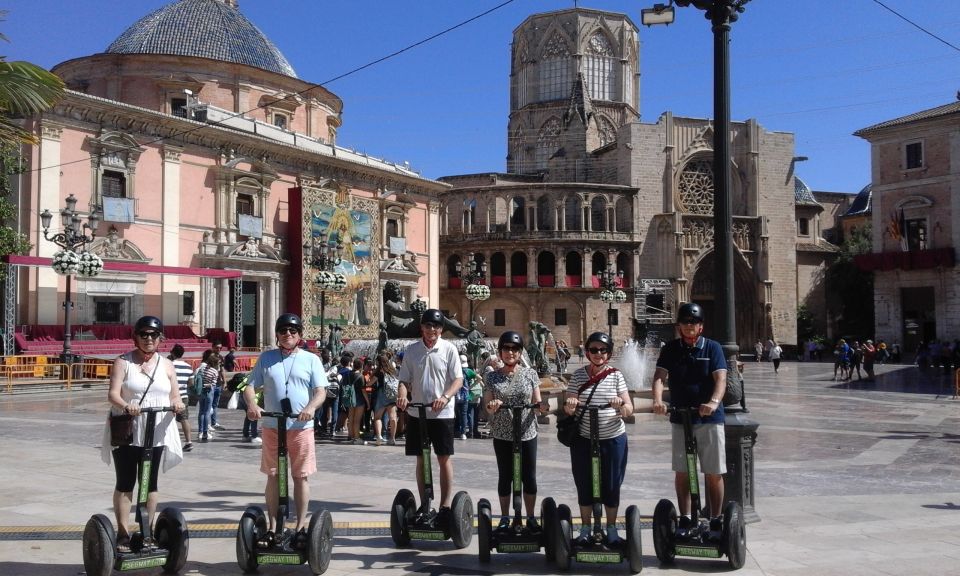
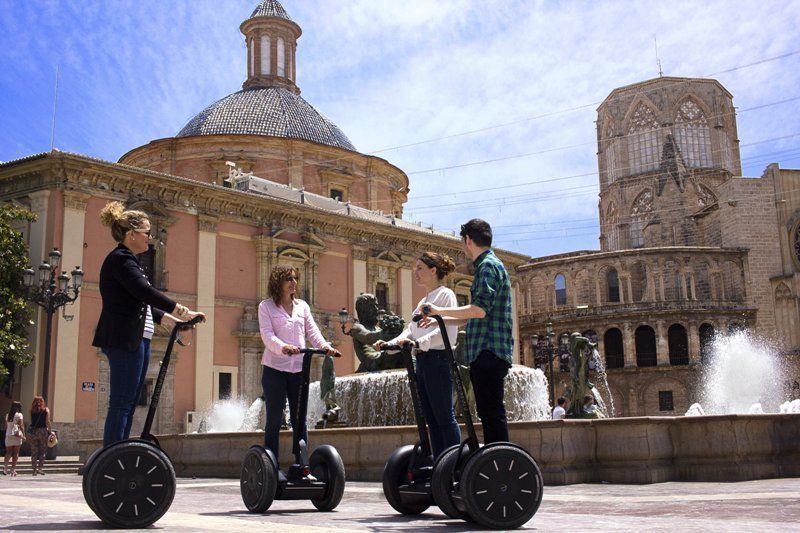
Near the end, the route pushes you into a cluster of major civic-religious sites: Valencia Cathedral and the Palace of the Archbishop, plus L’Almoina Square and Virgin Square.
Even without entering every building, this zone gives you an “official power” picture. Cathedrals and archbishop palaces aren’t just pretty. They signal how religion, governance, and wealth organized city life. Your guide’s legends and historical notes help you see those places as a system, not isolated monuments.
L’Almoina Square is especially interesting because it has a “layers everywhere” feeling. In many historic cities, archaeology and old foundations hide in plain sight. Your guide’s framing can help you notice that vibe even during a quick pass.
And Virgin Square rounds out the loop with a final visual and emotional beat. It’s a good way to end because you’re not leaving with only towers and markets in your head. You’re also carrying the sense of where civic and spiritual identity show up in public space.
Price and value: is $41 for an hour money well spent?
At $41 per person for one hour, this tour sits in the “activity value” category rather than the “must-do no matter what” category. So the question is: what do you get for that hour?
You get:
- A Segway with mandatory helmet
- A professional guide speaking Spanish and English
- A route built around multiple major sites, not just a single highlight
- A quick start-up training that many first-timers complete comfortably
You do not get entrance fees. That’s important for budgeting. If Lonja, the Cathedral, or other sites are top priorities, plan separate time for those. But as a way to cover distance, get history in context, and decide what you want to return to, the price makes sense.
Reviews also suggest this activity is strong value because guides often personalize the tour tone. Some mentions include advice on where to go and what to eat after the tour, and one tip specifically pointed people toward the Roman ruins excavations museum area as a smart follow-up once the Segway stops were done.
One more value angle: your group stays small (up to 7). That’s not just a comfort perk. It affects how quickly you can learn the Segway and how responsive the guide can be if someone needs a little extra time.
Who should book this Segway Old Town tour
This tour fits best if you want:
- An efficient orientation to the Old Town
- A fun way to see more than you’d see on foot
- A guide who adds stories, not just directions
- A Segway experience that doesn’t leave first-timers behind
It also shows up as a solid family option in reviews. People mention success with teenagers, adults in their 60s and 70s, and mixed-age groups. That points to the training being practical rather than intimidating.
You should think twice if:
- You want a strict, in-depth medieval lecture with lots of museum time
- You’re not comfortable with the idea of riding a device in narrow streets
- You need mobility-friendly access. This tour isn’t suitable for people with mobility impairments.
And a key practical detail: participants must be at least 18 years old (minors can’t ride unaccompanied), and there are height/weight rules for safety. Also, you’ll need to be over 35kg or at least 1.4m tall.
If you meet those basics, the format is a strong way to get a lot of Old Town “big moments” in a short visit.
Should you book this tour?
Yes, if you want a fast, guided, high-coverage way to see medieval Valencia without the leg burn. The combination of Segway fun, small-group energy, and a route that hits major landmarks like Serranos Towers and Lonja makes it a great early-trip activity.
Book it especially if you plan to spend time in the city center anyway. You’ll finish with a mental map that helps you choose what to revisit on foot—churches, squares, and market areas that you can later explore at your own pace.
Skip it if you want a purely history-class experience or if you’d rather spend the full day on sites with long interior visits. This tour is about movement, stories, and seeing the layout clearly.
If you’re deciding between “walking highlights” and “a guided ride,” I’d lean Segway here. It’s one of those smart-value activities where the payoff is not only what you see, but how easy it makes the rest of your Valencia day to plan.
FAQ
How long is the Valencia Medieval Old Town Segway tour?
The tour lasts 1 hour.
How much does it cost?
It costs $41 per person.
Where is the meeting point?
The meeting point is Carrer de Náquera, 6, 46003 Valencia.
What’s included in the price?
Included are the Segway, an obligatory helmet, a professional guide, and a raincoat if needed.
Are there entrance fees included for monuments or museums?
No. Monument or museum entrance fees are not included.
What sites will the tour pass during the ride?
The route includes stops and pass-bys such as Serranos Towers, El Carmen Square, Portal de la Valldigna and the Arabic city walls, San Nicolás Church, Silk Exchange Market (Lonja), Central Market, Plaza Redonda, Santa Catalina Church, Valencia Cathedral, the Palace of the Archbishop, L’Almoina Square, and Virgin Square.
What languages is the guide available in?
The tour offers a live guide in Spanish and English. Other languages may be available with prior booking.
Is it suitable for children or minors?
No. Unaccompanied minors are not allowed, and the activity is not suitable for children under 18 years old.
What are the height and weight requirements?
For safety reasons, participants must weigh more than 35kg or be at least 1.4m tall.