REVIEW · HISTORICAL TOURS
Essential Valencia and World Heritage Sites (English)
Book on Viator →Operated by Turiart · Bookable on Viator
Valencia has a habit of surprising you. This 2-hour historic-center walk zeroes in on the city’s UNESCO sites, with the Lonja de la Seda as the headline and plenty of context around how Valencia’s past still shapes daily life.
I especially like the professional guides and their clear storytelling. I’ve seen guides (like Sara, Gabor, and María Eugenia) bring the places to life with tight explanations, good English, and even photos on a tablet to make details easier to spot.
One thing to consider: this is a walking tour with no included transport, and it depends on good weather, so you’ll want comfy shoes and a flexible mindset.
In This Review
- Key points before you book
- The real draw: Valencia’s UNESCO story, not just sightseeing
- Start at Estació del Nord, end near Micalet
- Lonja de la Seda: the Silk Exchange’s “how did they build this?” factor
- The Water Court: a tradition that turns rules into routine
- Fallas: why temporary art becomes a world-recognized legacy
- How the historic-center stops work as a “guided city brain”
- The guides: organized, personable, and easy to follow
- Pacing and what to bring for a comfortable 2-hour walk
- Price and value: $121.91 for a UNESCO hit-and-explain route
- Who should book this tour (and who might skip it)
- Should you book this Valencia UNESCO walking tour?
- FAQ
- How long is the Essential Valencia and World Heritage Sites tour?
- Where does the tour start and end?
- What’s included in the price?
- Is transportation included?
- Is this a group tour or private?
- Do I need to print anything or can I use my phone?
- Can service animals join the tour?
- Are children allowed?
- What happens if weather is bad?
- Is there a cancellation window?
Key points before you book
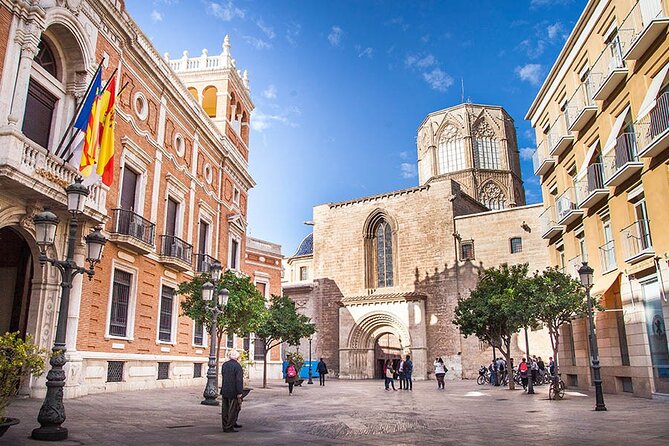
- UNESCO focus in just 2 hours: Silk Exchange, Water Court, and Fallas, plus major historic-center stops.
- High guide quality: Multiple guides get praised for being organized, engaging, and easy to understand in English.
- Great for orientation: Ideal when you want to understand the city fast and know what’s worth a second look.
- Tablet photos and history context: A practical way to “see” what you might miss from street level.
- Private format: Only your group participates, which usually makes questions easier.
The real draw: Valencia’s UNESCO story, not just sightseeing
If you like monuments, you’ll enjoy the buildings. If you like understanding why people care about them, you’ll enjoy this more. Valencia’s UNESCO connections aren’t museum-style and distant. They connect to real traditions: trade, community governance, and festival culture.
The tour centers on three UNESCO entries tied to Valencia’s identity: the Silk Exchange (Lonja de la Seda), the Water Court (Tribunal de las Aguas), and the Fallas festival. That trio is unusual. Few places can point to commerce, civic tradition, and an explosive art tradition and say, all three matter globally.
And the walk style matters. In a short time you get a guided thread through the historic center, so you’re not wandering with a map that only tells you where things are, not why they mattered.
You can also read our reviews of more historical tours in Valencia


Start at Estació del Nord, end near Micalet
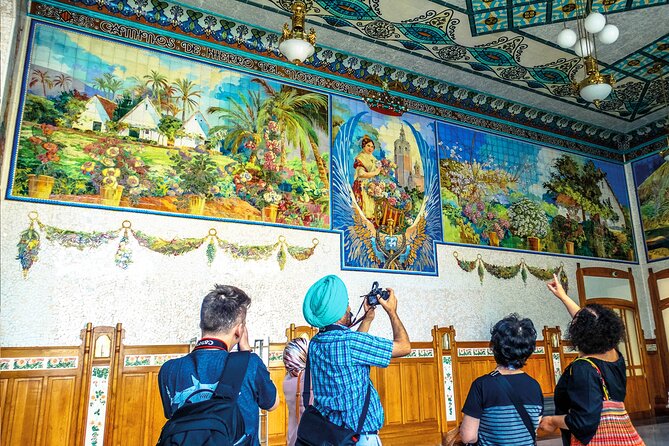
This tour starts at Bailén – Estació del Nord (Estació del Nord area), and it ends at Carrer del Micalet 7 in Ciutat Vella. That’s a helpful route for first-timers because it pulls you into the old city core without making you start deep inside the thick of it.
No transportation is included, so plan to arrive on foot, by taxi/ride-share, or transit. You’ll also want to check your footwear and weather plan. The experience requires good weather, and if weather cancels it, you’ll be offered a different date or a full refund.
Lonja de la Seda: the Silk Exchange’s “how did they build this?” factor
The Lonja de la Seda is the kind of place that makes your brain go quiet for a second, then start asking questions. It’s not just pretty architecture. It’s a monument to Valencia’s commercial power and the way trade shaped the city’s worldview.
On this tour, you’re not treated like you’re just taking photos. The guide connects the building’s details to the bigger story—who used it, why it mattered, and what it says about Valencia’s confidence in its own place in history. If you’re the type who likes seeing the “invisible” meaning behind facades, this stop is where the tour earns its keep.
One practical plus: some guides use tablet photos to help you understand architectural details that are hard to notice while you’re standing in the street flow. That’s a small thing, but it makes the visit feel less like a checklist and more like actual learning.
The Water Court: a tradition that turns rules into routine
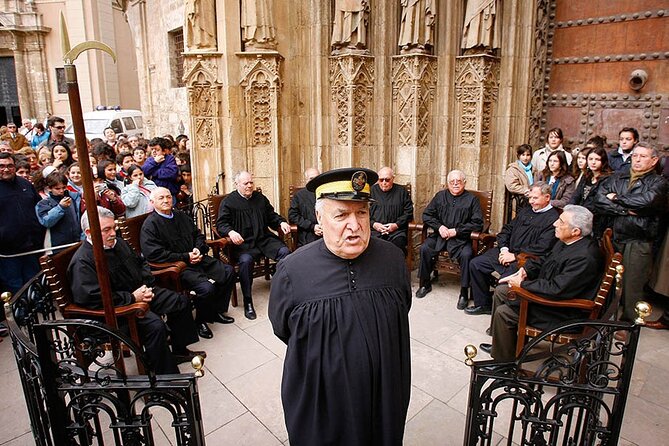
The Tribunal de las Aguas (Water Court) is easy to underestimate if you only think of it as another historic site. But the whole point is that it’s tradition with a calendar and a purpose.
What I like about how this tour handles it is the framing: you’re not just hearing dates. You’re learning what the Water Court represents—community governance tied to something practical and essential: water. Valencia’s history isn’t only about grand buildings. It’s also about how people managed resources together, long before modern systems took over.
This stop is a great reminder that Valencia’s UNESCO value isn’t just visual. It’s social. It’s how a city handled fairness, responsibility, and daily life in a way that still matters.
Fallas: why temporary art becomes a world-recognized legacy

Fallas is the third UNESCO pillar, and it’s the one that confuses people at first: how can something temporary earn a serious place on UNESCO’s list?
The answer you’ll get on this tour is the connection between celebration, community, and expression. Fallas are ephemeral art, fire, and fireworks—but behind the spectacle is an organized cultural tradition. The guide helps you see that it’s not random chaos. It’s a structured festival with meaning, symbolism, and local identity.
Even if you’re not there during the exact festival dates, you’ll leave with a better sense of how Fallas fit into Valencia’s rhythm. That makes it easier to understand what you’ll see if you’re in town during preparations—like the sense of anticipation and the buzz around the city’s big seasonal moment.





How the historic-center stops work as a “guided city brain”
The World Heritage sites are the headline, but the in-between streets are part of the value. You pass through key squares and landmarks that help you place what you’re seeing.
Along the way, you can expect stops and orientation around places like:
- the Town Hall area
- the Central Market
- Place de la Reina and Place de la Vierge
- the route connections near the Silk Exchange / Bourse de la Soie area
This is the part that helps you later. After the tour, you won’t just remember where the big monuments are. You’ll understand how the city “stacks” its story: civic spaces, commercial spaces, and cultural spaces in one walkable core.
A lot of people book this early for a reason. The tour gives you an overview that makes the next hours (and days) easier to plan. You’ll know what to revisit for photos, what to linger at, and what to skip if you’re short on time.
The guides: organized, personable, and easy to follow
The most consistently praised part of this experience is the human one. Guides are repeatedly singled out for preparation and strong communication in English. People mention that guides make sure everyone can see and hear them, and that the explanations are clear and structured even when the route is moving.
You’ll also hear praise for guides who add extra layers—anecdotes, helpful historical context, and photos. Sara and Gabor are names that show up often in strong feedback, and María Eugenia is also praised for passion and personality on day-of-specific visits.
What that means for you: you’ll get a tour that feels like a guided story, not a rapid sprint from stop to stop with vague facts. Questions are also part of the experience, and guides tend to be open to them.
Pacing and what to bring for a comfortable 2-hour walk
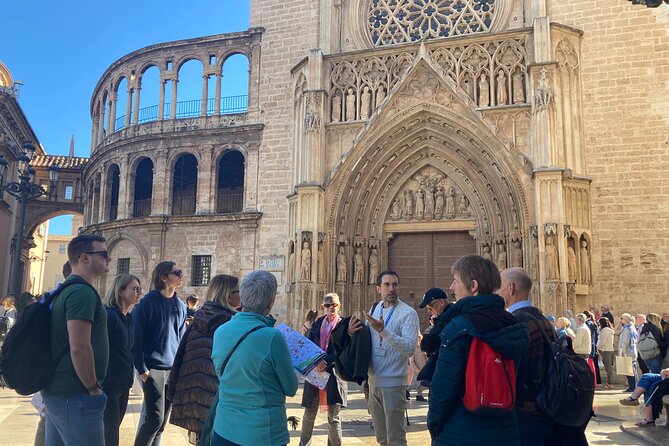
This is listed as about 2 hours, which is short enough to feel doable even on a busy itinerary. But it’s still a walk through an old-city core with multiple points of interest.
Here’s what to bring or plan for:
- Comfortable shoes (you’re on your feet the whole time)
- Water if the weather is warm
- A phone ready for your mobile ticket
- A light layer if evenings feel cooler in the historic center
If you’re traveling with kids, note that children must be accompanied by an adult. For most people, participation is described as possible, but because it’s a walking format, choose the version of Valencia that fits your stamina.
Price and value: $121.91 for a UNESCO hit-and-explain route
The price is $121.91 per person, and the tour runs about 2 hours. That’s not “cheap lunch money,” so you’ll want to judge it on what you’re actually buying: time saved, guided context, and access to the right places without getting lost.
This is good value if:
- you only have a day or two and want the major UNESCO sites without planning on the fly
- you want the “why” behind monuments, not just the “where”
- you like asking questions and getting straight answers on-site
It may feel less worth it if you already know Valencia deeply, or if you’re the type who prefers unguided wandering with a long list of stops. But for most people arriving in Valencia for the first time, this kind of compact UNESCO-focused route tends to pay off quickly.
Also keep in mind: group discounts are listed, which can help if you’re booking with others.
Who should book this tour (and who might skip it)
Book this tour if you want:
- a fast route through UNESCO Valencia with an explanation you can actually use
- help orienting yourself in the historic center
- a professional guide who’s good at making architectural and civic details feel understandable
You might skip it if:
- your schedule is so tight that you can only do one major thing
- you prefer fully independent travel and already have a plan for Silk Exchange, Water Court, and Fallas context
This tour is also a solid choice if you’re excited by culture that’s still lived today, not only preserved in stone.
Should you book this Valencia UNESCO walking tour?
I think this is a smart booking for first-time visitors and for anyone who wants to leave Valencia with a clean mental map: trade, water, and festival culture, all connected.
If you want maximum value from limited time, this hits the right balance. You get major sights, a professional guide, and context that makes the historic center feel like more than a set of photo spots. And if a guide like Sara, Gabor, or María Eugenia is leading your group, you’re likely to get that rare combo of clear structure and small details that make it memorable.
Go for it if you’re ready to walk, want UNESCO-focused storytelling, and like tours where questions feel welcome.
FAQ
How long is the Essential Valencia and World Heritage Sites tour?
It’s listed as about 2 hours.
Where does the tour start and end?
It starts at Bailén – Estació del Nord (Extramurs, 46007 Valencia) and ends at Carrer del Micalet, 7 (Ciutat Vella, 46001 València).
What’s included in the price?
A professional guide is included.
Is transportation included?
No. Transportation to and from the meeting or ending point is not included.
Is this a group tour or private?
It’s described as a private tour/activity, and only your group participates.
Do I need to print anything or can I use my phone?
A mobile ticket is part of the experience.
Can service animals join the tour?
Service animals are allowed.
Are children allowed?
Children must be accompanied by an adult.
What happens if weather is bad?
The experience requires good weather. If it’s canceled due to poor weather, you’ll be offered a different date or a full refund.
Is there a cancellation window?
Free cancellation is available up to 24 hours in advance for a full refund.