REVIEW · CITY OF ARTS & SCIENCES TICKETS
The City of Arts and Sciences in Valencia
Book on GetYourGuide →Operated by alapontasins.com · Bookable on GetYourGuide
Modern Valencia looks better with context.
This guided outside visit is a fast way to make sense of the City of Arts and Sciences—especially Santiago Calatrava’s design—without turning it into a maze. I especially like how the guide connects what you see to the meaning of each building, and I also like that the tour includes extra photos of the complex plus a small gift.
One thing to keep in mind: the big indoor-ticket venues (like Hemisfèric, the Science Museum, Palau de les Arts, and Oceanogràfic) are not included, so you’re mostly touring corridors, gardens, and the main entrances rather than full shows or exhibits.
It’s paced for a small group (max 10) with a live guide in several languages. If you’re craving structure and easy photo moments, this is a good fit.
In This Review
- Key points to know before you go
- City of Arts and Sciences Outside Tour: what you’re actually getting
- The design story: learning Calatrava’s buildings as you walk
- Stop 1: starting at El Corte Inglés (and why this meeting point works)
- The Hemisfèric corridor (when it’s available)
- Umbraacle garden: Valencia plants in a designed setting
- Sciences Museum Prince Felipe: learning through the main corridor
- Agora building: why this space matters beyond photos
- Oceanogràfic entrance: planning your next step
- Price and value: is $28 worth it?
- The guide factor: what the best reviews tell you
- Timing and pacing: when to plan it in your Valencia day
- Small group size: why max 10 matters here
- Practical notes: tickets, photos, and what to wear
- Accessibility and who should skip (or choose another option)
- Should you book? My honest recommendation
- FAQ
- How long is the tour?
- What does the tour include?
- Which tickets are not included?
- Where do we meet?
- What time does the tour start?
- What languages are offered?
- Is the tour wheelchair accessible?
Key points to know before you go
- A guide turns architecture into an easy story as you walk between major buildings.
- Umbraacle garden plants are explained in a Valencia context, not just photographed.
- You preview the museum vibes via the main corridor and hands-on themed areas you can see from outside.
- Agora is treated as part of the experience, not just a backdrop building.
- You get smart ticket planning since Hemisfèric and Oceanogràfic entrances are shown, but admissions aren’t included.
City of Arts and Sciences Outside Tour: what you’re actually getting
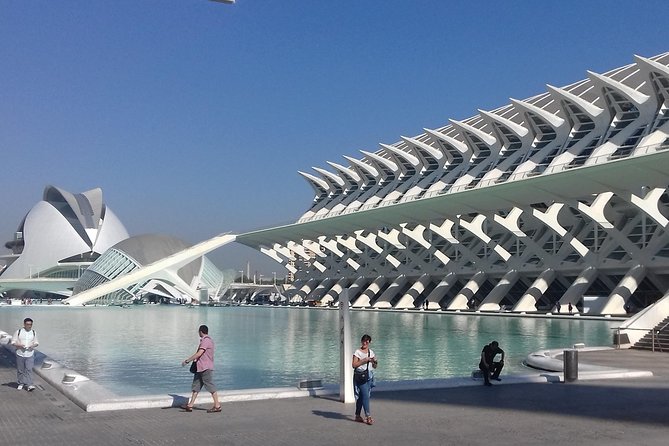
This is an outside-focused guided walk through Valencia’s modern showpiece, the City of Arts and Sciences, designed by Santiago Calatrava. You’ll spend around two hours with a live guide, moving through key spaces like Umbraacle, museum corridors, the Agora building, and the main entrance area for Oceanogràfic.
Think of it as a “get your bearings fast” tour—but with real explanations. You’re not just passing famous buildings. You’re learning what each one is trying to do, how the complex works as a whole, and why this place matters to Valencia beyond being a landmark you’ve seen in photos.
The group stays small (up to 10), and the guide shares historical information plus extra photos of the complex. There’s also a small present included, which is a nice bonus if you like souvenirs that are tied to the exact stop.
You can also read our reviews of more city tours in Valencia



The design story: learning Calatrava’s buildings as you walk
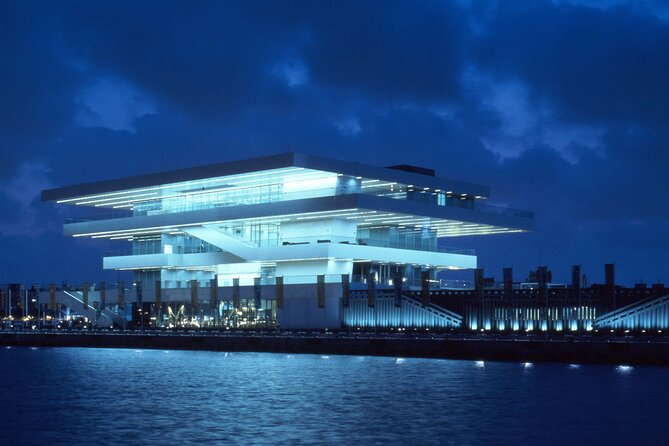
The core value here is interpretation. You’ll walk through the complex and get the “why” behind the “wow.” The guide explains the meaning of each building and also the importance of outside and inside spaces—how daylight, open areas, and the structure itself shape the experience.
That matters because the City of Arts and Sciences can feel intimidating if you arrive cold. Each building looks like a sculpture, but without context you may miss the point: the complex is built to connect science, culture, and public space in one deliberate layout.
The tour also covers the importance of the location and the financial relevance of the complex for the city. If you like your sightseeing with a bit of civic context, that part is useful. It helps you understand why Valencia invested in this kind of architecture-heavy cultural district and how it fits into the city’s identity.
Stop 1: starting at El Corte Inglés (and why this meeting point works)
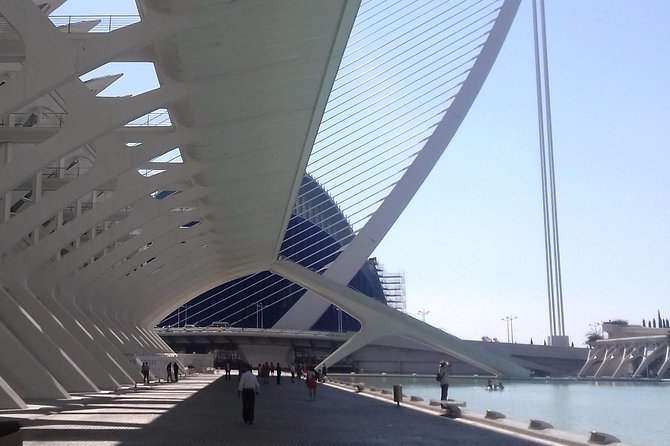
You start at the main entrance of El Corte Inglés on Pintor Maella street, close to Aqua Mall and in front of the taxi stop. It’s a practical pick: it’s easy to find, there’s usually plenty of nearby movement, and you’re starting in the right part of Valencia for the modern complex.
The tour runs every day at 10:00 a.m., with one exception: the day of the Valencia Marathon. If you’re visiting around race weekend, you’ll want to double-check dates so you don’t end up planning for a tour that isn’t operating.
Before you meet up, you’ll get a message confirmation after booking. That’s helpful because meeting points for large attractions can be confusing, and you don’t want to waste time wandering in the morning.
The Hemisfèric corridor (when it’s available)
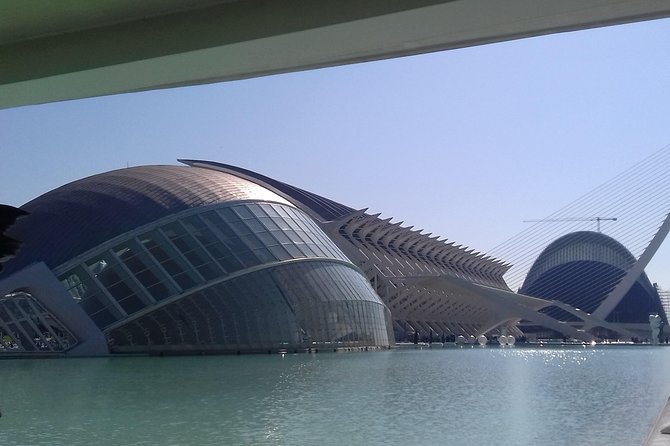
One of the first stops is the main corridor of the cinema Hemisfèric—but access depends on availability. If it is available, you’ll get a preview of the kind of cinematic and scientific programming the building is designed for.
Even when you’re not entering for a full ticketed experience, corridors can tell you a lot. Here, it’s about the atmosphere and the way the complex leads you from one world to another: science, film-style experiences, and cultural spaces all in the same architectural language.
Important: tickets for Hemisfèric are not included. So plan this stop as a guided viewing and orientation, not a guaranteed show.
Umbraacle garden: Valencia plants in a designed setting
Then you move into Umbraacle, the garden area. This is where the tour slows down just enough to make it more than a photo sprint. You’ll see traditional plants and vegetation linked to the Valencia region, and the guide explains what you’re looking at.
This part is a great choice if you’ve visited other European parks that feel generic. Here, the plant focus is tied to the local environment and to how the complex uses outdoor space as part of the attraction. It’s not only about green scenery—it’s part of the story of the City of Arts and Sciences.
If you like easy outdoor breaks during sightseeing, Umbraacle gives you a calmer moment before heading back into the “science-and-culture corridor” flow.





Sciences Museum Prince Felipe: learning through the main corridor
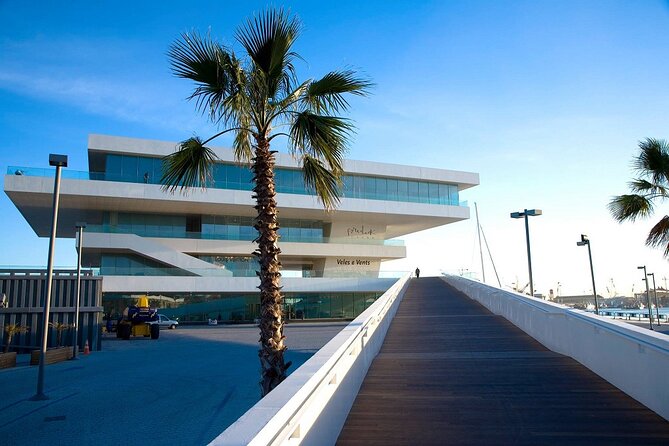
Next comes the main corridor of the Sciences Museum Prince Felipe. The key idea is that you’ll get a solid sense of what the exhibitions feel like once you’re inside—especially the touch, learn, and experiment approach.
You’re not buying the full museum ticket on this tour, so you won’t have complete access to everything. But the corridor preview helps you decide whether you want to add the museum later. If you’re the kind of traveler who likes hands-on exhibits, seeing the general setup from the corridor is a good filter.
Also, this is the spot where the tour layout starts to make sense. The guide is showing you the “outside of the inside,” so you understand the building rhythm and what types of learning experiences await behind the doors.
Agora building: why this space matters beyond photos
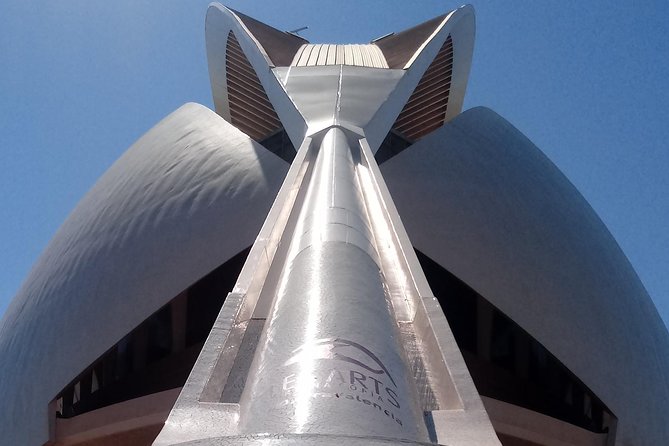
The Agora building is a key stop, and it’s treated that way in the tour. Instead of rushing through a landmark, you’ll get information about the building’s role in the complex and why it’s part of the experience.
Agora-type public spaces are designed for gatherings, events, and human-scale moments. In a complex like this, those spaces help balance the more futuristic shapes and keep the place feeling like a working cultural district, not a set piece.
Even if you don’t attend an event, understanding why Agora exists helps you read the site as an intentional public space system.
Oceanogràfic entrance: planning your next step
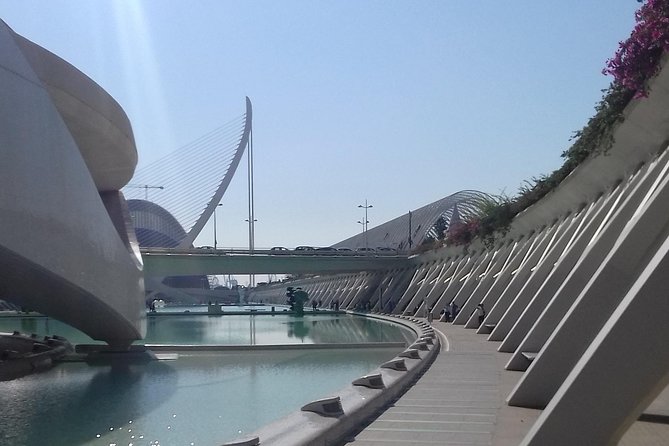
The tour also includes the main entrance of Aquarium-Oceanogràfic. You’ll see the entrance area as part of your orientation, which is useful if you’re deciding whether to spend extra time at the aquarium on your own later.
Here’s the practical note: tickets for the Aquarium-Oceanogràfic are not included. So what you get is a guided arrival point, not entry to the exhibits.
That still makes sense for most travelers. You’ll likely want to budget extra time for the aquarium itself because it can take hours, and the tour is already doing a lot of orientation work.
Price and value: is $28 worth it?
At about $28 per person, this tour is priced like a practical add-on rather than a full ticketed day. The big value is the guided structure plus the outside walkthrough that ties everything together—buildings, gardens, location importance, and the story of why it all exists.
You are not paying for entry tickets to Hemisfèric, the museum, Palau de les Arts, or Oceanogràfic. That can be a plus: you keep control over what you actually want to go inside, based on what you learned during the walk.
For many visitors, this approach is better than buying multiple tickets on arrival. You get the context first, so your later choices feel more intentional.
The guide factor: what the best reviews tell you
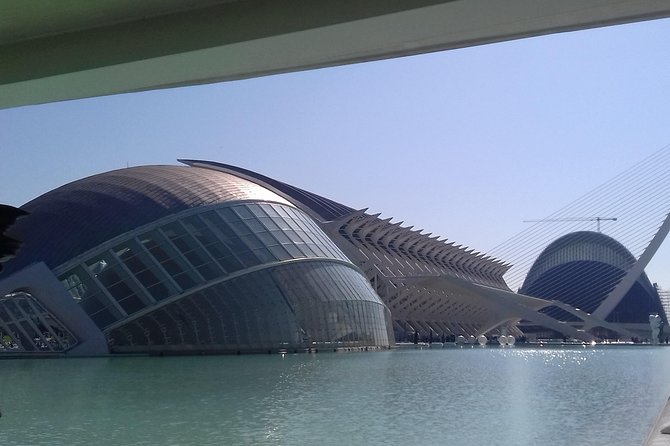
The tour has a strong overall rating (4.8) across many reviews, and one name comes up: Enrique. People appreciate how engaged he is and how easy it is to reach him before the tour.
That’s exactly what matters on a walking orientation tour. If the guide is sharp and responsive, you’ll get more out of every stop—especially in a place with large, sculptural buildings that can feel confusing without someone explaining the layout.
Even if you don’t speak every language the guide offers, the tour’s multi-language format (German, English, Italian, Spanish) keeps the experience accessible.
Timing and pacing: when to plan it in your Valencia day
Because it starts at 10:00 a.m., it works well as your first “big sight” in the City of Arts and Sciences area. You’ll get the complex explained while the site is fresh and before your energy runs low.
The tour runs about two hours, and it includes a guided external visit of the complex. That timing is ideal if you want the main orientation without losing an entire afternoon.
If you’re also planning to add a ticketed attraction later, use the guided tour as your decision point. You’ll know what you liked (or what you skipped) once you see the corridor previews and the garden layout.
Small group size: why max 10 matters here
Limiting the group to 10 participants isn’t just a nice-to-have. In this kind of architecture-heavy site, small groups make it easier for the guide to pause, answer questions, and keep everyone oriented at the right moments.
It also helps with photos. Large groups turn every stop into a traffic jam. A smaller group means you’ll usually have a better chance to frame the buildings without feeling rushed.
Practical notes: tickets, photos, and what to wear
Tickets for Hemisfèric, Sciences Museum Prince Felipe, Palau de les Arts (Opera House), and Aquarium-Oceanogràfic are not included. That’s not a problem if you treat this as an orientation tour, but it is important for your budget. If you want the full indoor experiences, you’ll need separate admissions.
The tour includes extra photos of the complex and a small gift. That’s handy because even if you’re a great self-photographer, architectural sites often demand angles you don’t instinctively capture.
No special items are required, and it’s a leisure activity. Still, I’d suggest wearing comfortable shoes. You’ll be walking and taking in multiple buildings, and Valencia mornings can feel warm even when the day hasn’t fully heated up.
Accessibility and who should skip (or choose another option)
This experience is wheelchair accessible, which is a big plus for visitors who need mobility support. The tour is also limited by comfort needs: it’s not suitable for people over 95 years.
The tour also has basic rules: alcohol and drugs are not allowed, and explosive substances are not allowed. That’s standard for organized public experiences, but it’s good to know ahead of time.
Should you book? My honest recommendation
Book this tour if you want to understand what you’re seeing. If you like architecture with explanation, gardens with local context, and a calm walking route that sets you up for future ticketed visits, this is a solid choice.
Skip it—or at least consider a different plan—if you’re only interested in full indoor admissions for Hemisfèric, the museum, the opera house, or the aquarium. This walk is about orientation and key corridors and entrances, not full entry experiences.
Also, if you’re visiting on the day of the Valencia Marathon, double-check scheduling since tours don’t run that day.
If you want one smart move to make your City of Arts and Sciences time smoother, start here. Then decide later what deserves your ticket money.
FAQ
How long is the tour?
The tour duration is listed as 2 hours.
What does the tour include?
You get a guide tour and an external visit of the complex for about 2 hours, including Umbraacle, the main corridor of the Sciences Museum Prince Felipe, the Agora building, and the main entrance of Aquarium-Oceanogràfic. The main corridor of Hemisfèric is included if available.
Which tickets are not included?
Tickets for Hemisfèric cinema, the Sciences Museum Prince Felipe, the Opera House Palau de les Arts, and Aquarium-Oceanogràfic are not included.
Where do we meet?
You meet at the main entrance of El Corte Inglés on Pintor Maella street, close to Aqua Mall, in front of the taxi stop.
What time does the tour start?
The tour is available every day at 10:00 a.m., except on the day of the Valencia Marathon.
What languages are offered?
The live guide is available in German, English, Italian, and Spanish.
Is the tour wheelchair accessible?
Yes, the activity is wheelchair accessible. It is not suitable for people over 95 years.