REVIEW · WALKING TOURS
Valencia Private Walking Tour with Official Valencian Guide
Book on Viator →Operated by Valencia & Go · Bookable on Viator
A short walk, big Valencia payoff. This private tour threads together Roman, Muslim-era, and Christian layers with an official Valencian guide. I like the flexible start time and the way your guide answers questions on the spot, with real local detail from guides like Sonia and Monika. The main thing to consider: it is a walking tour focused on what you see outside, and only some stops include admission.
You’ll cover the old center in about 2 hours, moving from Plaça de la Mare de Déu toward Valencia’s classic market and government-adjacent sights. I also like that the guide is a professional art historian, so the talk connects buildings to the city’s changing identity. One possible drawback is cost: at $127.03 per person, it’s best when you can spread the price across a small group and when you truly want history commentary—not ticket-only museum time.
In This Review
- Key things that make this Valencia private walking tour work
- A 2-hour walk through Valencia’s street-level layers
- What you’re paying for: official guide time and smart pacing
- Route walkthrough: Plaça de la Mare de Déu to Town Hall Square
- Stop 1: Plaça de la Mare de Déu and the city’s stacked past
- Stop 2: Torres dels Serrans, the medieval city gate story
- Stop 3: Palau de la Generalitat and why it belongs here
- Stop 4: Mercat Central de Valencia, ticket-in included
- Stop 5: La Lonja de la Seda, the Silk Exchange and UNESCO energy
- Stop 6: Plaça del Ajuntament, modernist and civic Valencia
- The ticket reality: what’s included and what you may need to plan
- How official art historian guides change the whole experience
- Pace, comfort, and when to book for the weather
- Who this Valencia private walking tour suits best
- Should you book this tour?
- FAQ
- FAQ
- How long is the Valencia private walking tour?
- What does the tour cost?
- Is the tour private or shared?
- Is it offered in English?
- Where do we meet and where does the tour end?
- Are tickets included for the main sights?
- What is the walking like and who should book?
- When is the best time to book in summer?
- What is the cancellation policy?
- Are children and service animals allowed?
Key things that make this Valencia private walking tour work
- Just your group, no ear-piece crowd: private pacing with time to ask questions.
- Start where you are: the tour meets at Plaça dels Furs and ends near Plaça de la Mare de Déu.
- Mercat Central is included: you get time in the big market with ticket coverage.
- Silk Exchange area is a split-ticket moment: La Lonja de la Seda is not included, so plan for optional add-on entry.
- Hot-weather scheduling tip: earlier departures or late evening help a lot in July–September.
- Guides build practical plans: in multiple tours, guides like Sonia and Joaquín shared food and what-to-do-next suggestions.
A 2-hour walk through Valencia’s street-level layers
Valencia does not feel like a single “top sights” city. It feels like layers. This tour is built for that reality: you move through the old center and the guide explains how the city shifted over centuries, from Roman Valencia to the Islamic past and then into the Christian era.
The route is compact but wide-ranging. You’ll hit the Cathedral/Basilica area, the Torres dels Serrans gate complex, government-palace territory, and then the city’s big market-and-Silk-Exchange zone. It’s the kind of overview that helps you later understand why certain streets look the way they do and what mattered when.
Because it’s private, you can steer the pace. If you care more about architecture, you’ll get more architecture talk. If you care more about everyday life, you’ll get market and neighborhood context instead of a generic script.
You can also read our reviews of more walking tours in Valencia
What you’re paying for: official guide time and smart pacing
At $127.03 per person for about 2 hours, this is not a “cheap add-on” tour. The value comes from three practical choices the tour makes: private guide, official guide format, and tailored commentary.
Private tours can feel pricey until you do the math: you’re buying time with someone who can point out small details you’d miss alone. The best part is the flexibility. You can ask questions mid-walk, and guides can adjust the emphasis. In the real world, that means fewer “quick photo, next stop” moments.
This is also a good fit if you prefer not to crowd into interiors. The itinerary focuses on what you can see on foot, with ticket inclusion only at specific points. If you want a museum-hopping day with lots of paid entry, you’ll need to pair this with additional tickets separately.
Also check whether your group size qualifies for group discounts at checkout. Even a small reduction helps this tour feel more like a smart splurge than a hard sell.
Route walkthrough: Plaça de la Mare de Déu to Town Hall Square
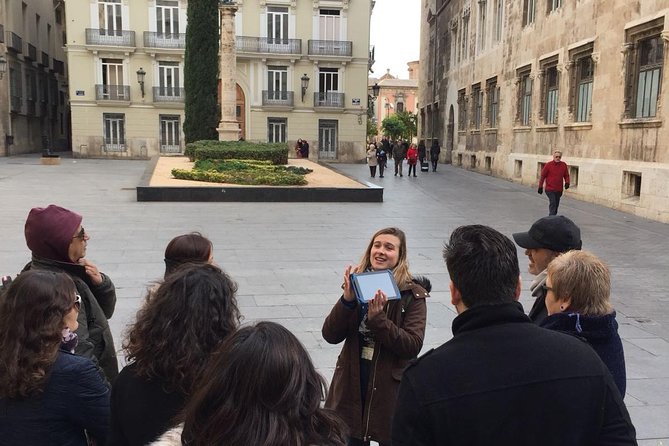
The walk starts at Plaça dels Furs in Ciutat Vella and finishes around Plaça de la Mare de Déu. That’s a nice layout because you end close to the historic core again, rather than ending far away in the suburbs.
Stop 1: Plaça de la Mare de Déu and the city’s stacked past
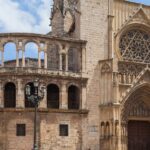
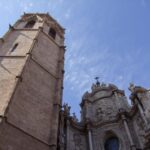
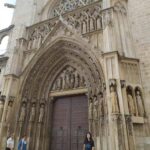
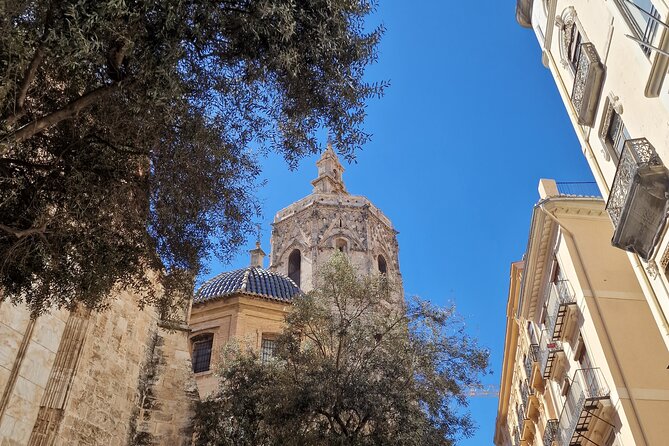
This is your big “how Valencia became Valencia” moment. From the square, the guide connects the dots between the Roman ruins, the Cathedral, and the Basilica. You’ll also learn what to look for in the traces of older walls, including parts tied to the Muslim and Christian eras.
Even when you’re just standing in public space, you start seeing the city as a timeline. Your guide’s approach is less about dates and more about why the structures were placed where they were, and how each period left visible clues.
Expect a calm but dense start: it’s labeled around 20 minutes, and admission is free here. It’s also the stop where you’ll likely get your first set of “future visit” ideas.
Stop 2: Torres dels Serrans, the medieval city gate story
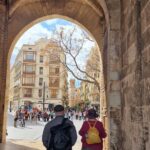
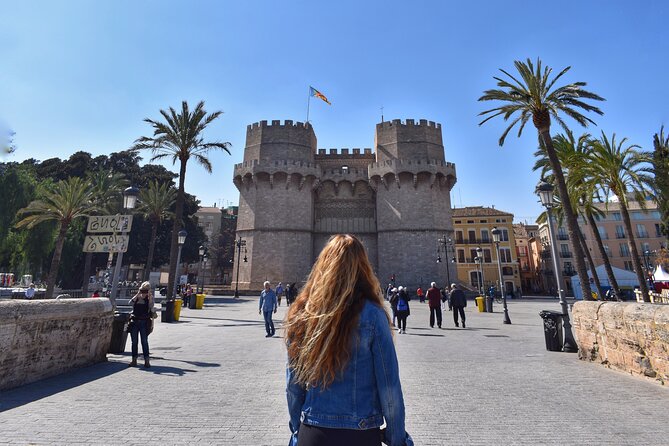
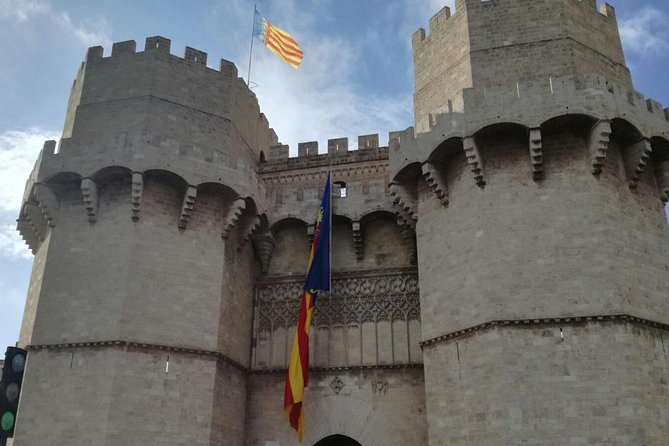
Next comes the Torres dels Serrans area, described as the main entry gate complex from roughly the 14th to 19th centuries. The point is not only the gate itself, but why this position mattered for defense and movement into the city center.
It’s shorter here (around 15 minutes), so don’t treat it like a long viewpoint stop. Use the time to ask your guide what to notice in the stonework and what the gate signaled about the city’s changing boundaries.
A nice detail: in real-tour feedback, people highlighted getting a view from the Serrans tower area. If your guide takes you to a viewpoint angle, take it seriously. Views help you understand the city’s layout faster than any map.
You can also read our reviews of more guided tours in Valencia





Stop 3: Palau de la Generalitat and why it belongs here
You’ll also pass by Palau de la Generalitat. The tour frames it as one of the key palaces in the neighborhood and explains why it sits in this cluster of old-center power.
This stop is about context more than interiors. Admission is not included, so if you want inside time, you’ll need to arrange that separately. For many people, that’s fine: the guide’s job here is to give you the “why this place, why this period” story.
Stop 4: Mercat Central de Valencia, ticket-in included
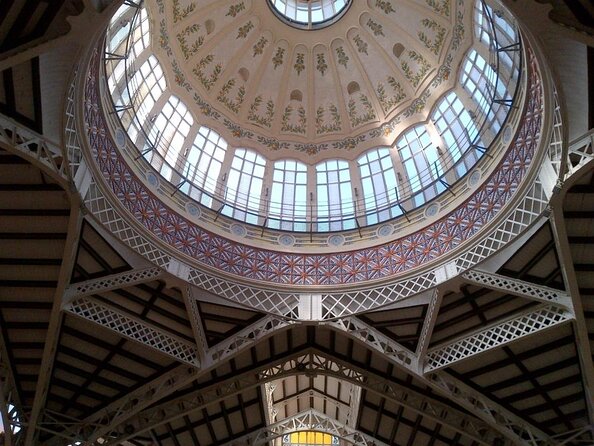
This is where the tour earns its easy win. Mercat Central de Valencia is the big central market in Valencia, known for its modernism style and for being a serious place to buy fresh food.
Admission is included for this stop, which matters because it lets you spend time inside without worrying about extra payments mid-walk. You’ll get a guided orientation: what you’re looking at, how markets work in Valencia, and how the market fits into the city’s daily rhythm.
If you like food culture, this stop alone can justify part of the tour cost. Even if you’re not shopping heavily, walking through it with a guide’s explanations makes the experience feel less touristy and more like real city life.
Stop 5: La Lonja de la Seda, the Silk Exchange and UNESCO energy
From the market area, you move toward La Lonja de la Seda, the 15th-century Silk Exchange building tied to Valencia’s so-called golden era. It’s UNESCO, and the exterior and surroundings are part of the story.
Here’s the trade-off: admission is not included. That means you may see it from the outside as part of the walk, with the guide explaining what makes it special. If you want interior entry, ask your guide for the best next step before you reach it, because you’ll likely need to plan a separate ticket.
Stop 6: Plaça del Ajuntament, modernist and civic Valencia
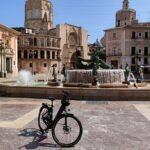
Finally, you reach Plaça del Ajuntament, the Town Hall Square. This stop is about architecture and civic space: eclectic and modernist buildings around the square, plus the feeling of formal Valencia.
It’s labeled around 15 minutes, mostly a wrap-up. The upside is that by now you understand enough of the city layers that this square stops being just a pretty photo moment. It becomes the last chapter in how Valencia organizes power and identity in public spaces.
The ticket reality: what’s included and what you may need to plan
This tour isn’t designed as an all-entry ticket package. Instead, it’s more like a guided path through key zones, with admission included at the market.
Here’s the practical way to think about it:
- Mercat Central de Valencia: admission included.
- Palau de la Generalitat: admission not included.
- La Lonja de la Seda: admission not included.
- Other stops: free viewing areas as noted by the tour structure.
So if your dream version of the day is “walk + every monument inside,” you may feel a mismatch. That’s exactly why I suggest matching your expectations. If you want context, orientation, and a guided walk through the historic center, this works well. If you want entry-heavy sightseeing, plan to add tickets elsewhere.
Also keep an eye on your timing. The tour is about two hours, so the guide won’t turn it into a long stop-and-line day. It’s an overview tour with smart stops, not a slow museum crawl.
How official art historian guides change the whole experience
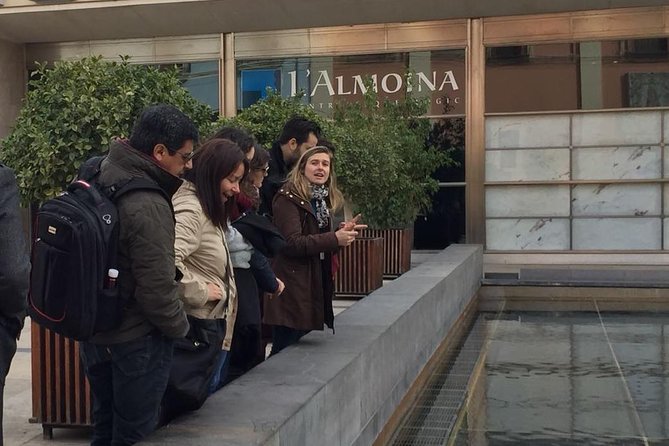
The tour’s biggest strength is not just where you go. It’s how you listen. A professional art historian guide can link architecture details to the bigger city changes, and in this kind of old-center walking tour, that’s the difference between seeing buildings and understanding the city.
In feedback from real tour moments, some guides used extra tools to make the talk easier—like maps and visual references on an iPad. That helps when you’re standing in a square and trying to picture what used to be there.
You’ll also notice the guide’s tone. People often singled out the human side: Sonia’s warm, friendly help and practical recommendations; Joaquín’s engaging approach that matched what people wanted from a private old-town walk. Even Monika’s clear enthusiasm came up again and again, especially for visitors who had lots of questions.
If you have a specific interest—cathedrals, markets, language and culture, or just how Valencia became a layered city—this private format lets you steer. That’s why the tour is a strong first step when you want to start your Valencia trip on the right foot.
Pace, comfort, and when to book for the weather
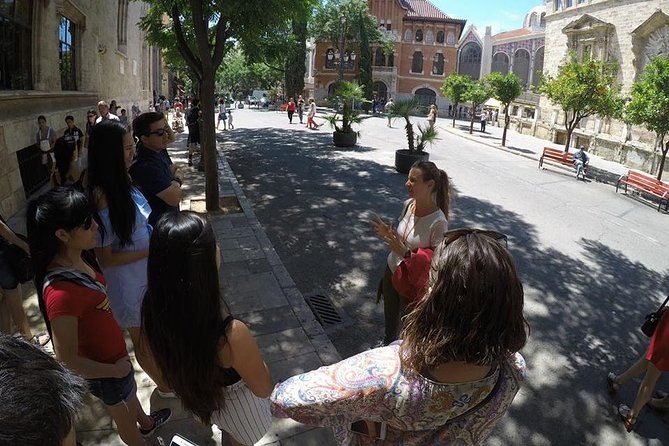
You’ll want moderate physical fitness. The tour is walking in the old center, and that usually means steady movement on uneven sidewalks and lots of stops-and-starts for explanations.
The good news is that private means you can slow down. If someone in your group is older or needs a slightly gentler pace, you can ask the guide to adjust. Some tour feedback even highlighted how well guides worked with elderly visitors.
The bigger factor is heat. During July, August, and September, the tour suggests booking early in the morning (09:00–10:00) or late (around 18:30). The logic is simple: Valencia gets very warm, and running a walk through the 11:30–17:00 window can be complicated. The late option also benefits from longer light, with daylight lasting until around 22:00.
If you’re visiting in summer and you only have midday hours, I’d still consider booking—but treat it as a priority to wear light clothes, bring water, and accept a slightly slower pace.
Who this Valencia private walking tour suits best
This is a great match if:
- you want a first-day overview of Ciutat Vella that helps you plan the rest of your trip
- you prefer walking with a guide rather than riding around in transit
- you like history explained through buildings, streets, and visible clues
- you care about markets and the Silk Exchange area, even if you’re not doing every interior ticket
It may feel less ideal if:
- you’re expecting entry into every monument listed
- you mainly want ticketed museum time instead of outside viewing and interpretation
- you’re traveling solo and the per-person price feels hard to justify
If you’re two or more people, it usually becomes more sensible. Private walking tours start to feel more like value when you’re sharing the guide cost and using the time well.
Should you book this tour?
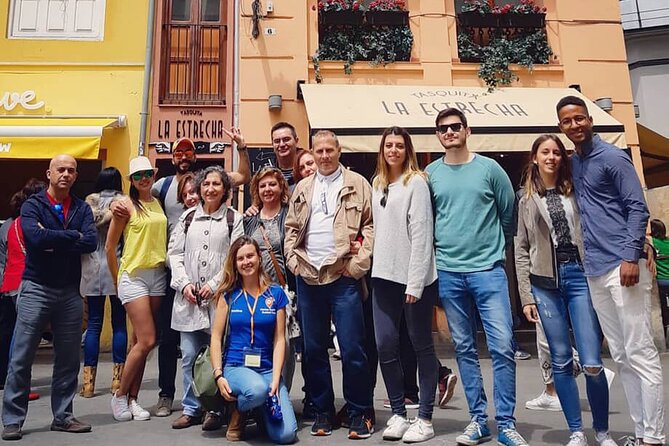
I’d book this Valencia private walking tour if you want a smart, guided overview of the historic center with a guide who can connect Roman ruins, Islamic-era traces, and Christian landmarks into one understandable story. The inclusion of Mercat Central is a practical bonus, and the private format helps you get real answers instead of following a group script.
I would not book it if you’re mainly chasing paid monument entry and you’re disappointed by outside-only viewing. If that’s you, add separate ticketed visits for the places that are not included, and use this tour as the orientation layer.
FAQ
FAQ
How long is the Valencia private walking tour?
It runs for about 2 hours.
What does the tour cost?
The price is $127.03 per person.
Is the tour private or shared?
It’s private. Only your group participates.
Is it offered in English?
Yes, the tour is offered in English, and it may be operated by a multi-lingual guide.
Where do we meet and where does the tour end?
You start at Plaça dels Furs, Ciutat Vella (46003 València) and end at Plaça de la Mare de Déu in Ciutat Vella.
Are tickets included for the main sights?
Mercat Central de Valencia includes admission. La Lonja de la Seda and Palau de la Generalitat do not include admission. Other areas are free to view as part of the walk.
What is the walking like and who should book?
It’s best for people with moderate physical fitness. It’s near public transportation, and it’s a walking format.
When is the best time to book in summer?
For July, August, and September, the tour suggests booking early in the morning (09:00–10:00) or around 18:30, because the midday heat can make walking tours harder.
What is the cancellation policy?
You can cancel for a full refund up to 24 hours in advance. If it’s canceled due to poor weather, you’ll be offered a different date or a full refund.
Are children and service animals allowed?
Children must be accompanied by an adult, and service animals are allowed.