REVIEW · WALKING TOURS
Walking in Valencia
Book on Viator →Operated by alapontasins.com · Bookable on Viator
Valencia pays off fast when you walk it. This private, English-led stroll strings together big architecture and quick cultural stops so you get a clear feel for the city without a long itinerary. You start at València-Estació del Nord and finish at Mercado de Colón, with a mobile ticket and admission tickets built into the route.
I especially like the way this walk moves through eras in a tight loop: mosaic details at the train station, then Art Nouveau market architecture, then Gothic towers and a Baroque facade. The other win for me is the finish at Mercado de Colón—easy to stay and cool down with horchata after you’ve done your sightseeing. One possible drawback: the stops are short, so if you want lots of time inside each place, you may wish for a longer follow-up.
In This Review
- Key highlights
- Why This Valencia Walk Works So Well (2–3 Hours, Done Right)
- València-Estació del Nord: Mosaics First, Then You Get the Big Picture
- Placa del Ajuntament: Belle Epoque Facades and City Power
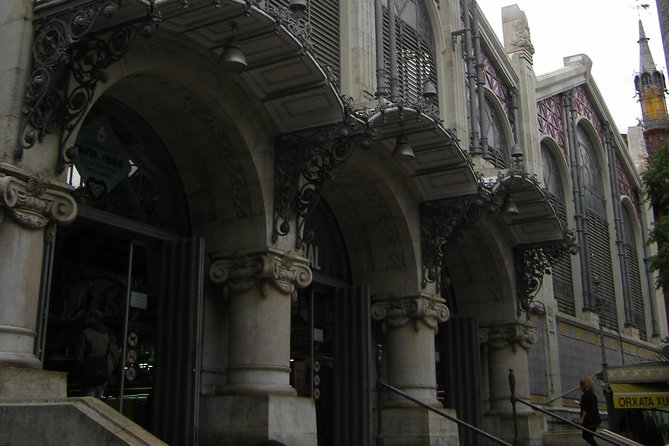
- Mercat Central de Valencia: Art Nouveau in Motion (and the Market DNA)
- Plaza Redonda: The Round Square and Craft That Still Hangs Around
- Plaza de la Reina: The Cathedral Axis and Old Town Symbols
- Torres dels Serrans: Gothic Style and Why the Turia River Mattered
- Palacio del Marques de Dos Aguas: Baroque Facade and the Ceramic Collection
- Mercado de Colón: Horchata at the End of the Story
- Practicalities That Actually Matter (Meeting, Timing, Walking Pace)
- Who Should Book This Valencia Walk (and Who Might Want More)
- Should You Book Walking in Valencia?
- FAQ
- How long is the Walking in Valencia tour?
- Is the tour offered in English?
- Is this tour private?
- Where does the tour start?
- Where does the tour end?
- Are admission tickets included?
- What ticket type do I use?
- Is the tour dependent on weather?
- What’s the cancellation window for a full refund?
Key highlights
- Private group in English: only your group, with a guide who can handle multiple languages
- Included admission at every major stop, so you’re not scrambling for tickets
- Art Nouveau, Gothic, Baroque, and Belle Epoque in one 2–3 hour loop
- A classic Old Town flow: start at Estació del Nord, end at Mercado de Colón near Colón street
- Finish with horchata at a restored 1916 market building, right where you’ll want to linger
Why This Valencia Walk Works So Well (2–3 Hours, Done Right)
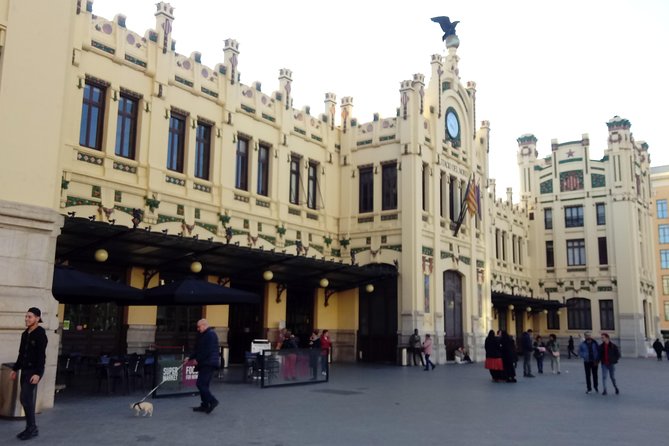
This tour is built for people who want the essentials, but in the good way: you don’t just see landmarks from the street. You also get quick entry moments and context so the buildings make sense as part of Valencia’s story.
It runs about 2 to 3 hours, starting at 5:00 pm. That timing is smart for Old Town walking—cooler temperatures, softer evening light, and fewer “all-day heat” problems. And since it’s a private tour, you’re not fighting the crowd flow or waiting for the group bottleneck in each square.
The other practical win is how the route is designed. You’re walking from neighborhood to neighborhood within the historic core, so you can compare architectural styles in sequence: Belle Epoque (city power era), Art Nouveau (turn-of-the-century design), Gothic (medieval defense and prestige), and Baroque (religious/art influence). If you’re the type who usually leaves a city with photos but not much understanding, this route gives you the quick mental map you need.
You can also read our reviews of more walking tours in Valencia
València-Estació del Nord: Mosaics First, Then You Get the Big Picture
You begin at València-Estació del Nord on Carrer d’Alacant, 25. Before you even hit the squares, you get the feel of Valencia as a city that plans movement and identity in the same breath.
The standout here is the station’s mosaic pictures. They’re not just decoration. You’ll learn to read them as a kind of visual signature—Valencia’s habit of putting craft and artistry into public spaces. It’s a strong opener because it teaches you how to look at details again later, when you’re staring at stone, tile, and ornament for the rest of the walk.
A small but helpful note: you’re spending only about 5 minutes here, so treat it like a “get your bearings” moment. If you want extra time to go slower or take deeper photos, you’ll probably add that on your own later.
Placa del Ajuntament: Belle Epoque Facades and City Power
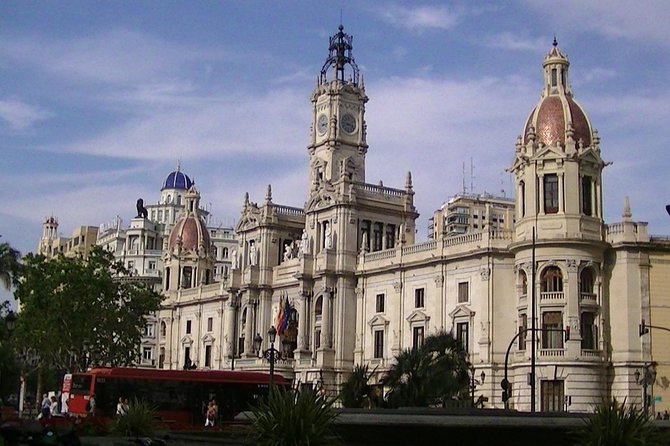
Next up is Placa del Ajuntament, the Town Hall Square. Right away, you’ll see how the city uses grand facades to project status. The Town Hall Square and the Post Office together show off Valencia’s Belle Époque mood from the 20th century—formal, decorative, and meant to impress.
This stop also pairs nicely with the station you saw earlier. Even though you’re moving location, the design language feels connected: Valencia likes to stage its civic spaces like an open-air gallery. In a short walk, that connection is exactly what you want.
If you’re traveling with someone who cares more about people and vibe than architecture, this is still worth it. City halls and post offices are where daily life meets the impressive public face of a place. It helps you understand why Valencia feels orderly and artistic at the same time.
Mercat Central de Valencia: Art Nouveau in Motion (and the Market DNA)
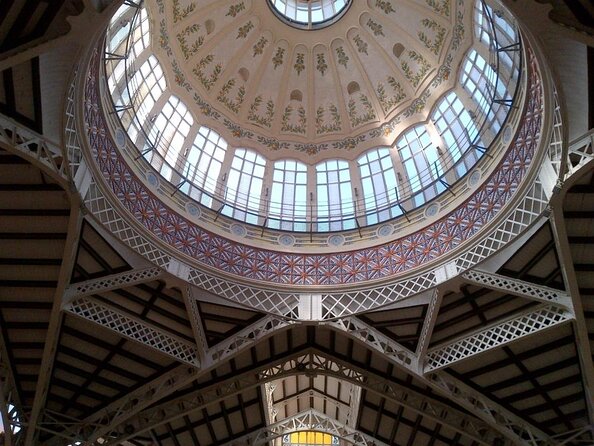
Then you step into the center of things at Mercat Central de Valencia. The Central Market is an Art Nouveau building, and it opened in 1928—plus you’ll also connect it to the Silk Market from the 15th century, so the market tradition feels older than the walls you’re standing in.
The layout and architecture matter here because markets are how cities feed themselves and define social rhythm. This isn’t a museum-style market stop where you just look and leave. You get enough time to orient yourself around the building, and you’ll likely leave understanding why this part of Valencia is such a magnet.
There’s also a neat “visual anchoring” detail: you’re in front of the diamond of Valencia. Even if you’re not a geometry person, the idea helps you place the market in the city’s mental map—this is central, planned, and important.
Drawback to consider: this is another quick about 4 minutes stop. The value is in the orientation and story, not lingering. If you love markets, plan a separate food-market visit after this tour so you can slow down and actually shop or snack.
Plaza Redonda: The Round Square and Craft That Still Hangs Around
At Plaza Redonda—the Round Square—you’ll see the first and oldest mall in Valencia. Yes, mall, but the vibe is older: this space is tied to the city’s commercial life and craft culture.
You’ll learn that the building was renewed, but the shops still offer handwork in a style that goes back about 100 years. That’s the kind of detail you can only catch with a good guide and a short, focused stop. It’s not just “pretty square.” It’s a place where the everyday economy has continuity.
One practical tip for this stop: use it to look up as much as you look around. Round buildings tend to hide interesting design lines, and your guide’s commentary helps you notice what matters instead of getting lost in photo angles.






Plaza de la Reina: The Cathedral Axis and Old Town Symbols
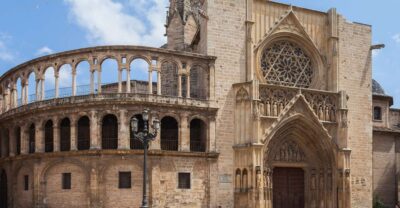
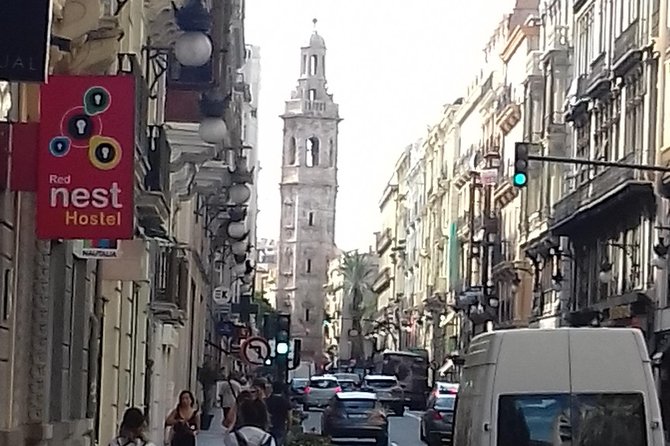
From Plaza Redonda you move to Placa de la Reina (Queen Square), one of the strongest symbolic zones in the Old Town. Here, the Cathedral, the Micalet Tower, and the Virgin Square show up as the key landmarks you hear about again and again for good reason.
This is where the tour shifts from architectural styles to cultural identity. The guide’s framing makes you see these buildings as symbols of what the city values—art, worship, civic pride, and the kind of landmark permanence that lets a place feel stable even as neighborhoods evolve.
Timewise, it’s about 10 minutes, so you get more context than earlier stops. If you want photos, this is also the moment to slow down slightly. Try to catch the skyline relationship between the tower and the surrounding square streets.
Torres dels Serrans: Gothic Style and Why the Turia River Mattered
Next comes Torres dels Serrans (Serranos Towers). After you walk through Serranos Street, the towers rise up as a Gothic statement. Gothic design here isn’t subtle; it’s meant to communicate power and protection.
What I found useful is how the tour connects the towers to the Turia river—specifically how the river mattered for Valencia’s evolution. That connection changes the way you interpret what you’re seeing. Instead of treating the towers like isolated monuments, you understand them as part of a landscape shaped by water, defense, and growth.
If you care about city planning, this is a great stop. Water routes determine where people settle, trade moves, and buildings get placed. When you understand that, Old Town feels less random and more logical.
Palacio del Marques de Dos Aguas: Baroque Facade and the Ceramic Collection
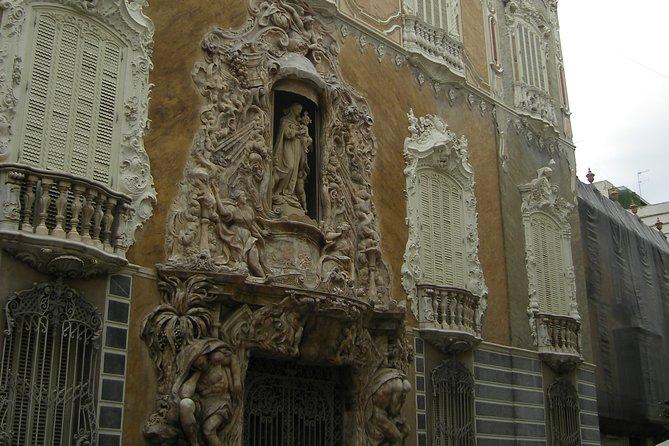
Then you reach Palacio del Marques de Dos Aguas. Even if you only see the facade in this time window, it’s a jaw-drop kind of moment. The style is Baroque, and the building’s exterior tells you it was designed to impress.
Here’s the practical value: you’re also introduced to what the building hosts—the National Ceramic Collection. That matters because it explains why the facade looks the way it does. Ceramics and decorative artistry are part of Valencia’s identity, not just an interior detail.
Time on this stop is about 4 minutes, so you’re not going to “complete” the collection in one go. But you’ll get enough context to make your own future visit feel more targeted. You’ll know what you’re looking for instead of wandering without a clue.
Mercado de Colón: Horchata at the End of the Story
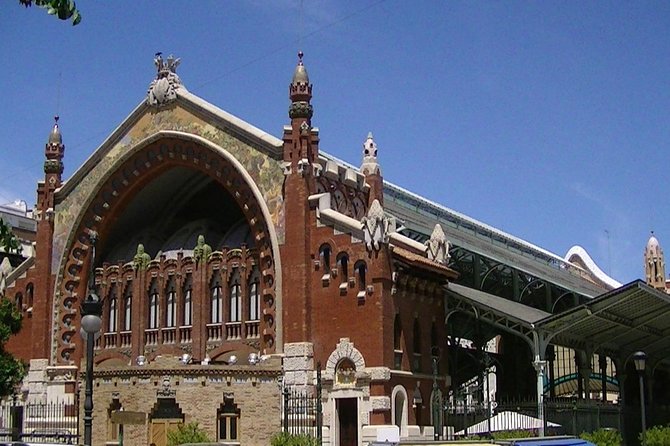
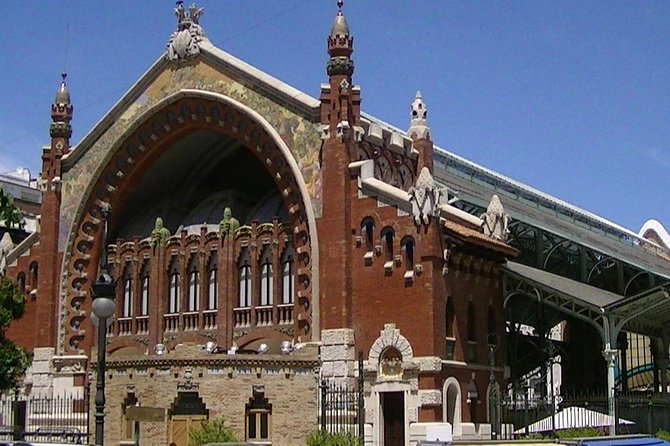
The tour wraps at Mercado de Colón, near Colón street in the center. This market is another Art Nouveau landmark, opened in 1916 and renewed in the 21st century. That mix of old structure and modern refresh is a big reason it works as an end point.
The vibe here is different from Central Market. This is a natural meeting point, and the tour encourages a simple local pleasure: try horchata. When you finish a walk like this, you want something that feels like Valencia, not like a standard tourist snack. Horchata fits that goal well because it’s familiar, easy, and tied to local routine.
This is also where you can extend the evening. Since you end near shopping streets, it’s an easy transition into dinner or browsing without feeling like you’ve abandoned the city’s center.
Practicalities That Actually Matter (Meeting, Timing, Walking Pace)
Here’s how to plan for this type of Old Town walk so it feels smooth instead of rushed.
Start time and direction: It begins at 5:00 pm at Estació del Nord. From there, you’re moving toward the cathedral area and then finishing near Colón street. If you like the last stop best, you’ll want to keep energy for the final stretch.
Walking pace: The stops are generally short—often around 4–5 minutes, with the longer moments at plazas and towers. That’s not a problem if you want highlights plus context. If you’re someone who likes long sits and slow museum reading, you’ll need extra time on your own after.
Tickets and smartphone entry: You use a mobile ticket, and admission tickets are included for the major stops. That’s a real value, because you avoid ticket-line stress during your short 2–3 hour window.
Getting there: The starting point is near public transport. That helps if you’re arriving from a beach hotel, an apartment outside the center, or you’re mixing this with other plans that day.
Weather note: This experience requires good weather. If it gets canceled due to poor weather, you’ll be offered a different date or a full refund. So on rainy days, you’re not stuck hoping.
Who Should Book This Valencia Walk (and Who Might Want More)
This tour is ideal if you want a structured way to learn Valencia’s design language in one evening. It works well for couples, solo travelers, and small groups because it’s private, English-led, and focused on clarity instead of confusion.
You’ll likely be happiest if you:
- want the big Old Town landmarks in a single loop
- like architecture and design details you can recognize afterward
- appreciate short, story-driven stops instead of long museum time
You might want to skip (or add extra time) if you:
- need lots of free time inside buildings
- prefer an unstructured wander with no fixed sequence
- dislike walking on uneven historic sidewalks
Should You Book Walking in Valencia?
I’d book it if you want a smart, time-efficient way to understand Valencia’s Old Town. The combination of included admissions, a guided storyline through major architectural styles, and a satisfying finish at Mercado de Colón with horchata makes the whole experience feel like more than “just a walk.”
I also like that the guide experience is described as friendly and able to work across languages, so you’re less likely to end up with awkward gaps in communication. If you’re okay with short stops and prefer highlights over deep stays, this is a strong value choice for an evening in the city.
FAQ
How long is the Walking in Valencia tour?
It lasts about 2 to 3 hours.
Is the tour offered in English?
Yes, the tour is offered in English.
Is this tour private?
Yes. It’s a private tour/activity, so only your group participates.
Where does the tour start?
The start is at València-Estació del Nord, Carrer d’Alacant, 25, Extramurs, 46004 València.
Where does the tour end?
The tour ends at Mercado de Colón (near Colón street), 46004 València.
Are admission tickets included?
Yes. Admission tickets are included for the stops listed on the tour route.
What ticket type do I use?
You’ll receive a mobile ticket.
Is the tour dependent on weather?
Yes. It requires good weather. If canceled due to poor weather, you’ll be offered a different date or a full refund.
What’s the cancellation window for a full refund?
You can cancel up to 24 hours in advance for a full refund.