REVIEW · CITY OF ARTS & SCIENCES TICKETS
Valencia: City of Arts and Sciences Private Walking Tour
Book on Viator →Operated by Yannat.com · Bookable on Viator
Futuristic Valencia, explained step by step. This private walking tour gives you the full wow-factor of the Ciudad de las Artes y las Ciencias by focusing on what you can actually see from the streets: clean lines, bold forms, and the thinking behind them. You start at the Hemisfèric, with its iconic eye-shape and water reflections, and you build your understanding as you move between buildings.
I love that it stays practical and visual. You’ll get a clear sense of how each structure connects to its purpose, and how Santiago Calatrava’s design language shows up across the complex. The tour also shines because you’re with a private guide, so questions don’t have to wait for a group.
One consideration: this is an exterior-only visit. Interiors and museum ticketed experiences aren’t included, so if your priority is exhibitions inside the buildings, you’ll likely want to add an optional interior stop through the local agency.
In This Review
- Key points to know before you go
- Why Valencia’s City of Arts and Sciences feels unreal (and still makes sense)
- How the tour works: a private walk with exterior-only stops
- The starting point that makes the first minutes easier
- Hemisfèric: the eye-shape, the water, and the future theme
- Príncipe Felipe Science Museum: whale-skeleton energy from the outside
- Oceanogràfic: the largest aquarium in Europe, seen in sea-inspired form
- Palau de les Arts Reina Sofía: sculptural arts space with a performing-arts feel
- Umbracle: garden-walk views that tie the whole complex together
- Price and value: what $139.03 per person buys you
- Timing, comfort, and photo strategy for a smooth 2-hour walk
- Who this tour is best for (and who might want something else)
- Should you book this Valencia architecture walk?
- FAQ
- How long is the tour?
- Is this a private tour?
- What stops are included in the route?
- Are building interiors included?
- Is admission included for the complex?
- Is transportation included?
- Where does the tour start?
- Does the tour end where it starts?
- Is it near public transportation?
- What is the cancellation policy?
Key points to know before you go
- Exterior-only architecture focus: great for photos and first-time orientation, not for indoor exhibits
- Private guide: better pacing and more chances to ask why the buildings look the way they do
- Designed by Santiago Calatrava: expect design and purpose explained across the whole complex
- Hemisfèric to Umbracle route: a logical loop that hits the most recognizable exteriors
- Oceanogràfic included in the walk: you’ll see Europe’s largest aquarium from outside, up close
- Admission not included: you may need extra tickets if you want to go inside
Why Valencia’s City of Arts and Sciences feels unreal (and still makes sense)
The City of Arts and Sciences can look like a movie set. White, sculptural forms. Glassy surfaces. Big shapes that seem too designed to be real. What makes this tour worth it is that it helps you decode the place without turning it into homework.
You’ll get a guided walk through the exteriors, which is the best way to start if you’re seeing the complex for the first time. Even with no interiors, the buildings tell a story. They’re tied to science, nature, art, and performance—so once you know what each one is meant to do, the architecture stops being random sci-fi and starts feeling intentional.
And because it’s private, you can match the pace to what you like. Want more time at the water reflection of the Hemisfèric? You’ll have that flexibility. Prefer to move quickly for photos and then slow down near the best viewpoints? That usually works well with a private format.
You can also read our reviews of more walking tours in Valencia


How the tour works: a private walk with exterior-only stops
This is a private walking tour with a guide. The route covers the main buildings at Ciudad de las Artes y las Ciencias, and the emphasis is on exterior viewing. That means you won’t spend time in ticket lines for museum spaces during this 2-hour window.
Included is the private guide. Not included is transportation, any interior visits, and admission tickets. If you want to see inside a building, you’ll need to coordinate an add-on by contacting the local agency. The upside of that setup is clarity: you can treat this as your architecture orientation, then decide later if you want deeper museum time.
The pace is about 2 hours. That’s long enough to get the main sights and learn the design ideas, but short enough that you can fit it into a busy day in Valencia. The tour also ends back at the meeting point, so you don’t have to plan an awkward “how do we get back?” ending.
The starting point that makes the first minutes easier
The meeting point is at Barceló Valencia, Av. de França 11, in the Camins al Grau area. It’s also described as being near public transportation, which matters because this complex is spread out and not always convenient if you’re relying only on taxis.
In practice, that location can help you avoid stress. You can arrive with a plan—then let the guide steer you through the complex. Since you’re walking, that’s useful: shoes matter a bit here, and having a clear start point keeps the first stop from feeling like a hunt.
Most people can participate, and service animals are allowed. If your mobility is limited, you’ll want to take it easy with breaks and pace, since you’ll be outside and walking between major structures.
Hemisfèric: the eye-shape, the water, and the future theme
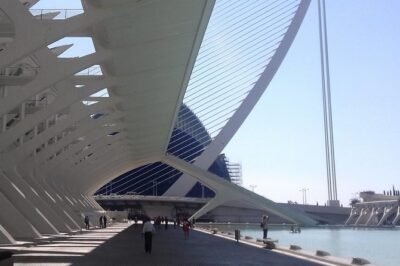
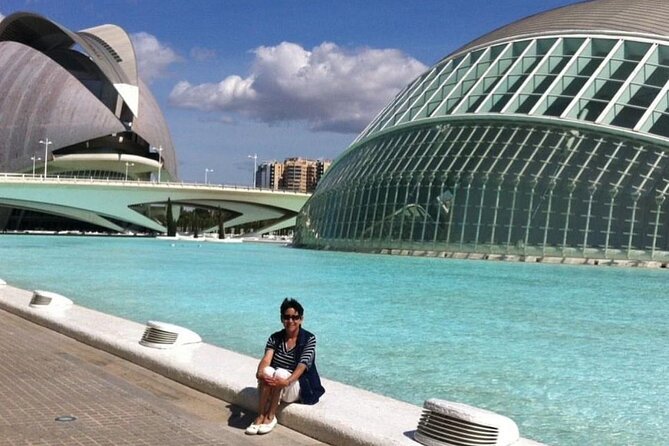
Your route begins at the Hemisfèric, the building with the eye-shaped profile that’s instantly recognizable. You’ll see it as the water nearby catches the form, which is a big part of why this stop feels so dramatic.
What I like about starting here is that it sets a tone for everything that follows. The Hemisfèric isn’t just a pretty exterior. It’s a reminder that the complex was designed as a vision for Valencia’s future, using bold engineering and a clean, modern look.
Your guide should connect the building’s appearance to its purpose and design logic, rather than treating it like a photo stop only. In the feedback I’ve seen, guides such as Amir, Sonnia, and Jose often explain how the complex thinks in themes—science, art, nature—so the architecture reads like a system instead of isolated landmarks.
Photo tip: come ready for reflection shots around the waterline areas. The building’s shape plays differently depending on the angle, so it helps to spend a minute or two repositioning rather than taking one quick picture and moving on.
Príncipe Felipe Science Museum: whale-skeleton energy from the outside
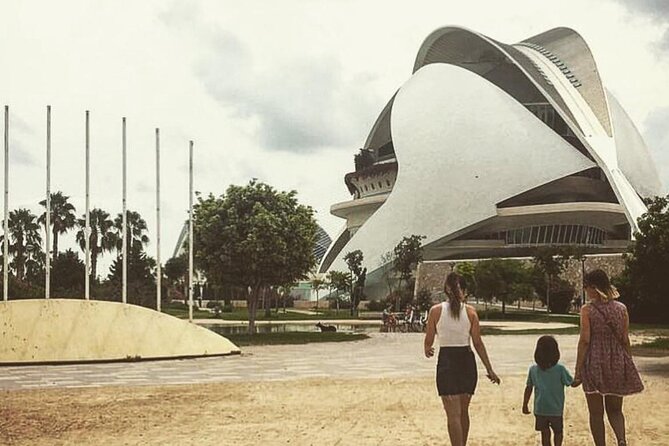
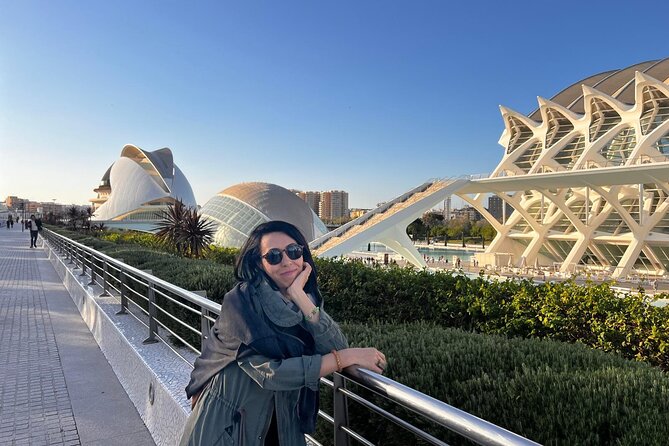
Next comes the Príncipe Felipe Science Museum. From outside, the building has that striking “whale’s skeleton” impression—rib-like forms and a strong sense of structure. Even without stepping inside, it’s a powerful sight because it looks engineered for motion and discovery.
This stop is where the tour’s architecture focus really pays off. If you only visit the building as a standalone object, you might admire the form and move on. With a guide, you’re more likely to understand what those shapes are doing and why the designers built the building with this kind of visual metaphor.
In the kind of explanations guides give here—like Jose Luis sharing construction and design details—you end up seeing the museum exterior as part of a broader story. It connects to the science theme, but it also shows Calatrava’s signature approach: sleek shapes paired with structural clarity.
Consideration: because the tour is exterior-only, you won’t get the full science experience. If you want hands-on exhibits or indoor content, you’ll need an added visit on your own time.
You can also read our reviews of more city tours in Valencia





Oceanogràfic: the largest aquarium in Europe, seen in sea-inspired form
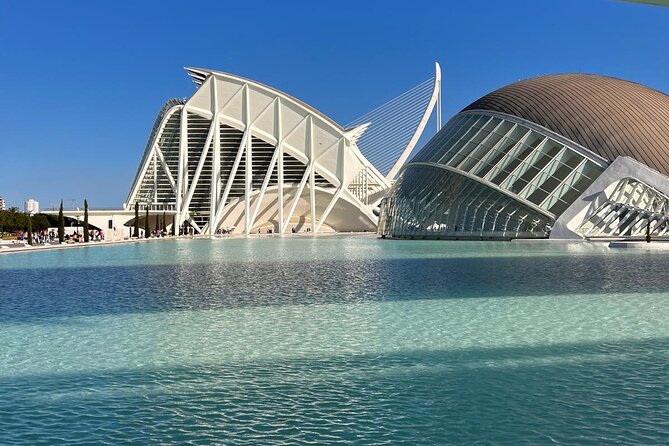
Then you’ll walk around the Oceanogràfic, known as the largest aquarium in Europe. The best part here is that you don’t just see tanks or signage—you see the building language itself.
The Oceanogràfic exterior is described as sleek and organic, inspired by the sea. That matters because it changes how you interpret the space. Instead of thinking of an aquarium as a box, you start thinking of it as something shaped like water’s movement, designed to feel natural and fluid.
This is often the stop where photos feel easiest. The architecture gives you curves and angles that look good from multiple sides. If your guide has time to show you the “why” behind the design, you’ll appreciate the forms even more.
One thing to keep in mind: Oceanogràfic is a major attraction for a reason, and seeing it outside is a taste, not a full visit. If aquarium animals are your main goal, you’ll want to plan a separate ticketed visit for interior viewing.
Palau de les Arts Reina Sofía: sculptural arts space with a performing-arts feel
Next is the Palau de les Arts Reina Sofía, a structure tied to performing arts. From the exterior, it has flowing, sculptural design lines that feel like movement—even when you’re standing still.
I like this stop because it adds variety to the tour. Up to this point, you’ve been building science and nature context through design. The Palau brings in the arts, and the architecture reflects that shift with softer, more sculpted geometry compared with the more engineering-forward structures.
Guides often connect the building’s look to its role as a cultural venue. That’s valuable because it makes the exterior feel purposeful, not just decorative. In feedback, guides such as Sonnia have been praised for explaining how the design blends science, nature, and art across the complex. This building is usually where that idea clicks.
Practical note: the Palau can be a good place to pause and look back at the broader complex. From certain angles, it’s easier to understand how the buildings relate to one another in the overall plan.
Umbracle: garden-walk views that tie the whole complex together
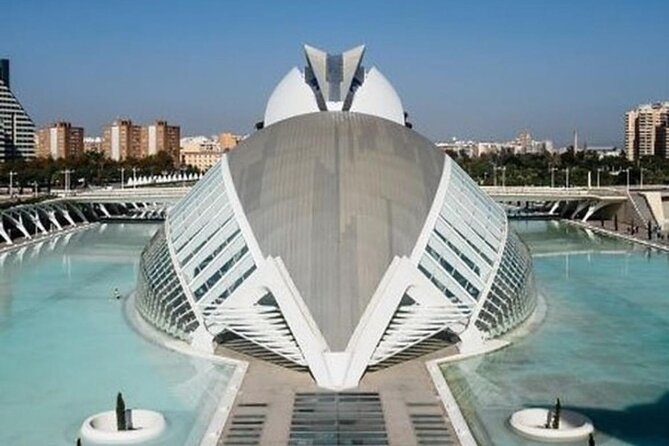
Finally, you’ll reach the Umbracle, a garden and walkway offering panoramic views of the entire area. This is a strong ending point because it changes your role from admirer of individual buildings to observer of the whole composition.
From the Umbracle viewpoints, you can see how the complex’s modern architecture sits in its environment and how the buildings’ shapes relate to each other. That “pull back” view helps you remember the tour in a more complete way than just a list of impressive exteriors.
It’s also a good spot for photos that show scale. At earlier stops, the buildings can look huge but still “flat” in your mind. From the walkway, you start appreciating the distances, the layout, and why the route feels like a designed experience.
If you want to add an interior visit later, this is a useful mental baseline. After you’ve seen the exteriors and gotten the stories, you’re in a better position to choose which indoor attraction will matter most to you.
Price and value: what $139.03 per person buys you
At $139.03 per person for about 2 hours, this isn’t the cheapest way to see the complex. So the value has to come from the “private guide + architecture focus” equation.
Here’s how that tends to work for people: you’re paying for someone to explain what you’re looking at, and you’re paying for time. Instead of wandering and guessing, you get a structured walk through the key exteriors. The architecture is the highlight, and the guide’s job is to connect each building’s design and purpose to what you can observe from outside.
The tour includes a private guide, and it mentions mobile ticket and group discounts. Group discounts can matter if you’re booking with friends or family and can keep the private setting. The mobile ticket piece can also reduce friction on arrival.
One more signal: it’s commonly booked about 46 days in advance on average, which usually means this tour slot gets taken up. If your dates are firm, booking earlier can help you lock in the timing you want.
Timing, comfort, and photo strategy for a smooth 2-hour walk
Since you’re moving between iconic exteriors, comfort affects how much you enjoy the tour. Wear shoes you’re happy to walk in for a couple of hours outdoors. Bring water, especially in warm months, because the stops can’t be reached by hopping in and out of vehicles—this is a walking experience.
For photos, think in layers:
- First pass: capture the obvious shape at each stop.
- Second pass: slow down for the angle that shows the design details your guide points out.
- End pass: use the Umbracle panoramic viewpoints to show the whole complex.
If you want the “eye” reflection effect at Hemisfèric, or scale views at Umbracle, be ready to spend a few extra seconds repositioning. The buildings are designed to look different from different angles, so rushing usually leads to blurry or repetitive shots.
Who this tour is best for (and who might want something else)
This tour is a great match if you love architecture, design, modern engineering, or simply want a confident introduction to a huge complex. It also works well if you’re short on time but still want to understand what you’re seeing instead of just collecting photos.
It’s also a good choice if you already plan to see interiors later. Consider this tour your “orientation and stories” layer, then choose the indoor experience that fits your interests best.
If you mainly want museum exhibits, aquarium viewing, or performing arts venues inside, the exterior-only format may feel limiting. Since admission to interiors isn’t included, you’d want to treat this as part one of a bigger plan rather than your only visit.
Should you book this Valencia architecture walk?
If your main goal is to understand why Valencia’s futuristic buildings look the way they do, and you want a guided walk that hits the most important exteriors in around two hours, I think this is a smart buy. The private format helps, and the route builds nicely: Hemisfèric sets the theme, then science, then nature, then arts, and the Umbracle ties it all together.
I’d skip or add-on plan if you’re expecting indoor access as part of the same price. Interiors aren’t included, so you’ll need extra planning if you want museum content or aquarium viewing inside.
If you’re torn, ask yourself one question: do you want a guided architecture explanation from the outside, or do you want a ticketed indoor experience? This tour answers the first one very well.
FAQ
How long is the tour?
The tour lasts about 2 hours.
Is this a private tour?
Yes. It’s private, so only your group will participate.
What stops are included in the route?
The tour covers the main exteriors of the Ciudad de las Artes y las Ciencias, including the Hemisfèric, the Príncipe Felipe Science Museum, the Oceanogràfic, the Palau de les Arts Reina Sofía, and the Umbracle.
Are building interiors included?
No. The tour focuses on exterior views, and visits to interiors are not included. You can contact the local agency to add an interior visit.
Is admission included for the complex?
No. The admission ticket is not included.
Is transportation included?
No. Transportation is not included.
Where does the tour start?
It starts at Barceló Valencia, Av. de França, 11, Camins al Grau, 46023 València, Valencia, Spain.
Does the tour end where it starts?
Yes. It ends back at the meeting point.
Is it near public transportation?
Yes. The meeting area is near public transportation.
What is the cancellation policy?
You can cancel for a full refund up to 24 hours before the experience start time. If you cancel less than 24 hours in advance, the amount paid is not refunded.
If you tell me your travel month and whether you care more about photos or about indoor exhibits, I can suggest the best way to pair this with the rest of your Valencia day.