REVIEW · MUSEUMS & ATTRACTION TICKETS
Valencia: Hortensia Herrero Art Center Ticket or Guided Tour
Book on GetYourGuide →Operated by Hortensia Herrero, Fundación de la Comunidad Valenciana · Bookable on GetYourGuide
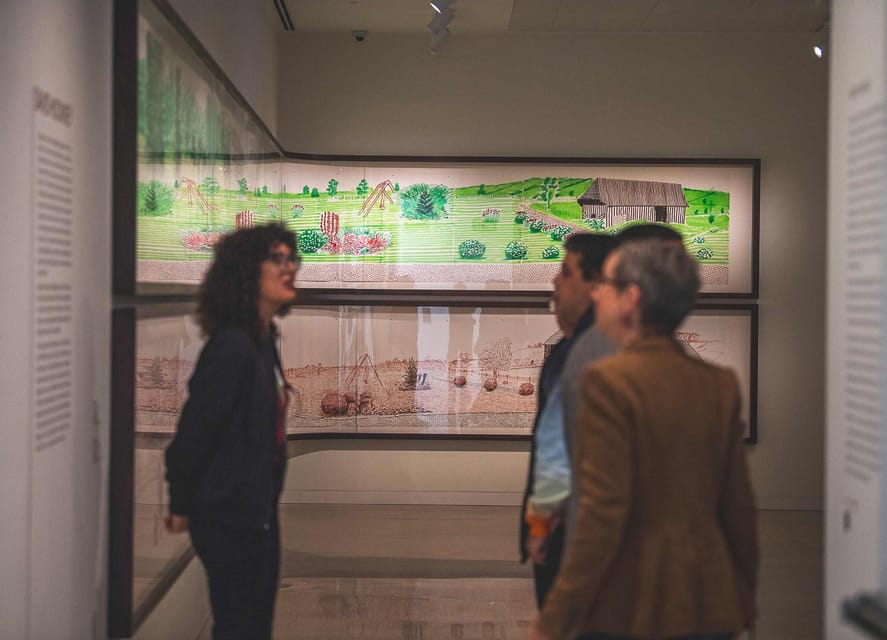
Contemporary art lives in an old palace. In Valencia, the Hortensia Herrero Art Center turns the Valeriola Palace into a gallery where contemporary works share space with visible history. You’ll move through two four-story buildings and a total of 17 exhibition spaces in about 1.5 hours.
I love the way the art feels built for the rooms, from multimedia pieces to works created specifically for this kind of setting. I also like the extra layer that most galleries skip: you’ll see Roman circus remains and remnants connected to Valencia’s Jewish quarter, plus other archaeological features.
One thing to consider: it’s a short visit at 1.5 hours. If you like to read every label slowly and stay in one room for a long time, you may feel a little time-pressed.
In This Review
- Key highlights worth planning around
- Why the Valeriola Palace is the real star of the show
- Ticket vs guided tour: choosing the right pace
- What $14 gets you, and when it feels like a bargain
- Entering the main hall: original materials set your expectations
- 17 exhibition spaces: contemporary names, multimedia, and room-scale ideas
- The archaeological layer: Roman circus, Jewish quarter alley, and more
- How to get the best experience in 1.5 hours
- Accessibility and languages: planning without friction
- Who should book this art center, and who might want to think twice
- Should you book the Hortensia Herrero Art Center?
- FAQ
- How long is the Hortensia Herrero Art Center visit?
- What does the ticket include?
- How much does it cost?
- What’s the difference between a ticket and a guided tour?
- What languages are available for the host or greeter?
- Is the experience wheelchair accessible?
- Where is the art center located?
- How much of the building will I explore?
- Is there a free cancellation option?
- Is there a reserve and pay later option?
Key highlights worth planning around
- Valeriola Palace setting: old architecture and original materials frame the contemporary art
- 17 exhibition spaces in 3,500 m²: enough variety to keep your attention without being endless
- Big international names: Andreas Gursky, Anselm Kiefer, Georg Baselitz, plus major contemporary artists in the collection
- Art meets archaeology: Roman circus remains, an alley tied to the ancient Jewish quarter, and more built-in history
- Wheelchair accessible: you can plan this visit without automatically losing access
Why the Valeriola Palace is the real star of the show
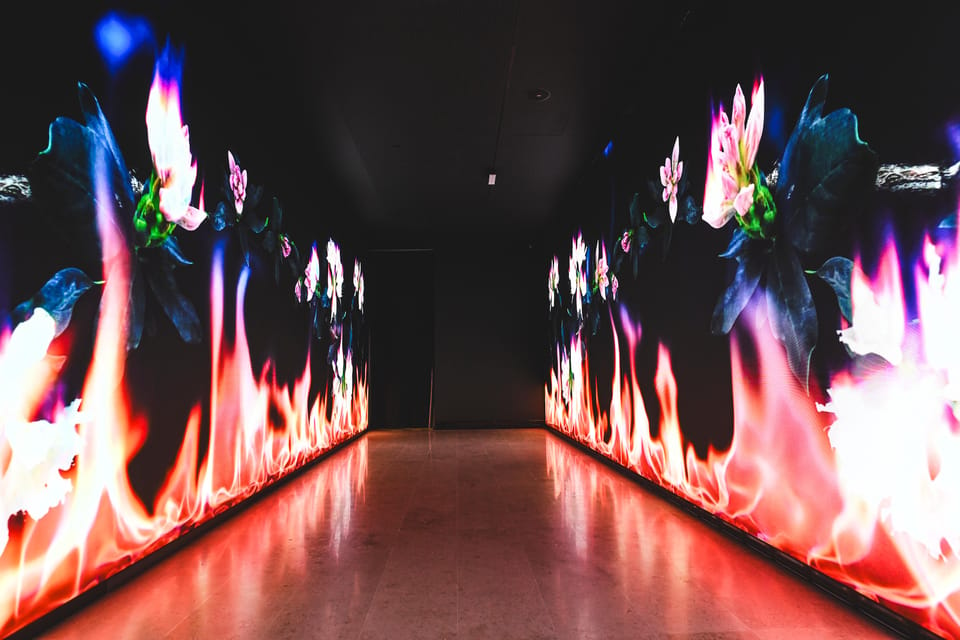
The Hortensia Herrero Art Center works because it refuses to treat the building like a neutral container. The palace itself does the talking. You’ll spend time inside a historic complex in Valencia’s historic center, where the curving paths and tall rooms give contemporary art a more architectural rhythm.
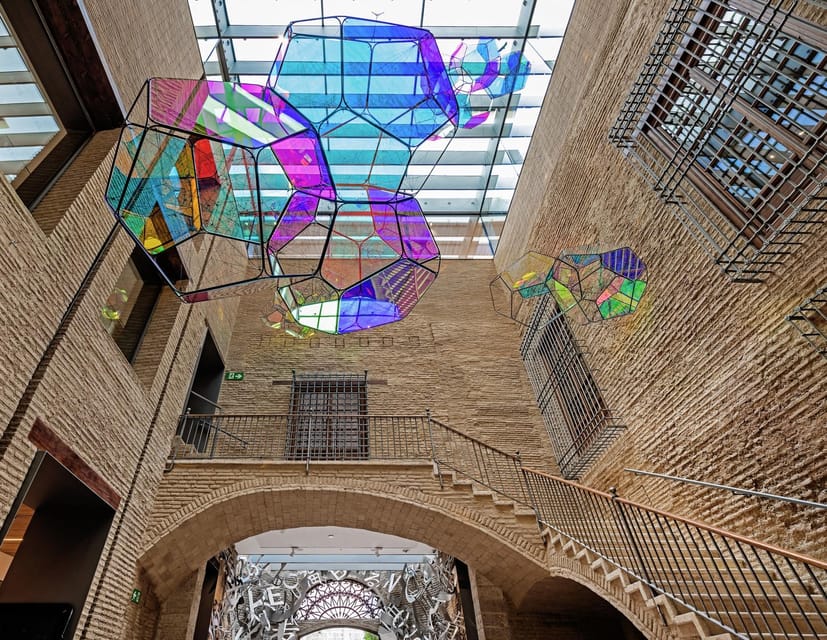
In the main hall, the atmosphere is shaped by original features like wooden beams and ceramic masonry. That matters for your experience because it changes how you look at the artworks. Instead of just seeing art on a wall, you’re constantly noticing how light bounces off surfaces and how the space makes scale feel different.
You can also read our reviews of more tours and experiences in Valencia



Ticket vs guided tour: choosing the right pace
You can book an entry ticket only, or add a guided tour. The guided option is worth thinking about if you like context. In a place like this, a few lines of explanation can turn an artwork from just interesting into memorable.
With only 1.5 hours, pace is everything. A self-guided visit is perfect if you already know what names and styles you want to focus on. You can prioritize the artists you’re most curious about and spend less time in areas that don’t grab you.
If you choose the guided tour, you’ll likely appreciate the structure. In short time windows, guidance helps you avoid wandering in circles and helps you connect the art to the palace setting. That said, if you prefer freedom over direction, the ticket-only route gives you control.
What $14 gets you, and when it feels like a bargain
At about $14 per person, this is priced like an art visit that won’t break your day budget. The value comes from the mix of three things you usually pay separately for in bigger cities: a contemporary art museum experience, a major palace interior, and on-site archaeological context.
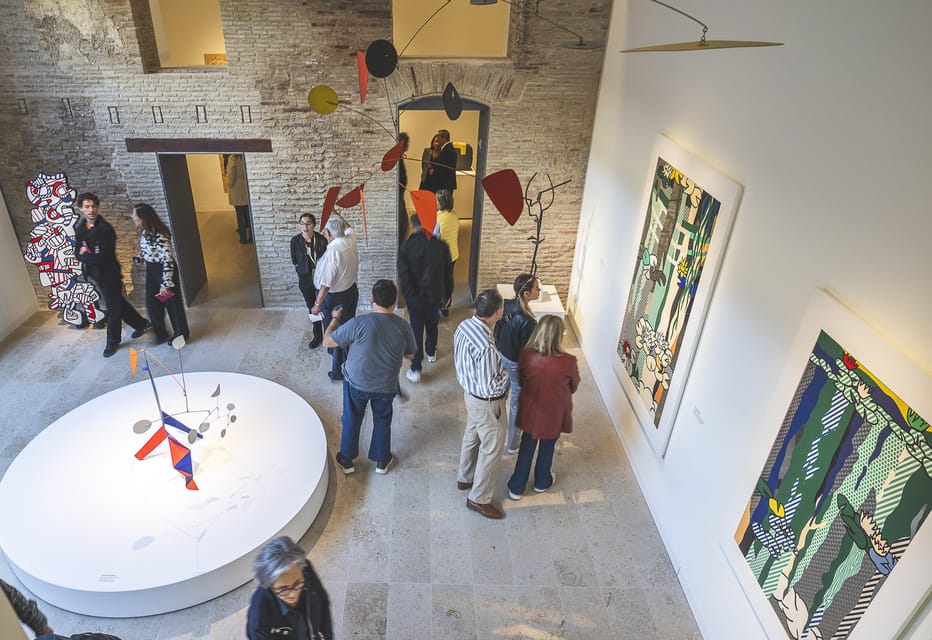
You’re not just paying to see a few rooms of art. The center spans 3,500 square meters across two palace buildings with 17 exhibition spaces. That’s a lot of content for a relatively short timed visit, especially if you like variety and don’t want a museum day that eats your entire afternoon.
Entering the main hall: original materials set your expectations
Your first impressions matter here. The main hall is designed to make you look up and around. You’ll notice original construction details, including the wooden beams and ceramic masonry, which act like a quiet introduction to the rest of the palace.
That’s a practical reason I like this stop: it teaches you how to view the art in the space. Contemporary pieces often depend on scale, angle, and sound. In a historic room with strong architectural features, those effects feel more intentional. You’ll likely find yourself shifting positions more often than you would in a white-box gallery.
17 exhibition spaces: contemporary names, multimedia, and room-scale ideas
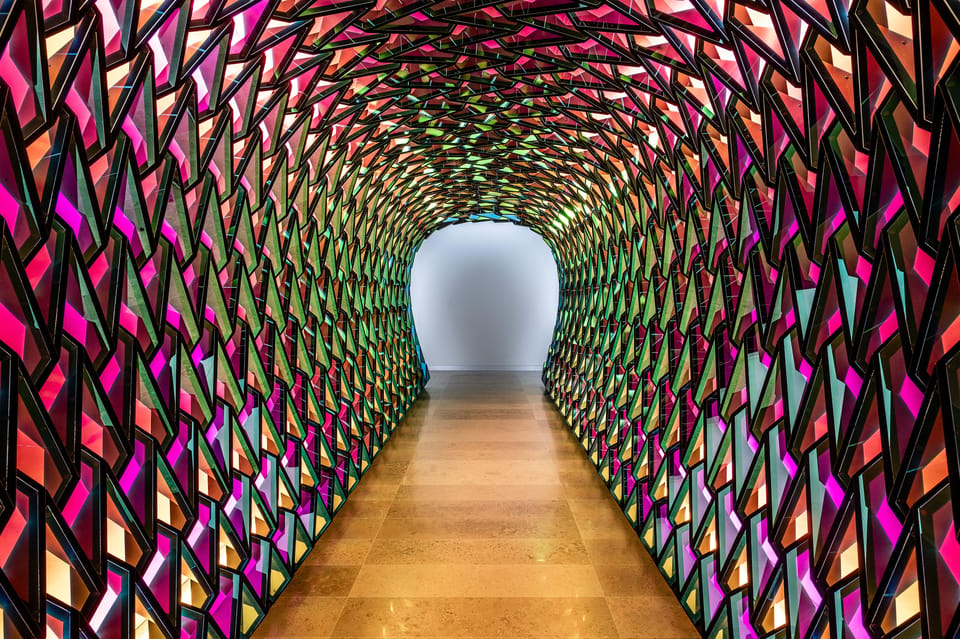
The art side of this visit is built for people who enjoy contemporary work. You’ll see a range that includes multimedia works and pieces made specifically for palace spaces. That “made for this place” detail is important, because it usually means the artwork isn’t only about the image—it’s about how it interacts with the room.
You can expect the center to feature internationally recognized artists, including Andreas Gursky, Anselm Kiefer, and Georg Baselitz. In the private collection associated with Hortensia Herrero’s foundation, you can also encounter major contemporary figures such as Tomás Saraceno, Jaume Plensa, Olafur Eliasson, Cristina Iglesias, Sean Scully, and Mat Collishaw.
Even if some names don’t ring a bell for you, the place still works because the art isn’t presented like a checklist. The palace layout encourages you to move from one type of work to another—media to sculpture, idea to atmosphere. In 1.5 hours, you won’t see everything like a scholar, but you can still leave with a strong sense of what the center is trying to do: connect contemporary language to older walls.
You can also read our reviews of more guided tours in Valencia





The archaeological layer: Roman circus, Jewish quarter alley, and more
This is the part many people don’t expect going in, and it’s exactly why the visit is memorable. Valencia has a long paper trail of cultures, and here you can feel it physically.
As you explore, you’ll encounter archaeological remains tied to the Roman era, including the ruins connected to the Roman circus of Valencia. You’ll also see an alley connected to the ancient Jewish quarter, which adds a residential, street-level texture to the experience that typical museums don’t offer.
The center also includes other remains and features such as a medieval oven and an Islamic fountain. Again, these aren’t just background facts. The way they sit inside a palace museum changes your pace. You’ll pause, look for details, and then return to the contemporary works with a different mindset.
A quick tip: if you love architecture and layers of time, spend a little extra attention on transitions—where the museum space shifts into archaeological features. Those are the moments that make the whole visit feel like one story rather than two separate attractions.
How to get the best experience in 1.5 hours
Because the visit is designed to fit into a short window, you’ll get more enjoyment if you enter with a plan. Here’s a simple way to do it:
Pick your top two or three artists or themes before you arrive. Then aim for: one room you know you want, one room you’re curious about, and one stop where you just follow the space. In a building like Valeriola Palace, the “follow the space” choice often leads to the most surprising moments.
If you’re doing it ticket-only, give yourself permission to skip rooms. Contemporary art can be dense, and time limits are real. If a room isn’t clicking, move on without guilt. You’ll get a better overall hit rate that way.
If you’re doing it with a guide, ask yourself what you want from the experience: context, pacing, or artist connections. The guided format is most useful when you want help turning what you see into meaning.
Accessibility and languages: planning without friction
The center is wheelchair accessible, so you can plan this visit without immediately worrying about basic access. The host or greeter can help in English, Spanish, French, Italian, and Catalan.
That language list matters more than it sounds. In contemporary art spaces, small explanation differences can change your understanding quickly. Knowing you’ll be supported in your preferred language (when available) makes the visit smoother, whether you choose the guided tour or entry ticket.
Who should book this art center, and who might want to think twice
This works especially well for you if you enjoy contemporary art but also like the extra pull of architecture and historical remnants. The combination of museum rooms plus visible ruins gives you a dual experience: modern ideas in a place that carries older layers.
You’ll also probably enjoy this if you’re the type who likes a tight, high-quality stop rather than a half-day museum marathon. The 1.5-hour length is ideal for fitting into a Valencia itinerary.
You might want to think twice if you expect an extremely long, slow-moving museum experience. Some visitors may want more time per room, and the pace can feel limiting if you’re deeply focused on reading every detail.
Should you book the Hortensia Herrero Art Center?
I think you should book if you want contemporary art with real physical context. The Valeriola Palace setting, the large number of exhibition spaces in a short visit, and the on-site archaeological elements together make this feel like more than a standard ticket.
Choose the guided tour if you’d like help navigating the space in 1.5 hours and want connections between artworks and setting. Choose the entry ticket only if you’re comfortable exploring on your own and want freedom to go straight to the names and works that interest you most.
If you like art that interacts with architecture and history, this is a smart Valencia stop at about $14. If you only want classic museum vibes and you need lots of time to linger, you may feel rushed—but you can still build a very satisfying visit by setting priorities before you step inside.
FAQ
How long is the Hortensia Herrero Art Center visit?
The experience lasts 1.5 hours. Starting times depend on availability.
What does the ticket include?
Your ticket includes entry to the Hortensia Herrero Art Center. If you select the guided tour option, the tour is included as well.
How much does it cost?
The price is listed as $14 per person.
What’s the difference between a ticket and a guided tour?
You can enter with a ticket only, or you can choose a guided tour option for added guidance. The guided tour is included when you select it.
What languages are available for the host or greeter?
The host or greeter can assist in English, Spanish, French, Italian, and Catalan.
Is the experience wheelchair accessible?
Yes, it is wheelchair accessible.
Where is the art center located?
It’s in the Valencian Community, Spain, in Valencia’s historic center inside the Valeriola Palace.
How much of the building will I explore?
The center spans two four-story buildings with 17 exhibition spaces over about 3,500 square meters.
Is there a free cancellation option?
Yes. You can cancel up to 24 hours in advance for a full refund.
Is there a reserve and pay later option?
Yes. You can reserve your spot and pay nothing today.