REVIEW · BIKE & E-BIKE TOURS
Valencia: Top 25 Highlights Guided Bike Tour
Book on Viator →Operated by Bikes & Tours · Bookable on Viator
Valencia looks different at bike speed. This guided ride ties together Old Valencia and the futuristic City of Arts and Sciences in a tight, 2.5-hour plan. I like that the route is mostly flat, so even a first-time rider can keep up, and the guides (I’ve heard names like Daria, Jorge, Liliana, Shakti, Victor, and Martin) bring the sights to life with stories you can actually use while planning your next day.
The biggest thing to watch is expectations around admissions. Several highlights are listed as free, but the tour time at most places is best for viewing, photos, and context—not a full “walk in and explore” visit to every paid attraction.
In This Review
- Key highlights you’ll feel right away
- Getting your bearings fast on two wheels
- Russafa: the culture-and-nightlife Valencia before the monuments
- Estació del Nord: modernist tiles and a real sense of place
- Plaza de Toros and Plaça de l’Ajuntament: grand symmetry and civic Valencia
- Mercado Central: modernist architecture with snack potential nearby
- La Lonja de la Seda and Valencia Cathedral: what power looked like here
- Pl. de la Mare de Déu and the old gates: fountains and stone reminders
- Turia Garden: the quiet miracle corridor you’ll want to ride again
- City of Arts and Sciences: one ride, the whole futuristic lineup
- Hemisfèric: the eye of knowledge
- L’Umbracle: sculpture garden + outdoor art walk
- Queen Sofía Palace of Arts: a Roman helmet in modern form
- Oceanografic: Europe’s biggest aquarium stop
- Museo de las Ciencias Príncipe Felipe: whale-skeleton science
- L’Ágora: covered space with controlled light
- E-bike vs regular bike: choosing the comfort level
- What the timing really feels like at each stop
- Value for money: how $32.67 turns into a city overview
- Who this tour suits best
- Should you book this Valencia bike tour?
- FAQ
- How long is the Valencia top highlights guided bike tour?
- What is the price per person?
- Is the tour offered in English?
- How large are the groups?
- Where is the meeting point, and where does it end?
- Are entrance tickets included for all stops?
- Is there a choice between an e-bike and a regular bike?
- What if the weather is bad?
Key highlights you’ll feel right away
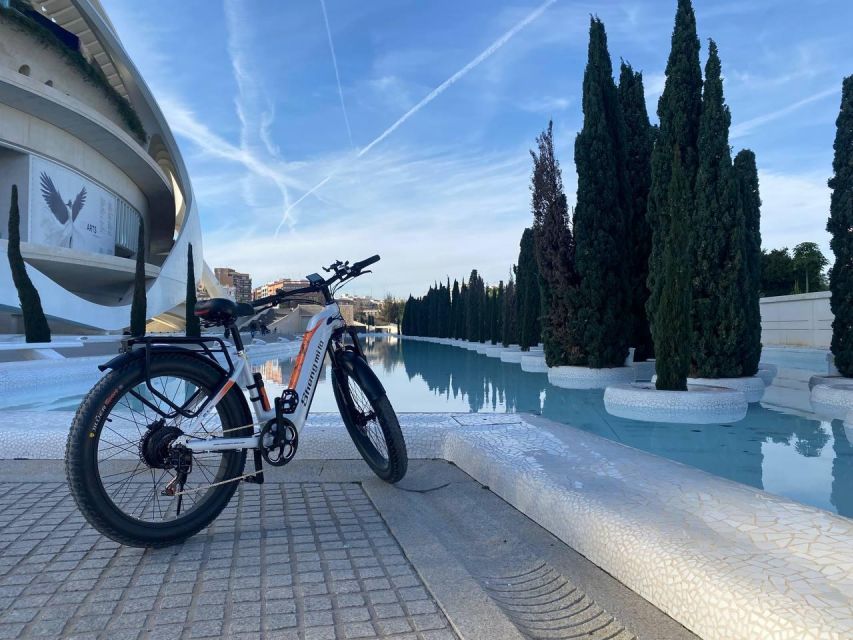
- A flat, easy-going loop through both old streets and the big modern sights
- Photo-stop pacing that gives you time to look, not just pass through
- Top-tier city landmarks from Central Market to the Turia River Park
- Modern architecture in one corridor: City of Arts and Sciences highlights are all in the same ride
- Optional ticket choices at a few major attractions (prices are listed for those)
- Small groups (max 14) that stay together and move smoothly
Getting your bearings fast on two wheels
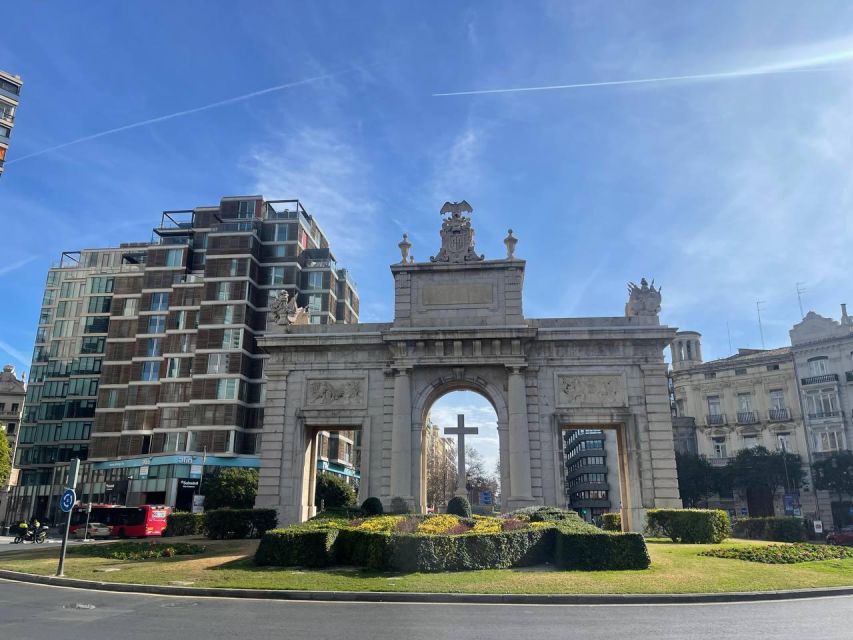
This tour is built for day-one energy. In about 2 hours 30 minutes, you get a structured overview of Valencia: the historic core, the modern showpieces, and the green spine in between. It’s the kind of experience that helps you decide where to linger later, because you leave knowing what’s where and what each landmark is really for.
One practical win: the meeting point is in L’Eixample (C. de Puerto Rico, 23, 46004 València). That’s convenient because it puts you close to public transportation, and the ride loops back at the end. You also get a mobile ticket, which is the kind of small thing that saves time when you’re juggling maps, transit, and finding the shop.
Groups are kept to a maximum of 14, so you’re not stuck watching the guide disappear into traffic. And the price—$32.67 per person—lands in the sweet spot for a guided, multi-sight highlights tour, especially when you’re using bikes to cover distance without tiring your legs before you even start sightseeing on foot.
You can also read our reviews of more cycling tours in Valencia
Russafa: the culture-and-nightlife Valencia before the monuments
Your ride begins in Russafa, a neighborhood that has become a hub for local culture, food, and evening life. Even with only a short stop, it sets the tone: Valencia isn’t only about grand cathedrals and museums. It’s also about street life, dining, and that everyday buzz that makes cities feel lived-in.
This is a good place to calibrate your expectations for the day. The guide will usually use the neighborhood vibe to introduce themes you’ll see again later—how Valencia balances old and new, and how architecture often signals identity.
If you’re the type who likes to understand a city before you eat your first meal, Russafa helps. And if you’re not sure where to explore after the tour, Russafa gives you a direction.
Estació del Nord: modernist tiles and a real sense of place
Next up is Estació del Nord (opened in 1917 and designed by Demetrio Ribes). What stands out here is the visual language: colorful tiles and floral motifs that feel unmistakably Valencian. Train stations can be forgettable in other cities, but this one is a landmark you’ll actually remember.
It also works well as a “breather” stop—only a few minutes, but long enough to absorb the look and snap photos. It’s the kind of moment where you’ll think, Okay, this city is serious about design.
Plaza de Toros and Plaça de l’Ajuntament: grand symmetry and civic Valencia
Then you roll to Plaza de Toro. Traditionally tied to bullfighting, it now hosts concerts and cultural events. Even if you just take in the façade from the outside, the stop helps explain how older traditions and older buildings can shift roles over time.
After that comes Plaça de l’Ajuntament, Valencia’s largest square. It’s anchored by a fountain and ringed with buildings from the 19th and early 20th centuries. This square is useful because it’s central, photogenic, and easy to revisit later if you want a relaxed evening walk.
Mercado Central: modernist architecture with snack potential nearby
You hit Mercado de Central next (the famous Central Market). It’s designed in modernist style by Francisco Guardia and Alejandro Soler and dates to 1914. It’s also described as the oldest and largest market in Spain, which is a big claim—but the building itself makes the reputation feel real.
This is one of the stops where you’ll want to look closely. Even if your time inside isn’t the focus, the market hall architecture is the kind of detail that makes Valencia feel like a city with pride. If you like food travel, you’ll likely find yourself circling back to this area after the tour—whether for a proper meal or just browsing stalls.
You can also read our reviews of more guided tours in Valencia



La Lonja de la Seda and Valencia Cathedral: what power looked like here
Two major “medieval prosperity” stops sit close together in the Old Town feel.
La Lonja de la Seda is a 15th-century UNESCO-listed Gothic masterpiece. It once functioned as a silk exchange, so it’s not just pretty stone. It’s a reminder that commerce and wealth built architecture, and Valencia has never forgotten that.
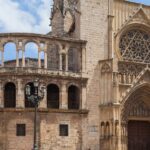
Then you reach Valencia Cathedral, where you’ll see layered architecture—Gothic, Baroque, and Renaissance—with a very deep timeline. The building began as a Roman temple in the 13th century and was turned into a Mosque for a short period. If you care about how buildings evolve, this is the kind of stop where the guide’s explanation makes your future visits faster and more satisfying.
The tour highlights that inside are the Santo Caliz Chapel and the Holy Grail. Even if you don’t plan a full cathedral visit on the bike day, knowing what to look for makes it worth coming back.
Pl. de la Mare de Déu and the old gates: fountains and stone reminders
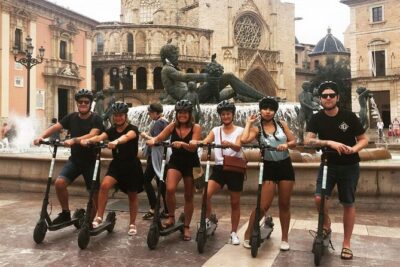
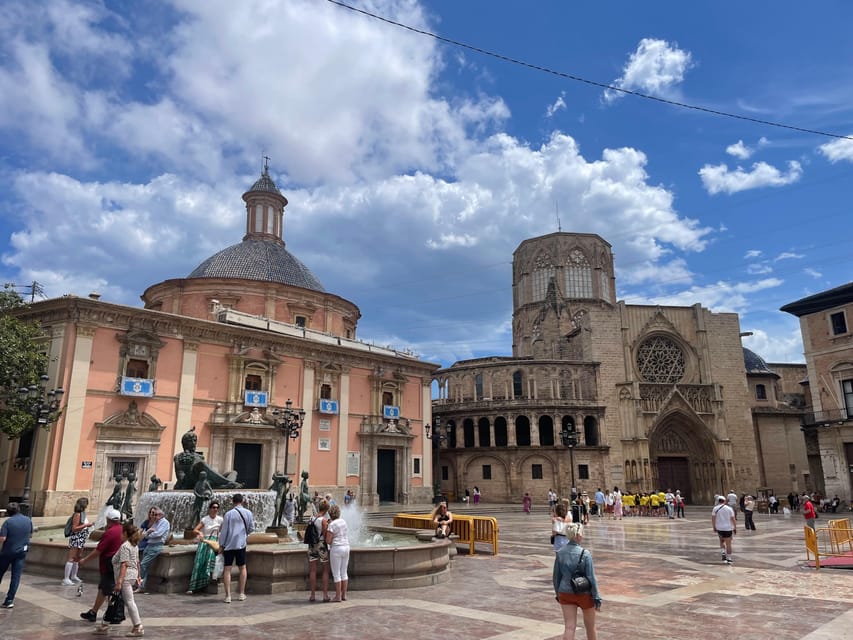
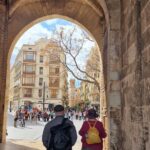
From there, you move to Pl. de la Mare de Déu, a square in the heart of the Old Town. The centerpiece is the fountain Fuente del Agua de la Acequia, surrounded by historic buildings including the Cathedral area and the Basilica. It’s a classic “stop for a moment, then keep going” location—great for photos and for absorbing the square-life feeling.
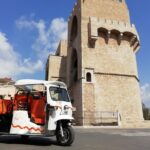
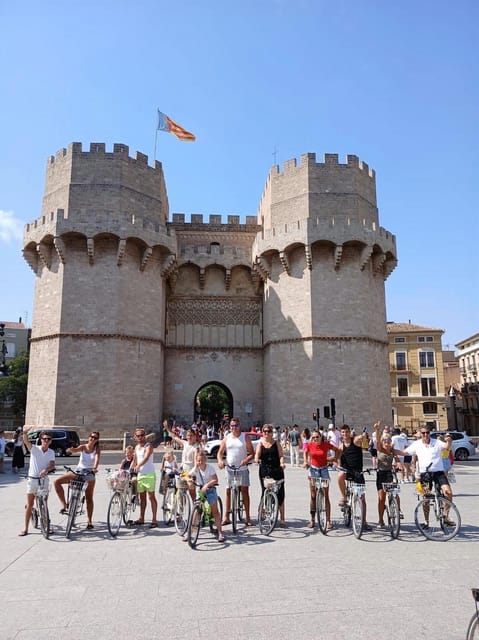
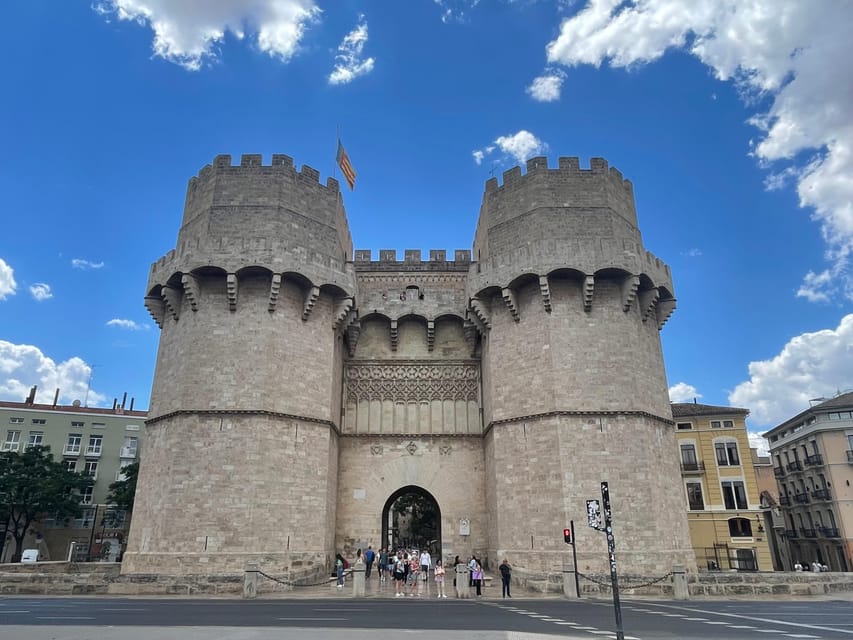
Next is Torres dels Serrans. Valencia once had 12 gates along a city wall in the old district, but most were destroyed in the 19th century. Only two remain: Torres de Serranos and Torres de Quart. The point here isn’t just the tower—it’s how the city has changed and how traces of defense still frame the modern streets.
Turia Garden: the quiet miracle corridor you’ll want to ride again
Now you get to the piece many people come back for: Jardí del Turia. This is an enormous urban park running about 9 kilometers through the city. It used to be the old riverbed, and after a devastating flood, Valencia’s community decided to turn that empty space into green rather than an expressway.
On a bike, this matters. You glide through a protected, low-stress corridor that feels cooler and calmer than the surrounding streets. One rider specifically called the river bike path the highlight for being quiet, and that matches the overall vibe of Turia—space to slow down and watch the city pass.
You’ll also pass by Palau de la Música de València, the concert hall. The guide notes Ricardo Bofill’s involvement in the Turia Park design process and his role connected to the building; the concert hall was finished in 1987. Even if you don’t go inside, it’s a strong cultural checkpoint: Valencia isn’t only historical—it’s active.
City of Arts and Sciences: one ride, the whole futuristic lineup
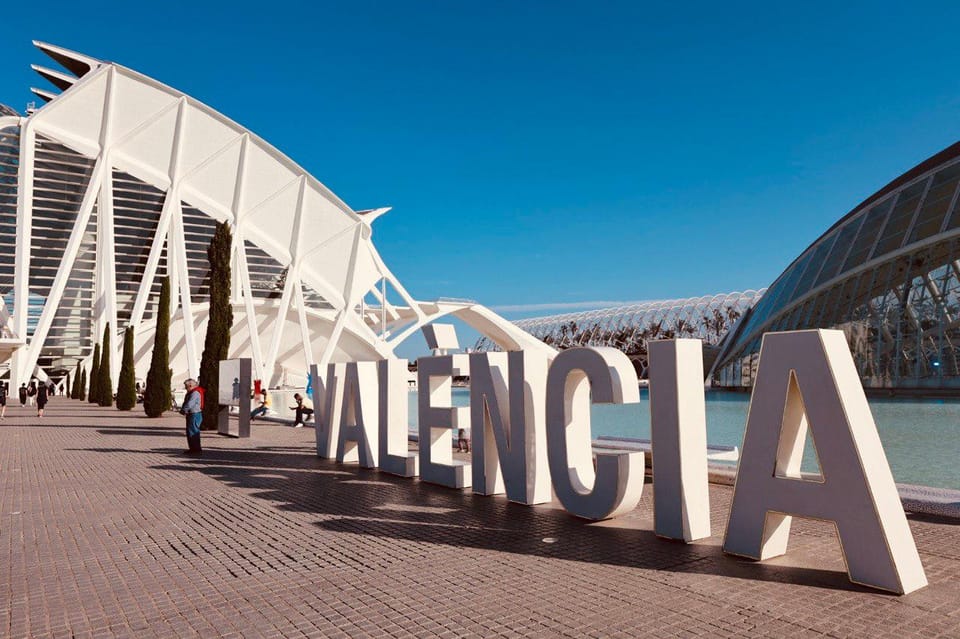
After Turia, the tour shifts into the modern “showpiece” part of the day: the City of Arts and Sciences. This is where the architecture feels like the main character. You’ll be moving between landmarks close enough that you won’t feel like you’re doing unrelated transfers—you’re seeing a single design vision across multiple buildings.
Hemisfèric: the eye of knowledge
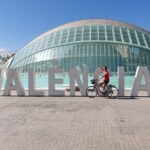
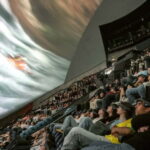
Hémisferic is described as the centerpiece and the first building of the complex. It’s designed by Santiago Calatrava, completed in 1998, and shaped to remind you of a human eye. It functions as an IMAX cinema. Admission is listed as from 6.70 euros, and the tour time here is framed so you can choose whether to go in.
L’Umbracle: sculpture garden + outdoor art walk
Next is L’Umbracle, a sculpture garden with different plant species and an outdoor art gallery called the Walk of the Sculptures. The building is also credited to Calatrava and works as a softer landing between the big-ticket architecture.
Queen Sofía Palace of Arts: a Roman helmet in modern form
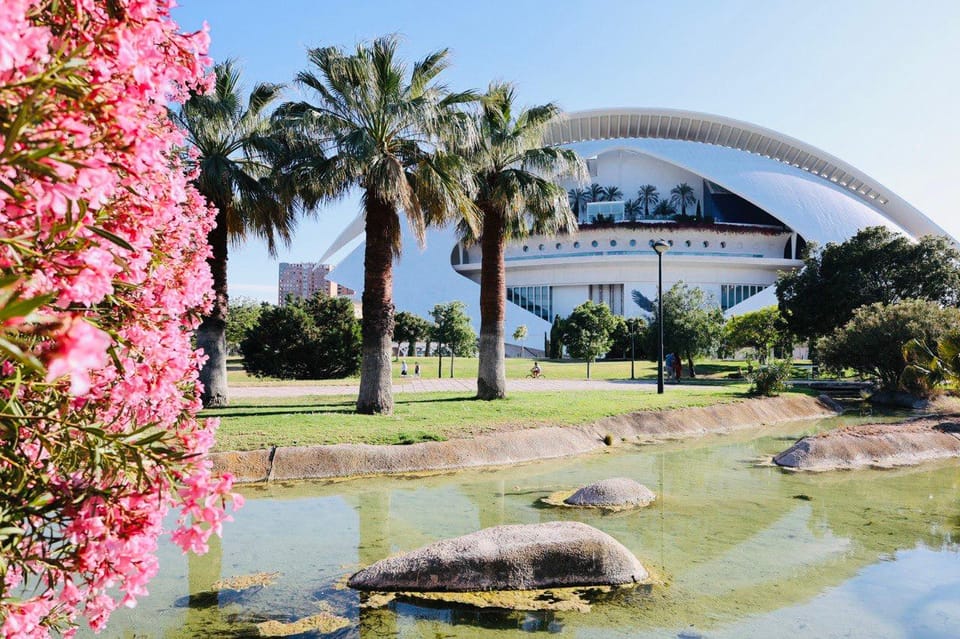
Then you reach Queen Sofia Palace of the Arts. The structure is designed to resemble a Roman helmet, and it acts as an opera house and performing arts center. It opened in 2005. Admission isn’t listed as required for the stop, so this is a strong “look and learn” moment.
Oceanografic: Europe’s biggest aquarium stop
If you love animals, this is the payoff. Oceanografic Valencia is described as the largest aquarium in Europe, designed by Felix Candela, with a dolphinarium and avant-garde architecture. The tour notes over 45,000 animals from more than 500 species. Admission listed is 25.75 euros, so this is one of the clearest spots where you’ll decide based on time and budget.
Museo de las Ciencias Príncipe Felipe: whale-skeleton science
Next, Museo de las Ciencias Príncipe Felipe is an interactive science museum. The building covers over 42,000 square metres and resembles a whale skeleton. Construction started around 1994, it opened in 2000, and it’s also attributed to Calatrava. Admission is listed as from 6.90 euros, again making this a choose-your-own-adventure stop.
L’Ágora: covered space with controlled light
Finally, L’Ágora rounds out the modern circuit. It’s a multifunctional covered space with a capacity listed as more than 6,000 seats. The glass roof along its spine and the movable structure that controls natural light are the design details the guide will point out.
This sequence—Hemisfèric to L’Ágora—feels like a mini architecture course. You’ll start spotting patterns in Calatrava’s style: bold forms, sculptural shapes, and design that turns buildings into landmarks rather than background.
E-bike vs regular bike: choosing the comfort level
The ride is designed to be doable for most people, and Valencia’s streets help. Multiple guides have led riders through the route with the emphasis that the ground is mostly flat, with only a few short inclines in some areas.
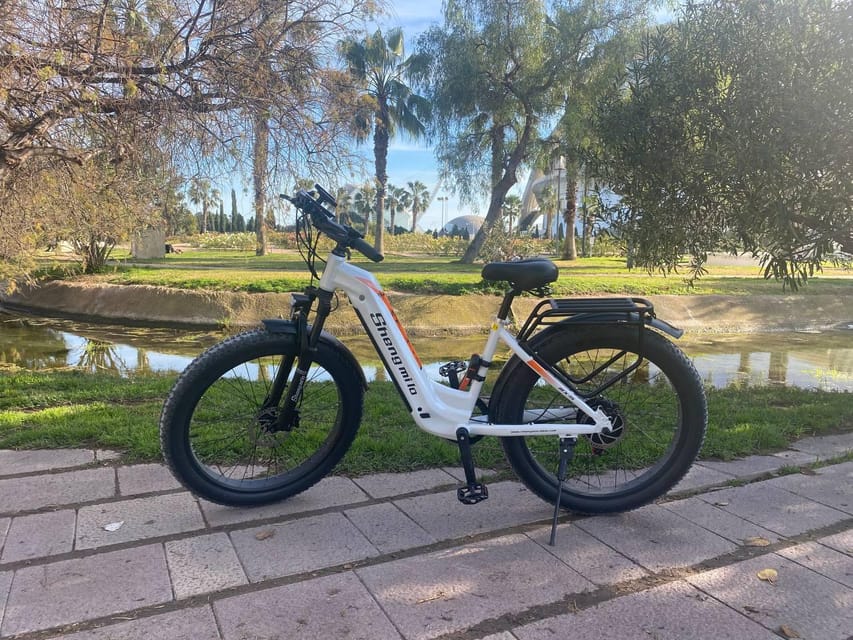
Still, comfort depends on the bike you choose. Some riders like the stability of a regular bike on flat routes, while others prefer the assist of an e-bike—especially if you want less effort during longer pedal segments or you’re newer to cycling. One practical tip from the experience: if you book a regular bike but end up wishing you had extra support, there’s evidence from real riders that upgrades can be possible once you’re there.
If you’re planning to do a lot more walking after the tour, leaning toward an e-bike can help you arrive fresher at dinner and your next stop.
What the timing really feels like at each stop
The tour is structured with short segments—often around 5 to 10 minutes per location—so the day stays efficient. This timing is part of the value: you get multiple categories of sights in a single loop instead of spending half a day on one monument.
At places like Russafa, Estació del Nord, and the Old Town squares, your time is best used for photos, orientation, and grabbing the details the guide points out. At larger “serious” attractions like the cathedral area, Central Market, and La Lonja, you’ll likely feel your mind saying, I want to come back for a longer look—because the ride gives you the essentials, not hours of wandering.
For the paid attractions in the City of Arts and Sciences, the tour is set up so you can decide on the spot. If you only have one “big-ticket” add-on day, this tour helps you pick the right one: aquarium, science museum, or the eye-shaped cinema complex.
Value for money: how $32.67 turns into a city overview
At $32.67 for roughly 2.5 hours, the value comes from three things.
First, you’re using bikes to cover ground fast, which makes it easier to see more of Valencia without spending your whole day commuting from district to district. Second, the guide-led context turns photo stops into a plan. You’ll know why La Lonja is UNESCO-worthy, what to look for at the cathedral, and why Turia Park is a civic decision rather than just a pretty promenade.
Third, you’re not forced into every ticket cost. The itinerary shows many stops as free, then lists certain major entry options (like Hemisfèric, Oceanografic, and the science museum) with specific starting prices. That lets you budget realistically instead of accidentally stacking admissions.
The one watch-out is that advertised “free entry” can feel confusing if you’re expecting to go inside everything. If your dream is deep interior time at every major venue, you’ll still need a second visit. The bike tour is best as your fast orientation plus a few optional upgrades.
Who this tour suits best
This is ideal if you:
- Want a day-one Valencia overview that mixes Old Town and modern icons
- Like architecture and city design as much as landmark photos
- Want an easy route (mostly flat) that still feels active
- Are traveling with limited time but want a guided plan
It’s also a smart pick for solo travelers. One rider described it like a private-feeling tour when the group was small, and that lines up with the small-group size here.
If you hate crowds or don’t like mixing with both e-bike and regular bike riders, you might feel more comfortable choosing the bike option that matches your cycling comfort. Some parts of the ride cross pedestrian-congested areas, so a calm mindset helps.
Should you book this Valencia bike tour?
I think you should book this tour if you want to get your bearings fast and you like the idea of seeing both Valencia’s old civic heart and its modern architecture in one afternoon. It’s great value for the time, and the stop-by-stop structure helps you turn “I saw that” into “I know what that is and where to go next.”
Skip it (or plan your expectations carefully) if you’re only interested in long indoor museum time at every stop. This ride is built for orientation and photo-worthy highlights, with a few optional paid add-ons that you can choose based on your interests and budget.
If you’re aiming for the most efficient first day in Valencia, this is one of the simplest ways to do it on two wheels.
FAQ
How long is the Valencia top highlights guided bike tour?
It’s about 2 hours 30 minutes.
What is the price per person?
The price is $32.67 per person.
Is the tour offered in English?
Yes, it’s offered in English.
How large are the groups?
The tour has a maximum of 14 travelers.
Where is the meeting point, and where does it end?
It starts at C. de Puerto Rico, 23, L’Eixample, 46004 València, Valencia, Spain, and ends back at the meeting point.
Are entrance tickets included for all stops?
Some stops are listed as free, while others list admission as not included. The City of Arts and Sciences highlights like Hemisferic, Oceanografic, and the Science Museum list admission prices, and you would need to pay separately if you want to go in.
Is there a choice between an e-bike and a regular bike?
You can choose between a normal bike and an e-bike. If you’re not used to e-bikes, a regular bike may feel easier at first.
What if the weather is bad?
The tour requires good weather. If it’s canceled due to poor weather, you’ll be offered a different date or a full refund.