REVIEW · COOKING CLASSES
Vegetable Paella cooking class, tapas and Ruzafa market visit
Book on Viator →Operated by My First Paella · Bookable on Viator
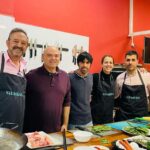
Paella starts in the market, not the pan. What makes this experience worth your time is the full loop: you shop at Mercado de Ruzafa, cook the meal with a chef, then sit down to eat with Valencian drinks and desserts. It is a small-group setup (so you get real attention), and it’s built around vegetable/vegan paella plus Spanish tapas.
Two things I especially like: you cook from fresh ingredients you pick up together in Ruzafa, and the class keeps everyone involved rather than letting one or two people do all the work. I also like the way the food show is paired with culture—while you buy ingredients, you’ll hear the origin of paella and local customs.
One consideration: the experience is offered in English, so if you’re not comfortable in English you may need extra help to follow along.
In This Review
- Key things that make this class feel worth it
- Market-to-paella flow: why you’ll enjoy this format
- Mercado de Ruzafa: what happens in the first part (and why it’s more than shopping)
- Tapas and drinks at the kitchen: setting the tone before the paella work
- The vegetarian/vegan paella method: what you’re really learning
- How you’ll taste and finish: tomato salad, wines, fruit, sweets, coffee
- Price and value: what $78.44 buys you in real terms
- Who this fits best (and who should consider alternatives)
- Practical tips to get the most out of your 3.5 hours
- Should you book this vegetarian paella + Ruzafa market experience?
- FAQ
- What time does the experience start, and how long does it last?
- Where is the meeting point?
- Do you return to the same place at the end?
- Is the paella vegetarian or vegan?
- Is the tour offered in English?
- Is the Ruzafa market included every day?
- How large is the group?
- What’s included in the price?
- What drinks and desserts are part of the experience?
- What is the cancellation policy?
Key things that make this class feel worth it
- Small group hands-on cooking with maximum 18 participants for close chef attention
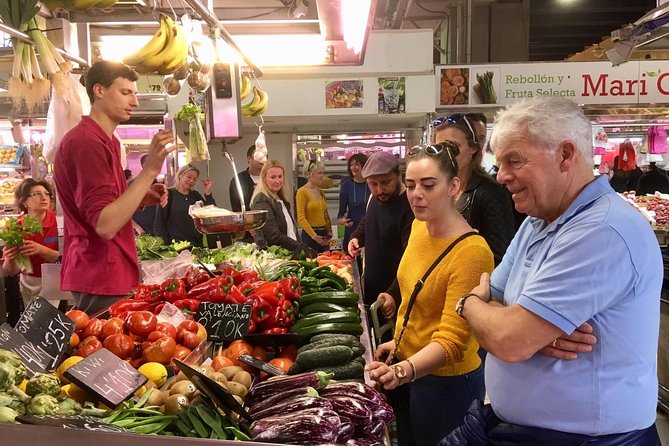
- Ruzafa market shopping first, so you understand ingredients before the pan work starts
- Vegetarian/vegan paella with a step-by-step method you can repeat later
- Sangria workshop + tapas before and during cooking, not just a plain lesson
- A full Valencian table after cooking: tomato salad, wines, fruit, sweet wine, and coffee
- Day-trip timing that fits: about 3 hours 30 minutes, starting at 11:00 am
Market-to-paella flow: why you’ll enjoy this format
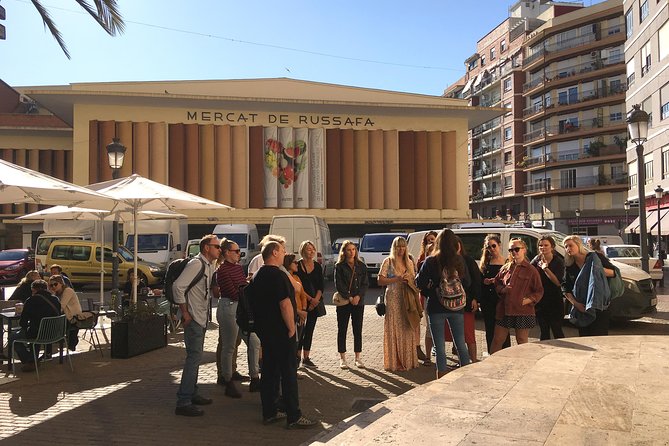
This class is built like a real Valencian meal day. You don’t just show up to a kitchen and get handed ingredients. You start at Mercado de Ruzafa, learn what matters in paella, then move to cooking with context you can actually use.
That order helps in two ways. First, the shopping walk gives you a sharper feel for what you’re buying and why it’s important. Second, when the chef explains the paella technique, it makes more sense because you already handled key ingredients.
It also makes the whole thing feel social without being chaotic. With a small group, the hosts can answer questions and adjust the pace so people can keep up.
You can also read our reviews of more shopping tours in Valencia
Mercado de Ruzafa: what happens in the first part (and why it’s more than shopping)
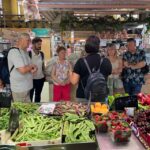
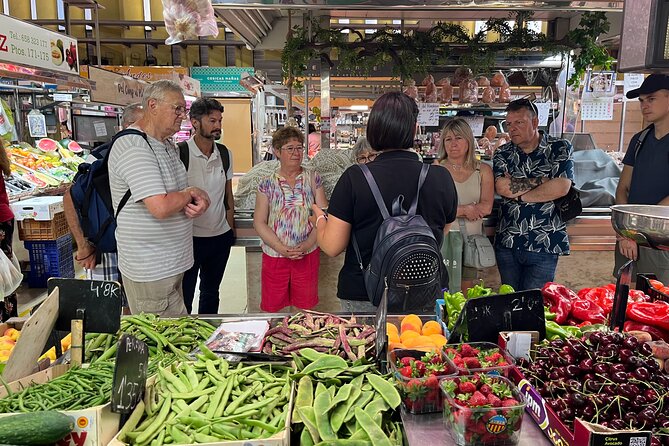
You’ll meet at Parroquia de San Valero (Carrer del Pare Perera, 6, L’Eixample, 46006 Valencia) at 11:00 am, then head to the Ruzafa market together. While you shop, you’ll learn where paella comes from and what local people do around food and dining.
The practical value is huge. Paella is simple on paper but fussy in real life. Ingredients, timing, and how you build flavor matter, so buying fresh produce as a group gives you a quick education you can carry home.
What you’re likely to notice in the market moment is that paella isn’t just one ingredient or one step. It’s about balancing vegetables, soaking up flavor, and keeping the process moving. Even if you’ve cooked rice before, the market context helps you understand what you’re trying to achieve.
One note to plan around: the Ruzafa market visit doesn’t happen on Sundays because it’s closed. If you’re booking for a Sunday, expect the class to shift away from that market piece.
Tapas and drinks at the kitchen: setting the tone before the paella work
After the market, you walk about 8 minutes to the kitchen. Here, the chef is waiting with tapas and drinks, including sangria, beer, water, and other beverages. This is not a tiny snack break; it’s a proper pre-cooking spread that warms up your appetite and gets you in the rhythm of Spanish dining.
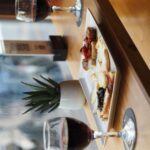
The tapas lineup includes items like patatas bravas with sojanesa, jamón serrano, manchego cheese, steamed mussels, and olives. Even though the main paella is vegetable/vegan, the tapas table gives you a broad taste of how Spanish meals often move between hot and cold, and between savory flavors and lighter bites.
From the reviews, the vibe here is a big part of why people rate this so high. Multiple guests mention that the staff and chefs are warm-hearted and good at making a group of strangers feel like a team. Names that show up from guest feedback include Guillermo and Cristina, plus other instructors such as Jordie, Anna, Marie, Jose/Sonja, Denny, Hans, and Corina.
If you’re traveling with teens or kids, this part helps. People report that even younger participants stayed engaged, not just watching from the sidelines.
The vegetarian/vegan paella method: what you’re really learning
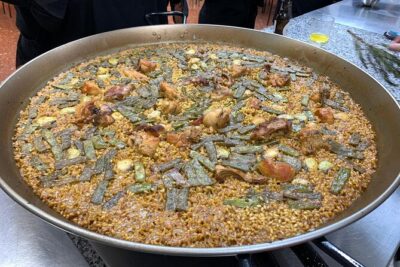
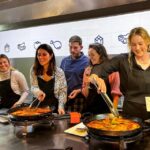
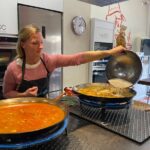
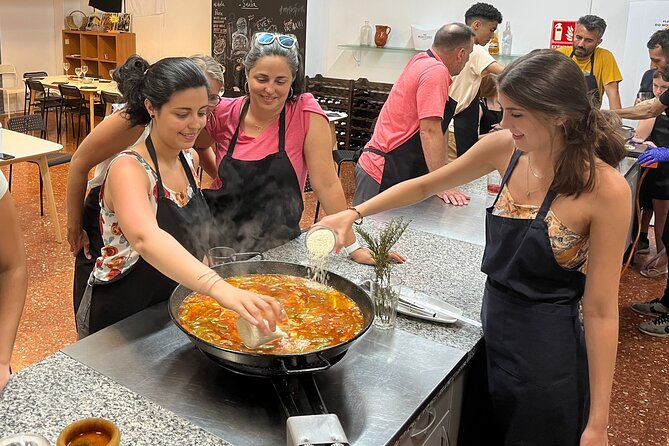
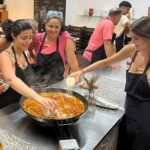
Now the core event: you’ll prepare and cook a vegetable/vegan paella. The class is structured step by step, and the chef explains the process as you go, not after you’ve already made decisions.
What stands out in the way this class is described is participation. Guests repeatedly say everyone got involved, from shopping to mixing and cooking. That matters because paella technique is hands-on. You don’t just want to know the recipe—you want to understand the flow: when to add, when to adjust, and how not to rush the critical parts.
You’ll also learn paella beyond the dish. The market portion sets up the why, and the kitchen portion builds the how. People mention learning paella history and cooking technique, which is exactly the right pairing for a vegetable version. Vegetarian paella can feel like a compromise if you treat it like a shortcut. Here, it’s taught as its own legitimate approach.
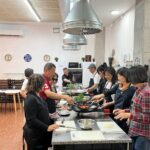
A small group (maximum 18 participants for hands-on attention) supports that teaching style. If you’ve ever done a class where you can’t hear the chef or you spend half the time waiting, you’ll feel the difference here.
How you’ll taste and finish: tomato salad, wines, fruit, sweets, coffee
Once the cooking is done, you sit down to taste what you made. The paella is served with a Valencian tomato salad, and the meal continues in classic Spanish fashion: drinks, seasonal fruit, and sweets after the main course.
Your included finish includes Valencia wines, seasonal fruit, a typical Valencian sponge cake, sweet wine (mistela), and coffee. The drinks and desserts aren’t an afterthought. This is a full meal that lets you treat the class like an actual Valencian lunch.
If you’re the type who loves food but hates the awkward part where classes stop being social, this is the fix. You get to eat together, talk through what you did, and compare notes like you’re part of a tiny community table.
The balance is also smart for vegetarians and vegans. The main paella is explicitly vegetarian/vegan, so you’re not forced into choosing one item and watching others eat the real thing.
You can also read our reviews of more tours and experiences in Valencia

Price and value: what $78.44 buys you in real terms
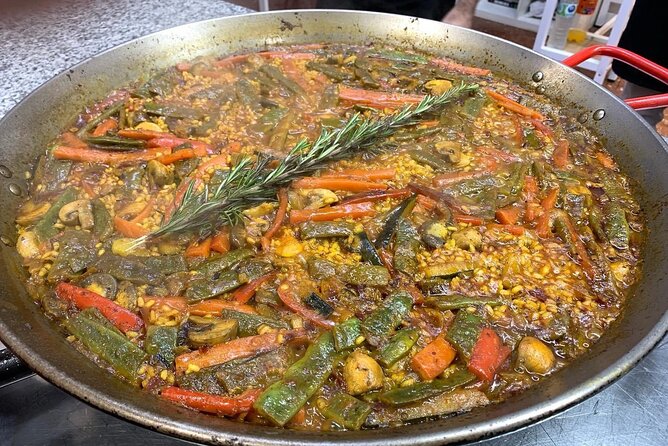
At about $78.44 per person for roughly 3 hours 30 minutes, this pricing is not just about the paella. You’re paying for a packaged experience that includes:
- Market shopping time (with cultural context)
- A kitchen workshop with a chef guiding you step by step
- Tapas plus a drinks workshop (including sangria, beer, water, and soft drinks)
- Ingredients and equipment
- A plated meal with tomato salad, wines, dessert, sweet wine, and coffee
So the real question isn’t whether you could buy groceries and cook at home. You could. The value is that you get structure, technique coaching, and a social setting that makes the meal feel like an event.
For me, the tipping point is the small group size and the “everyone participates” approach. That’s what turns a cooking class from a passive tour into something you actually learn from.
Who this fits best (and who should consider alternatives)
This class is ideal if you want a hands-on vegetarian paella cooking class in Valencia and you care about where ingredients come from. It’s also a strong choice for mixed groups—some people may enjoy the vegetable paella while others still get the Spanish tapas lineup.
It fits families too. Reviews mention a setup that worked for teens and even younger kids (example ages include an 11-year-old and a 15-year-old), because the hosts keep people included rather than relegated to watching.
You might want to think twice if English-only instruction is a problem for you. The class is offered in English, and at least one guest noted they needed to support translation for people who don’t speak English well.
Also, if you’re booking specifically for the Ruzafa market experience, confirm your date. Sundays are an exception because the market is closed, so that early market stop won’t happen.
Practical tips to get the most out of your 3.5 hours
A few common-sense moves will help you enjoy the class more:
- Come hungry. You’ll have tapas and drinks before cooking, then a full sit-down meal after.
- Plan for a hands-on session. Wear something you can move in comfortably; you’ll be standing, cooking, and eating.
- If you’re vegan, be ready to double-check your comfort with ingredients. The paella is described as vegan/vegetarian, but the tapas spread can include items like jamón serrano and mussels.
- If you’re sensitive to alcohol, remember sangria is part of the workshop and drinks lineup. You can still enjoy the meal and skip how much you sip.
Should you book this vegetarian paella + Ruzafa market experience?
Yes—if you want the most learn-and-eat value out of Valencia cuisine, this is a strong pick. The market-to-kitchen flow, the small-group attention, and the fact that you cook and then sit down for a full meal is a rare combination in half-day food tours.
Book it if you like practical instruction, want to taste classic Spanish items alongside your vegetable paella, and enjoy meeting people while you cook. It’s especially good for families and for travelers who want a day that feels like Valencia, not just food on autopilot.
Skip it if English instruction is a deal-breaker for your group, or if you’re traveling on a Sunday and you were counting on the Ruzafa market portion.
FAQ
What time does the experience start, and how long does it last?
It starts at 11:00 am and lasts about 3 hours 30 minutes.
Where is the meeting point?
You meet at Parroquia de San Valero, Carrer del Pare Perera, 6, L’Eixample, 46006 Valencia, Spain.
Do you return to the same place at the end?
Yes. The activity ends back at the meeting point.
Is the paella vegetarian or vegan?
Yes. You’ll shop, prepare, cook, and eat vegetarian/vegan paella.
Is the tour offered in English?
Yes. It is offered in English.
Is the Ruzafa market included every day?
No. There is no Ruzafa market visit on Sunday because it is closed.
How large is the group?
It’s capped at a maximum of 20 travelers, with a maximum of 18 participants for hands-on chef attention.
What’s included in the price?
Included items are tapas, a sangría workshop (with wine, beer, soft drinks, and water), tomato salad, all ingredients and equipment to cook, plus dessert, coffee, and mistela.
What drinks and desserts are part of the experience?
You’ll have sangria and other drinks during the workshop, and after cooking you’ll have seasonal fruit, Valencian sponge cake, sweet wine (mistela), and coffee.
What is the cancellation policy?
You can cancel for a full refund up to 24 hours in advance of the experience. If you cancel less than 24 hours before the start time, the amount paid is not refunded. The cutoff is based on local time, and if the minimum number of travelers isn’t met, you’ll be offered a different date/experience or a full refund.